Everything announced at Amazon’s fall hardware event

It’s not technically Techtober yet since we’re one day shy, but we’ve already had a bunch of fall hardware events from some of the bigger companies in the tech space. Today, it was Amazon’s turn to step up to the plate

Going into its event, the company teased new Echo speakers and Kindle news. Rumors suggested Amazon was ready to ditch its long-standing Android-based OS on Fire TVs in favor of the Linux-based Vega OS it’s already using on the Echo Show 5, Echo Hub units and Echo Spot. Indeed, Echo, Kindle and Fire TV are all being featured at the event, along with Ring and Blink devices. Oh, and lots of Alexa+ updates, of course.

Amazon doesn’t usually livestream its product events and that remained the case here. However, we’ve got you covered with all the news and announcements with both our liveblog and this here rundown of everything Amazon announced at its fall hardware event:

Ring

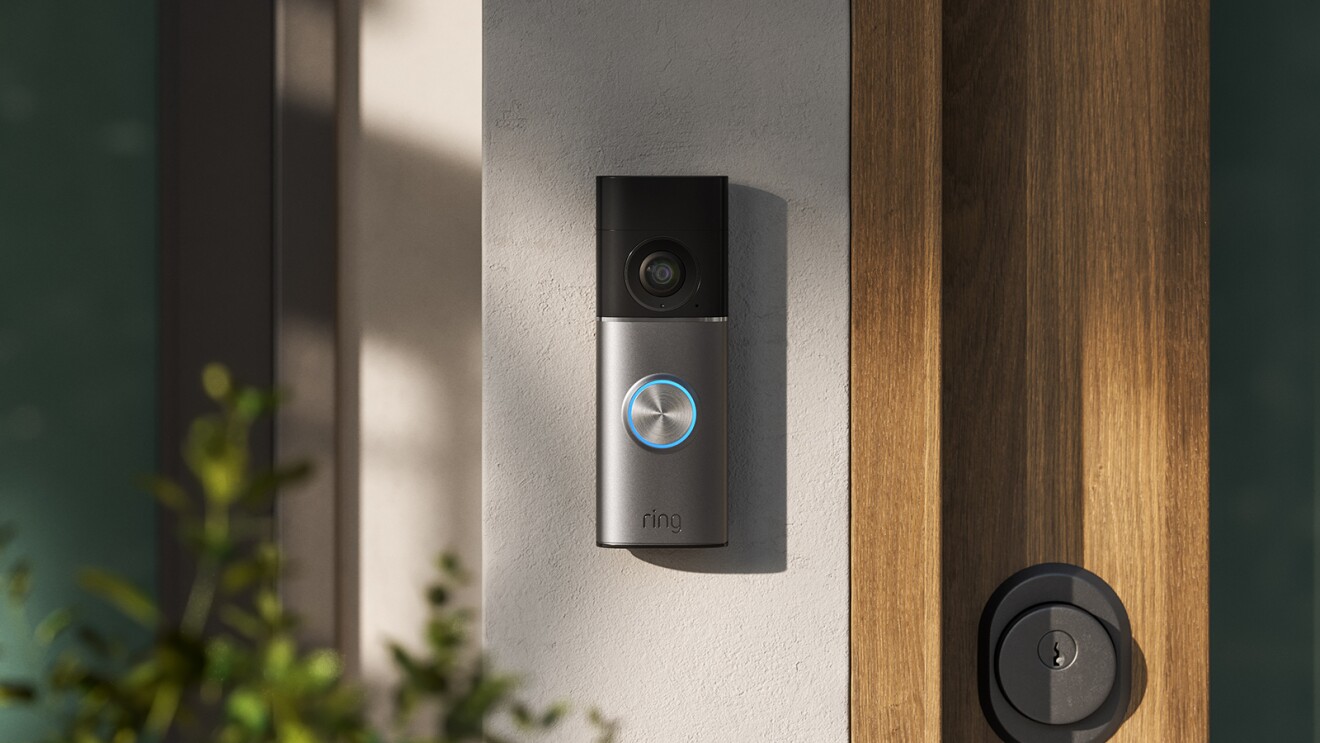
Ring Doorbell

Amazon

Retinal Vision is a concept that Ring has built its latest devices around (for what it’s worth, the name reminds me I’m probably due for an eye exam). The idea is to use AI to optimize image quality. It taps into back-side illumination sensors to deliver superior low-light performance, Amazon says.

An function called Retinal Tuning samples your Ring camera’s video quality several times per day for up to two weeks in a attempt to improve it. Large-aperture lenses in the new devices will help with all of that.

To that end, Amazon has announced a Wired Doorbell Plus with 2K visuals for $180 and the Indoor Plus Cam 2K for $60. There are 4K models too: Outdoor Cam Pro 4K ($200), Spotlight Cam Pro 4K ($250), Wired Doorbell Pro 4K ($250) and Floodlight Cam Pro 4K ($280). Pre-orders for all of them open today.

Of course, there are Alexa+ features embedded into the new cameras. Alexa+ Greetings is a function that will enable the AI to make “informed decisions about how to greet certain visitors.” Amazon will roll this out for the new cameras in December.

Familiar Faces, meanwhile, is a facial recognition feature. It identifies known faces, so Ring will be able to notify you when they’re at your door (or if someone unfamiliar is there). Related, I’m suddenly even more annoyed about my neighbors having Ring doorbells that are impossible to avoid passing by.

This story is developing; refresh for updates.

This article originally appeared on Engadget at https://www.engadget.com/home/everything-announced-at-amazons-fall-hardware-event-143557140.html?src=rss 

Google’s AI Mode gets better at understanding visual prompts

Since it began rolling out AI Mode at the start of March, Google has been slowly adding features to its dedicated search chatbot. Today, the company is releasing an update it hopes will make the tool more useful for visual searches.

If you’ve tried to use AI Mode since Google made it available to everyone in the US, you may have noticed it responds to questions about images with a lot of text. Robby Stein, vice president of product for Google Search, admits it can be “silly” to see text in that context, and so the company has been working on applying AI Mode’s “query fan-out” technique to images. Now, when you prompt AI Mode to find you images of “moody but maximalist” bedrooms for instance, it’s better equipped to respond to that request, with an algorithm that will run multiple searches in the background to get a better understanding of exactly what it is you’re looking to find.

Google has built this feature to be multimodal, meaning you can start a conversation with an image or video. And as you can probably guess, Google believes these capabilities will be particularly useful in a shopping context. You could use AI Mode to shop before today, but Google argues the experience benefits greatly from the more visual responses the chatbot is able to generate. What’s more, it’s better able to make sense of tricky queries like “find me barrel jeans that aren’t too baggy.” Once AI Mode generates an initial response, you can ask follow-up questions to refine your search.

As with any Google update, it may take a few days for the company to roll out the updates it announced today to everyone. So be patient if you don’t see the new, more visual experience right away.

This article originally appeared on Engadget at https://www.engadget.com/ai/googles-ai-mode-gets-better-at-understanding-visual-prompts-130001201.html?src=rss 

DoorDash introduces a cute delivery robot named Dot

At the Dash Forward keynote, DoorDash has unveiled a cute electric delivery robot named Dot that was designed specifically for quick neighborhood trips. Dot is around one-tenth the size of a car, can move up to 20 mph and can navigate not just roads, but also bike lanes and sidewalks. It’s small enough to fit through doorways and driveways and can help local businesses meet demand from people who prefer to shop from the comfort of their own homes. The robot was developed in-house by DoorDash Labs to integrate with the company’s new Autonomous Delivery Platform, an AI dispatcher that matches orders with the best delivery method. 

“You don’t always need a full-sized car to deliver a tube of toothpaste or pack of diapers,” said Stanley Tang, the head of DoorDash Labs. “That’s the insight behind Dot.” To start with, the company is launching an early access program for Dot in Tempe and Mesa, Arizona. DoorDash said it’s the beginning of Dot’s commercial deployment and that the robot will make its way to new markets in the future. 

The company has assured Dashers the Dot will not replace them. Human dashers will still handle the “vast majority” of its deliveries, and Dot is supposed to allow them to pick up the more high value ones while it fills in the gaps for local trips that don’t pay as much. DoorDash said that it needed to conjure up more “innovative ways to keep pace with demand” to support more local businesses and as it expands to new regions. It also previously teamed up with Coco Robotics to offer sidewalk robot deliveries in LA and Chicago, and it offers drone deliveries in Christiansburg, Virginia and Frisco, Texas.

This article originally appeared on Engadget at https://www.engadget.com/apps/doordash-introduces-a-cute-delivery-robot-named-dot-130036016.html?src=rss 

Amazon’s Smart Plug is cheaper than ever for Prime Day

There are few things as simple yet exceedingly annoying as having to get up and turn off a light. Whether you’re already comfortable in bed or live with mobility limitations, smart plugs can be a great option — especially when they’re on sale.

Right now, you can pick up an Amazon Smart Plug for a record-low price of $13, down from $25. The 48 percent discount comes as part of early Amazon Prime Day sales, ahead of the main event next week. You can also pick up a two-pack of Amazon’s Smart Plugs for $24, down from $50 — a 52 percent discount. 

The Amazon Smart Plug is our pick for best smart plug if you have an Alexa-enabled home. You can tell Alexa to turn off the lights or control it with the Alexa app. It’s compatible with most plugged in devices, from lamps and fans to even kitchen appliances. You can also set it to turn on lights or devices at a certain time each day.

This article originally appeared on Engadget at https://www.engadget.com/deals/amazons-smart-plug-is-cheaper-than-ever-for-prime-day-130446173.html?src=rss 

Prime Day laptop deals: Save on some of our favorite machines from Apple, Dell, Lenovo, HP and others

If your laptop simply isn’t cutting it anymore, October Prime Day might have arrived just in time. As has been the case for the past few years, laptop deals are abundant for Amazon’s Big Deal Days, bringing discounts to MacBooks, Windows laptops, Chromebooks and more. But we wouldn’t blame you if you didn’t know how to figure out if that laptop you’re eyeing actually has a good discount for Prime Day, or if the deal is stale.

That’s where Engadget can help. We’ve poured over the Prime Day laptop deals available this year to pick out the best ones you can get across all kinds of computers. If you’re super picky about the specs you want in a new laptop, we always recommend going straight to the manufacturer so you can configure the machine exactly to your needs. But if you’re willing to work with premade models, October Prime Day deals could help you save some cash on your next laptop.

Best Prime Day laptop deals: MacBooks

Apple’s latest laptops are the MacBook Air M4 and the MacBook Pro M4, and we recommend getting those if you want a device that’s as future-proof as possible at the moment. You’ll find decent MacBook deals on Amazon throughout the year, and most of them will be on the base configurations. In a welcomed update earlier this year, Apple recently made all base models of the MacBook Air M4 have 16GB of RAM by default (which is the same as you’ll find on the base-level Pros).

Apple MacBook Air (15-inch, M4) for $1,078 (10 percent off)

Apple MacBook Pro (14-inch, M4) for $1,399 (13 percent off)

Apple MacBook Pro (16-inch, M4) for $2,249 (10 percent off)

Best Prime day laptop deals: Windows laptops

You’ve got a lot of variety to choose from when it comes to Windows laptops, and that can be a blessing or a curse. We recommend looking for a laptop from a reputable brand (i.e. Microsoft, Dell, Acer, Lenovo and others like them), and one that can handle daily work or play pressures. That means at least 16GB of RAM and 245GB of SSD storage, plus the latest Intel or AMD CPUs. If you’re looking for a new gaming laptop, you’ll need a bit more power and a dedicated graphics card to boot.

Dell 15 3530 laptop (Windows 11 Pro, 15-inch, Intel Core i5) for $649 (28 percent off)

Acer Aspire 3 laptop (Windows 11 Pro, 15-inch, Intel Core i3) for $400 (11 percent off)

Lenovo IdeaPad 1i (Windows 11, 15-inch, Intel Celeron) for $280 (30 percent off)

Lenovo IdeaPad Slim 3 (Windows 11 Pro, 15-inch, Intel Core i7) for $800 (27 percent off)

Best Prime Day laptop deals: Chromebooks

Most Chromebooks are already pretty cheap, but that just means you can get them for even less during an event like Prime Day. However, there are a ton of premium Chromebooks available today that didn’t exist even three years ago, so now is a great time to look out for discounts on those models. In general, we recommend looking for at least 4 to 8GB of RAM and at least 128GB of SDD storage in a Chromebook that you plan on using as your daily driver.

Lenovo Ideapad 3 Chromebook (15-inch, Intel Celeron) for $230 (77 percent off)

HP HD Chromebook (15-inch, Intel Pentium N200) for $287 (18 percent off)

Acer Chromebook Plus (14-inch, Intel Core i3) for $360 (10 percent off)

This article originally appeared on Engadget at https://www.engadget.com/deals/prime-day-laptop-deals-save-on-some-of-our-favorite-machines-from-apple-dell-lenovo-hp-and-others-130507439.html?src=rss 

Early October Prime Day 2025 tech deals under $50: Save on gear from Apple, Anker, Ring, JBL and Roku

The event hasn’t officially begun, but we’ve already found some of the best Prime Day deals under $50. The October Prime Day sale, or Prime Big Deal Days as Amazon calls it, is a great time to stock up on smaller tech like bluetooth trackers, mini speakers, earbuds, mice, power banks, wall chargers, and more. Everything here is pulled from our own guides and reviews — products and brands we’ve tried ourselves and currently recommend. If you want to snap up a whole bunch of new tech without spending too much, this list of the best Prime Day deals under $50 is a great place to start.

Best Prime Day deals under $50

Amazon Fire TV Stick 4K Max for $40 ($20 off): Amazon’s most powerful streaming dongle supports 4K HDR content, Dolby Vision and Atmos and Wi-Fi 6E with double the storage of cheaper Fire TV sticks. It earned an honorable mention in our guide to streaming devices and also happens to make a good retro gaming emulator.

Ring Battery Doorbell for $50 ($50 off): At $49.99 this juuust qualifies as an under $50 tech deal. If you don’t have doorbell wires at your front entrance, you can still have a camera to capture all the package deliveries and neighborhood animal sightings with the Ring Battery Doorbell. It records video in HD with more vertical coverage than the last model, so you can see people from head to toe.

Blink Mini 2 security cameras (two-pack) for $35 ($35 off): This is the top budget pick in our guide to the best security cameras. The Mini 2 is a great option for indoor monitoring or you can put it outside with a weatherproof adapter, but since it needs to be plugged in, we like it for keeping an eye on your pets while you’re away and watching over entry ways from the inside.

Anker 622 5K magnetic power bank with stand for $34 ($14 off with Prime): This 0.5-inch thick power bank attaches magnetically to iPhones and won’t get in your way when you’re using your phone. It also has a built-in stand so you can watch videos, make FaceTime calls and more hands-free while your phone is powering up.

Amazon Smart Plug for $13 ($12 off): We named this the best smart plug for Alexa users because it hooks up painlessly and stays connected reliably. Use it to control lamps or your holiday lights using programs and schedules in the Alexa app, or just your voice by talking to your Echo Dot or other Alexa-enabled listener.

Levoit Mini Core-P air purifier for $40 ($10 off with Prime): This is the mini version of the top pick in our guide to air purifiers. It has a three-stage filter (pre, activated carbon and particle filters) though that particle filter is not a true HEPA filter. But it’s rated at 250 square feet and can help clear the air in your office or other small room.

Echo Pop smart speaker for $25 ($15 off): The half sphere Pop is the most affordable Echo speaker in Amazon’s lineup. The sound won’t be as full as its larger siblings, but will do a fine job of bringing Alexa’s help to smaller rooms. Just note that it went as low as $18 for Black Friday and October Prime Day last year.

Roku Streaming Stick Plus 2025 for $29 ($11 off): This is our top pick for the best streaming device for accessing free and live content. The dongle supports 4K video and HDR and doesn’t need to be plugged into the wall for power. It’s a great way to access any streaming service you could ask for: Netflix, Prime Video, Disney+, HBO Max and many more.

Leebein 2025 electric spin scrubber for $40 ($30 off with Prime): This is an updated version of the electric scrubber we love that makes shower cleaning easier than ever before. It comes with seven brush heads so you can use it to clean all kinds of surfaces, and its adjustable arm length makes it easier to clean hard-to-reach spots. It’s IPX7 waterproof and recharges via USB-C.

Jisulife Life7 handheld fan for $25 ($4 off with Prime): This handy little fan is a must-have if you live in a warm climate or have a tropical vacation planned anytime soon. It can be used as a table or handheld fan and even be worn around the neck so you don’t have to hold it at all. Its 5,000 mAh battery allows it to last hours on a single charge, and the small display in the middle of the fan’s blades shows its remaining battery level.

Anker Soundcore Select 4 Go speaker for $26 ($9 off with Prime): This is one of our top picks for Bluetooth speaker. It gets pretty loud for its size and has decent sound quality. You can pair two together for stereo sound as well, and its IP67-rated design will keep it protected against water and dust.

Amazon Echo Spot for $50 ($30 off): Amazon brought the Echo Spot smart alarm clock back from the dead last year with a new design and improved speakers. In addition to being able to control smart home devices and respond to voice commands, the Echo Spot can also act as a Wi-Fi extender for those that have Eero systems. It went as low as $45 for Black Friday last year.

Samsung EVO Select microSD card (256GB) for $23 ($4 off): This Samsung card has been one of our recommended models for a long time. It’s a no-frills microSD card that, while not the fastest, will be perfectly capable in most devices where you’re just looking for simple, expanded storage.

JBL Go 4 portable speaker for $40 (20 percent off): The Go 4 is a handy little Bluetooth speaker that you can take anywhere you go thanks to its small, IP67-rated design and built-in carrying loop. It’ll get seven hours of playtime on a single charge, and you can pair two together for stereo sound. The previous model, JBL Go 3 is on sale for $30.

Anker Soundcore Space A40 for $45 (44 percent off): Our top pick for the best budget wireless earbuds, the Space A40 have surprisingly good ANC, good sound quality, a comfortable fit and multi-device connectivity.

Blink Outdoor 4 security camera for $35 ($45 off): We named this the best choice for Alexa users in our guide to security cameras. It works seamlessly with Alexa devices like the Echo speakers and Show displays. Plus it can run for up to two years on a set of AA batteries and we found the motion detection to be spot on.

This article originally appeared on Engadget at https://www.engadget.com/deals/early-october-prime-day-2025-tech-deals-under-50-save-on-gear-from-apple-anker-ring-jbl-and-roku-120531892.html?src=rss 

Nothing spin-off CMF announces $100 Headphone Pro

Smartphone company Nothing now has quite the line of audio accessories and now counts a new adaptive ANC (active noise cancellation) over-the-ear headphone from its sub-brand CMF. The Headphone Pro offers remarkable specs for less than $100, with features like 40dB of noise cancellation, LDAC (Lossless Digital Audio Codec) and Hi-Res certification for both wired and wireless audio, along with an “Energy Slider” to adjust EQ.

The CMF Headphone Pro doesn’t at all resemble Nothing’s boxy over-the-ear Headphone 1 cans. While that design was rather eccentric and austere, CMF’s model has a softer, more conventional look with a rounded headband reminiscent of Sony’s WH-1000XM5s. Another prominent feature is the large, interchangeable ear cups that appear to have generous padding.

CMF’s new cans come with adaptive ANC that reduces outside sounds by 40dB or up to 99 percent and automatically adjust the level according to outside noise. Though battery life is a generous 100 hours with ANC disabled, it gets cut in half to 50 hours with ANC turned on. That’s still more than Sony’s new WH-1000XM6, even without ANC enabled. You can get an additional four hours of service with just a five minute charge, and the Headphone Pro can be directly charged by some smartphones via a USB-C cable. 

Control-wise, the Headphone Pro is nicely analog, with buttons instead of the touch controls found on other headphones. Those include Bluetooth/power button on one side and an action button on the other that’s customizable via Nothing’s X app. There’s a multifunction rocker for volume, playback and control of ANC/ambient sound. Then there’s the Energy Slider that lets you make treble and bass adjustments without the need to dive into the X app’s EQ settings. 

Nothing’s CMF sub-brand will soon spin off into its own budget brand, the company announced recently. That doesn’t seem to have happened yet, but you can now order the CMF Headphone Pro for just $84 in light grey, dark grey and light green, with shipping set for October 6. The company will soon offer interchangeable ear cushions as well in orange or light green for $25 a pair. 

This article originally appeared on Engadget at https://www.engadget.com/audio/headphones/nothing-spin-off-cmf-announces-100-headphone-pro-120002029.html?src=rss 

How to buy (and try) the Meta Ray-Ban Display glasses

Meta’s Ray-Ban Display glasses are now on sale, but actually buying a pair will be a bit more complicated than ordering a pair of Meta’s other smart glasses. That’s because Meta isn’t allowing online sales of its display glasses. Instead, they are only available by reservation at a handful of physical retail stores.

For now, the $799 Meta Ray-Ban Display glasses are available at select Ray-Ban, Sunglass Hut, LensCrafters and Best Buy locations in the United States. Verizon will also start carrying the glasses sometime “soon,” according to Meta. The company will also allow people to demo and buy a pair at its own Meta Lab locations. These include the Burlingame, California space that opened as the “Meta Store” in 2022, as well as pop-ups in Las Vegas, Los Angeles and New York opening in the coming weeks. 

In order to actually get your hands on a pair, though, you’ll need to book an appointment for a demo at one of these stores through Meta’s website. According to Meta, this is “to make sure customers get the glasses and band that’s perfect for them.” (In my own experience with both the Meta Ray-Ban Display glasses and the Orion prototype, the neural wristband requires a snug fit to function properly.) An appointment will also give shoppers the opportunity to order prescription lenses for the glasses. The glasses only support a prescription range of -4.00 to +4.00, though, so they won’t be compatible with all prescriptions.

The company recently said it’s seen “strong” demand for demos and it looks like most locations are already booked out for several weeks, judging by Meta’s scheduling website. It will also be difficult if you don’t live near a major city. For example, Sunglass Hut’s website currently lists just seven locations where demos will be available. 

The good news is that Meta does plan to eventually increase availability. The company has said the Meta Ray-Ban Display glasses will be available in Canada, France, Italy and the UK beginning in “early 2026” and that it expects buying options will “expand” the longer they’re on sale. 

Sales of the glasses, which are Meta’s first to incorporate a heads-up display, will be closely watched. At $799, the glasses are significantly more expensive than the rest of the frames in Meta’s expanding lineup of “AI glasses.” But, as I wrote after my recent demo at Meta Connect, the display also enables wearers to do much more than what’s currently possible with the existing Ray-Ban or Oakley models.

This article originally appeared on Engadget at https://www.engadget.com/how-to-buy-and-try-the-meta-ray-ban-display-glasses-121500138.html?src=rss 

Opera’s AI browser will cost you $20 a month

Would you pay $20 for an AI-powered browser? Opera is betting on it with the release of its $19.90 (per month) “next generation AI browser,” Opera Neon, meant for people who use AI every day. The Norwegian company first announced Neon in May and has now launched it to a limited number of users. 

According to Opera, “it’s a browser built to not only let you browse the web, but to also use agentic AI to act for you and with you as you browse and work on complex projects. Opera Neon moves beyond a simple AI chat to execute tasks, create code, and deliver outcomes directly within the browser experience.”  

Opera Neon includes features such as Tasks, which acts as your own workspaces to use AI for things like comparing and analyzing sources. There’s also Cards, which is made up of reusable AI prompts, versus having to rewrite the same prompt over and over again. You can make your own prompts or pull them from the community’s collection. 

Then there’s Neon Do, which works with a Task to navigate the web for checking sources, looking at information, completing forms and more. 

Opera is hoping that this “premium, subscription-based browser” will entice users enough to pay $19.90 per month, rather than use free options such as Google’s Gemini-powered Chrome features. You can join the waitlist to try it yourself, with Opera claiming more spots will become available soon. 

This article originally appeared on Engadget at https://www.engadget.com/ai/operas-ai-browser-will-cost-you-20-a-month-123022110.html?src=rss 

OpenAI will let you buy things from Etsy within ChatGPT

You’ll now be able to buy some items you’re looking for without leaving your ChatGPT conversation. OpenAI has launched a new feature called Instant Checkout, which is powered by Agentic Commerce Protocol, a technology it developed with Stripe. When you search for items to buy through ChatGPT, you’ll be able to see which ones you can buy from within the chatbot among the products it shows you. The feature is available for both free and paid users, but it only supports single-item purchases from Etsy sellers in the US at the moment. 

OpenAI says over a million sellers that use Shopify, including Glossier, SKIMS and Spanx, will support the Instant Checkout “soon.” It’s also adding multi-item cart checkout and is expanding the feature’s reach to more regions in the future. The company is open sourcing Agentic Commerce Protocol to allow more merchants to work on their ChatGPT integrations.

In its post, OpenAI said that it will continue ranking the product results most relevant to your search query based on availability, price and quality. It will not give products that support Instant Checkout a boost and will not rank them higher than other options just because of the feature. Your orders and payments will still be handled by the merchant you’re buying from, and you can either use your card on file with OpenAI or other available payment options. The company also said that it’s the merchants who’ll be paying a “small fee on completed purchases,” and that Instant Checkout will not affect product prices for you.

This article originally appeared on Engadget at https://www.engadget.com/ai/openai-will-let-you-buy-things-from-etsy-within-chatgpt-110032055.html?src=rss 

Generated by Feedzy
Exit mobile version