The modular Fairphone 6 offers two-day battery life and a modern design

With the flagship smartphone market in a continued state of stagnation and more people making an effort to be more sustainable with their tech purchases, it feels like a good time for the Fairphone 6 to arrive. It’s been nearly two years since the Fairphone 5 first launched, and as you’d expect, its successor is another highly repairable modular smartphone designed to last you a long time.

The Fairphone 6 is smaller and lighter than its predecessor, and ships with a 4415mAh battery that Fairphone says will last you nearly two days. You can get 50 percent of juice back into the phone in 25 minutes with a 30W charger. When that battery inevitably degrades a few years down the line, it’s one of the 12 components in the phone that can be swapped out after removing a few screws. Nothing in the phone is glued down, so tinkering is fully encouraged here. That said, like the Fairphone 5 before it, its water and dust resistance is only rated at IP55, which means it won’t take well to a swim.

The Fairphone 6 has a 6.31-inch 1,116 x 2,484 OLED display with up to a 120Hz refresh rate, which is a jump up from the previous model’s 90 Hz panel. You get 256GB of internal storage which is expandable by up to 2TB via microSD, and the phone is powered by a Snapdragon 7s Gen 3.

As for cameras, you have a 50MP main rear lens with up to 10x digital zoom, which is flanked by a 13MP ultra-wide camera. On the front, there’s a 32-megapixel selfie camera. On paper, the Fairphone’s photographic arsenal is actually a fairly sizable step downgrade from its predecessor, which used a 50MP lens for all three cameras.

The Fairphone 6 runs Android 15 and its maker guarantees updates until 2033 (on top of the phone’s five-year warranty). There’s also some custom software called Fairphone Moments. Activated by flicking the lime green-colored switch on the side of the device, it’s effectively a minimalist focus mode that lets you streamline your phone to show only five apps of your choice. You can have multiple Moments collections, from essentials to more relaxation-oriented apps.

As well as the phone’s modular innards, you’re also free to replace its backplates with custom alternatives with built-in features like a cardholder, finger loop or lanyard. And that remains the main appeal of the Fairphone brand. The fairly mid-range specs are less important than its future-proofed, anti-wastage design.

The Fairphone 6 is available to buy now for €599 (around $695), and comes in three colors: Cloud White, Forest Green and Horizon Black.

This article originally appeared on Engadget at https://www.engadget.com/mobile/smartphones/the-modular-fairphone-6-offers-two-day-battery-life-and-a-modern-design-143634840.html?src=rss 

HDMI 2.2’s full specs have been finalized, with better support for modern displays

The HDMI forum, which develops and manages HDMI specification, has officially launched the final and full specifications for HDMI version 2.2. First revealed at CES 2025, version 2.2 was designed to make it significantly easier to send videos with higher refresh rates and resolutions to modern TVs, such as those with 4K and 8K displays. Version 2.2 cables are required to be branded with the Ultra96 feature name, which indicates that they support up to 96Gbps in bandwidth and all HDMI 2.2 applications. 

The label ensures buyers that they’re purchasing a certified product with the features they need, as the current ultra high-speed HDMI cables only support up to 48Gbps in maximum bandwidth. HDMI forum will require testing for each model length to guarantee compliancy, and the label is required to be displayed on the cable itself. 

HDMI 2.2 cables are capable of sending content with up to 12K resolution at 120 fps and 16K resolution at 60 fps to supporting devices. They also support uncompressed full chroma formats such as 8K resolution at 60 fps/4:4:4 and 4K resolution at 240 fps/4:4:4 at 10-bit and 12-bit color. In addition, they come with a new feature called Latency Indication Protocol (LIP) that improves audio and video synchronization. It will be especially useful for more complex system configurations, such as those that include audio-video receivers or soundbars. Now that the Forum has officially released HDMI Version 2.2’s full specifications, we’ll just have to wait for certified cables and compatible devices to be available.

This article originally appeared on Engadget at https://www.engadget.com/home/home-theater/hdmi-22s-full-specs-have-been-finalized-with-better-support-for-modern-displays-130001078.html?src=rss 

Ring’s AI video descriptions tell you who’s doing what

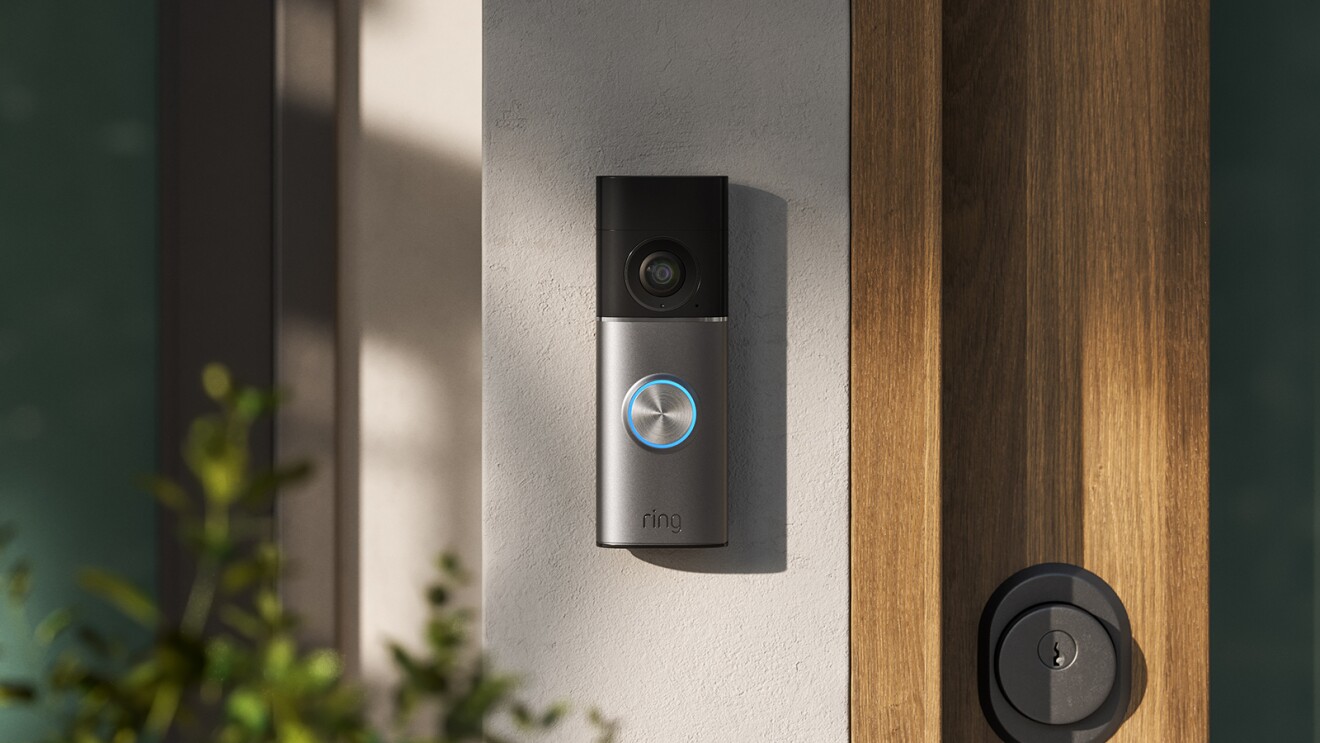
Here’s a use of artificial intelligence that could be handy. Ring is adding AI-generated text descriptions of alerts. If it works well, a glance will be all it takes to tell whether something requires your attention.

Ring founder Jamie Siminoff gave some examples of the new notifications. “A person is walking up the steps with a black dog” could tell you it’s just the dog walker returning. Or, “Two people are peering into a white car in the driveway” could indicate it’s time to call the fuzz.

Siminoff wrote in a press statement that the descriptions are “intentionally concise.” They only describe the main subject that triggered the motion alert and what they’re doing. The Ring founder hinted that AI features were on the way when he returned to Amazon in April. “We’re just scratching the surface of what we can do with AI — and I look forward to digging into this with the team even more,” he said.

Ring

The feature is only available to Ring Home Premium subscribers. That’s the company’s most expensive tier ($20 monthly or $200 annually). Fortunately, you don’t have to buy new hardware to use the feature. It’s available on all currently available Ring doorbells and cameras. Video descriptions are only available in English.

The feature begins rolling out today. Once available, you’ll find the setting to toggle it on in the Ring app.

This article originally appeared on Engadget at https://www.engadget.com/home/smart-home/rings-ai-video-descriptions-tell-you-whos-doing-what-130048789.html?src=rss 

How to watch the Axiom Mission 4 astronauts reach the ISS

A new Dragon spacecraft launched on top of a Falcon 9 rocket at 2:31AM Eastern time on June 25, 2025 to take the four astronauts of Axiom Mission 4 to the International Space Station. It’s the second Axiom mission that’s been sponsored in part by national governments, with the country and space organization of each participant contributing to mission costs. Former NASA astronaut Peggy Whitson serves as the mission commander, while Indian Space Research Organisation astonaut Shubhanshu Shukla is the mission pilot. ESA astronaut Sławosz Uznański-Wiśniewski of Poland and Tibor Kapu of the Hungarian Space Office join them as mission specialists. 

Nothing like a liftoff 🚀@Axiom_Space‘s #Ax4 mission, riding atop a @SpaceX Falcon 9 rocket, launched from @NASAKennedy at 2:31am ET (0631 UTC). pic.twitter.com/RuvVZ9shT6

— NASA (@NASA) June 25, 2025

Axiom Mission 4 marks the return to space of the four aforementioned countries, which had previously participated in Soviet-era Interkosmos missions over 40 years ago. The Dragon capsule carrying the astronauts, which they’ve named “Grace,” is expected to reach and dock with the ISS at 7AM Eastern on June 26. NASA’s live coverage will start at 5AM, and you’ll be able to watch it on the NASA+ website — or you can bookmark this page and return to it later to watch the event below.

The astronauts are expected to live with the other ISS residents for 14 days to conduct various research experiments aboard the orbiting lab. Axiom says the experiments represents 31 countries and cover a wide range of topics across life, biological and material sciences.

This article originally appeared on Engadget at https://www.engadget.com/science/space/how-to-watch-the-axiom-mission-4-astronauts-reach-the-iss-133059974.html?src=rss 

Blink security cameras are up to 62 percent off ahead of Prime Day

If you’re looking to buy some affordable wireless security cameras, it’s the perfect time to grab several from Amazon. Blink devices are on sale right now on the website for up 62 percent off ahead of Prime Day in July. Blink Outdoor 4, the brand’s latest model, will only set you back $45, 55 percent less than its usual price of $100. Instead of just one camera, $100 will now get you a three-pack, which is currently 62 percent off its usual price of $260. If you need even more cameras, you can get a bundle of five Blink Outdoor 4s for only $160 instead of $400 like what it typically costs. 

Blink cameras that come with battery extension packs are on sale, as well. The Blink Outdoor 4 already has a two-year battery life, but the units with extension packs can last for up to four years before their batteries need to be replaced. A two-camera bundle with battery extension packs is on sale for $90, down $125 from $215. Meanwhile, the five-camera bundle with battery packs is down to $210 from $460, though you can also get a single camera and a pack of three. 

The Blink Outdoor 4 cameras can provide live views of the area in 1080p, has infrared night vision and two-way audio. They can also alert you to motion faster than their predecessors. Take note that the cameras come with a free 30-day trial of the Blink Subscription Plus Plan, which adds the ability to notify you about any person the cameras detect, as well as the ability to store footage in the cloud. The subscription costs $10 a month or $100 a year after the trial period ends. 

In addition to pure Blink Outdoor 4 bundles, the sale also includes packs with Blink video doorbells, the Blink Mini and a system hub that extends the range of what the camera can see. 

This article originally appeared on Engadget at https://www.engadget.com/cameras/blink-security-cameras-are-up-to-62-percent-off-ahead-of-prime-day-143043844.html?src=rss 

Google’s Imagen 4 text-to-image model promises ‘significantly improved’ boring images

Google has unveiled its latest text-to-image model Imagen 4 with the usual promise of “significantly improved text rendering” over the previous version, Imagen 3. The company also introduced a new deluxe version called Imagen 4 Ultra designed to follow more precise text prompts if you’re willing to pay extra. Both arrive to a paid preview in the Gemini API and for limited free testing in Google AI Studio.

Google describes the main Imagen 4 model as “your go-to for most tasks” with a price of $.04 per image. Imagen 4 Ultra, meanwhile, is for “when you need your images to precisely follow instructions” with the promise of “strong” output results compared to other image generators like Dall-E and Midjourney. That model boosts the price by 50 percent to $.06 per image.

The company showed off a range of images including a three-panel comic generated by Imagen 4 Ultra showing a small spaceship being attacked by a giant blue… space lizard? with some sound effects like “Crunch!” and inexplicably, “Had!!” The image followed the listed prompt beat for beat and looked okay, not unlike a toon rendering from a 3D app.

Google

Another prompt read “front of a vintage travel postcard for Kyoto: iconic pagoda under cherry blossoms, snow-capped mountains in distance, clear blue sky, vibrant colors.” Imagen 4 output that to a “T,” albeit in a generic style lacking any charm. Another image showed a hiking couple waving from atop a rock and another, a fake “avant garde” fashion shoot. The images were definitely of good quality and followed the text prompts precisely but still looked highly machine generated. 

Imagen 4 is fine and does seem a mild improvement from before, but I’m not exactly wowed by it — particularly compared to the market leaders, Dall-E 3 and Midjourney 7. Plus, following an initial rush of enthusiasm, the public seems to be getting sick of AI art, with the main use case apparently being spammy ads on social media or at the bottom of articles.

Google

This article originally appeared on Engadget at https://www.engadget.com/ai/googles-imagen-4-text-to-image-model-promises-significantly-improved-boring-images-111711517.html?src=rss 

The next season of Diablo IV adds extra challenges to the endgame

Diablo IV has been demonically chugging along since the release of the major Vessel of Hatred expansion last fall. The seasonal model usually brings temporary gameplay updates and storylines, but when Season 9 hits on July 1, it will add a couple of useful permanent changes. First, console players are getting support for mouse and keyboard controls. Second, there will be new additions to Nightmare Dungeons.

The endgame of Diablo IV involves a lot of grinding Nightmare Dungeons, so even with a healthy dose of procedural generation, the landscape of those challenges starts to feel overly familiar. Season 9 will add some new wrinkles to the tile sets. Horadric Strongrooms are micro-dungeons within the Nightmare Dungeon that offer big potential rewards as well as a buff for the remainder of the main dungeon. Escalating Nightmares are a trio of dungeons in increasing challenges, and when tackled at Torment difficulty, they conclude with a riff on the Astaroth boss fight.

It’ll be a while yet before the developers bring another expansion on the scale of Vessel of Hatred, but Blizzard has been providing new twists on the game each season for the players who log hundreds of hours in Diablo IV. The Season 9 permanent additions, which also include some brand new dungeon affixes, could help keep things challenging and interesting for the game’s hardcore fans.

This article originally appeared on Engadget at https://www.engadget.com/gaming/the-next-season-of-diablo-iv-adds-extra-challenges-to-the-endgame-203832761.html?src=rss 

Roland just released a weird little riff on an acoustic handpan

Synthesizer giant Roland just announced a fairly bizarre contraption. The Mood Pan is the company’s digital take on an acoustic handpan. For the uninitiated, a handpan is a version of the steelpan instrument that’s been popular in Trinidad and Tobago since the 1930s. It’s widely considered to be the only truly new acoustic instrument invented in the 20th century.

However, handpans and steelpans take serious skill to play. Roland’s Mood Pan is much easier to play, thanks to clearly visible pads that represent notes. These nine pads can be set to different musical scales, making it impossible to hit a wrong note. The company says that this simpler design requires “no previous musical skills.”

There’s a built-in 2.1 speaker system and a Bluetooth receiver, which lets users stream audio from external sources. The sound engine offers “tranquil tones,” with multiple sound variations and effects.

The Mood Pan allows access to a number of different percussive instruments like the tongue drum, gamelan, crystal bowl and singing bowl, along with unique tunings. It can also emulate stuff like sitars, orchestral strings and synth pads. There’s an affiliated app for changing up sounds and for fine-tuning pad sensitivity.

It’s played with finger taps, just like many of its acoustic cousins. The instrument is small enough to be placed directly on a lap, though also works on a table. Roland claims this is the perfect gadget for “musical exploration, relaxation and meditation.” As for those last two, the Mood Pan can play built-in environmental music and nature sounds. The company says these modes are for “mornings, evenings, relaxing and yoga sessions.”

This being a modern digital instrument, there’s a USB-C MIDI port for triggering sounds on computers or via other gadgets. It’s powered by six AA batteries or via USB-C connection. The instrument is available to order right now, but shipments won’t be going out for a few weeks. The Mood Pan costs $660.

This article originally appeared on Engadget at https://www.engadget.com/general/roland-just-released-a-weird-little-riff-on-an-acoustic-handpan-180051436.html?src=rss 

Judge rules Anthropic’s AI training on copyrighted materials is fair use

Anthropic has received a mixed result in a class action lawsuit brought by a group of authors who claimed the company used their copyrighted creations without permission. On the positive side for the artificial intelligence company, senior district judge William Alsup of the US District Court for the Northern District of California determined that Anthropic’s training of its AI tools on copyrighted works was protected as fair use.

Developing large language models for artificial intelligence has created a copyright law boondoggle as creators attempt to protect their works and tech companies skirt rules or find loopholes to gather more training materials. Alsup’s ruling is one of the first that will likely set the foundation for legal precedents around what AI tools can and cannot do.

Using copyright materials can be deemed fair use if the output is determined to be “transformative,” or not a substitute for the original work. “The technology at issue was among the most transformative many of us will see in our lifetimes,” Alsup wrote.

Despite the fair use designation, the ruling does still provide some recourse for the writers; they can choose to take Anthropic to court for piracy. “Anthropic downloaded over seven million pirated copies of books, paid nothing, and kept these pirated copies in its library even after deciding it would not use them to train its AI (at all or ever again),” Alsup wrote. “Authors argue Anthropic should have paid for these pirated library copies. This order agrees.”

This article originally appeared on Engadget at https://www.engadget.com/ai/judge-rules-anthropics-ai-training-on-copyrighted-materials-is-fair-use-182602056.html?src=rss 

Philips Hue says US prices will go up in July because of tariffs

When Philips Hue’s US prices go up next month, you can officially know who to blame. (Hint: It rhymes with “rump.”) Parent company Signify told Hueblog (via The Verge) that its price increases are “a direct result of tariffs.” See how easy that was, Amazon?

Before that confirmation, the company vaguely referred to an upcoming price increase. “Hurry, prices go up on July 1,” marketing copy from earlier this month stated.

Signify’s statement to Hueblog doesn’t mince words about Trump’s trade war being the culprit. “Signify will increase prices on our Philips Hue portfolio in the US, effective July 1, 2025, as a direct result of tariffs,” it wrote. “We remain committed to providing consumers with high-quality products and features that make smart lighting extraordinary. Signify reserves the right to modify prices based on new or additional tariffs becoming effective in the future.”

We don’t yet know the exact price increases. The company says it will reveal them when they take effect on July 1. But there are some hints. The newly upgraded Hue smart button costs $32 compared to the old model’s $25. If you think that’s because it’s a new version, the product stayed at the same €21.99 as its predecessor in Europe. Up to this point, the company’s US pricing had been around a 1:1 conversion.

This article originally appeared on Engadget at https://www.engadget.com/home/smart-home/philips-hue-says-us-prices-will-go-up-in-july-because-of-tariffs-183434777.html?src=rss 

Generated by Feedzy
Exit mobile version