Apple’s second-gen AirPods Pro drop to a new low of $180 during the Amazon Spring Sale

If you’re one of the holdouts with an iPhone who hasn’t wanted to shell out for AirPods, your time has come. The Amazon Big Spring Sale has brought Apple’s second-generation AirPods Pro down to a new all-time low price. The earbuds are down to $180 from $249 — a 28 percent discount and $10 less than their previously best deal

Apple’s AirPods Pro scored an 88 in our review and hold a spot on our list of best wireless earbuds for good reason. The second-gen earbuds came on the scene in 2022 with updates such as swiping to control volume and richer, consistent sound coming through. 

Then there’s the addition of the H2 chip, which helps with that improved sound quality and boosts the earbud’s active noise cancellation abilities to double that of their predecessor. Battery-wise, the second-gen AirPods Pro lasted about six hours and 15 minutes when we tested it through a mix of calls, transparency mode and ANC. While most of the changes occurred internally, Apple also shrunk the ear tip to give more people a better fit. 

Your Spring Sales Shopping Guide: Spring sales are in the air, headlined by Amazon’s Big Spring sale event. Our expert editors are curating all the best spring sales right here. Follow Engadget to shop the best tech deals from Amazon’s Big Spring Sale, hear from Autoblog’s car experts on the best spring auto deals on Amazon, and find spring sales to shop on AOL, handpicked just for you.

This article originally appeared on Engadget at https://www.engadget.com/apples-second-gen-airpods-pro-drop-to-a-new-low-of-180-during-the-amazon-spring-sale-125120361.html?src=rss 

The Morning After: Our guide to spring cleaning your tech

This spring, clean your gadgets. Clean your tech. Be less gross in 2024. It’s one of my aims. Alongside our anniversary stories this month, we’re also in a spring-cleaning frame of mind. We’re cleaning AirPods and digitally decluttering the PC. (And if you’re physically decluttering, how about making a bit of money simultaneously?)

This week, we explain how to clean all your screens without damaging them. And, if we really stretch the spring-cleaning theme to include hygiene and then stretch again to sleep hygiene, here’s some technology to help you get a better rest, too. 

After all that cleaning.

— Mat Smith

The biggest stories you might have missed

YouTube created the creator economy

Lotus’s secret weapon is EVs with personality

​​Glassdoor reportedly attaches real names to anonymous accounts

​​You can get these reports delivered daily direct to your inbox. Subscribe right here!

Watch the first human Neuralink patient control a computer with his thoughts

He said the surgery was ‘super easy’.

Getty Images

Elon Musk announced the first human patient had received a Neuralink brain implant as part of the company’s first clinical trial earlier this year. And yesterday, the company briefly live streamed a demo on X of 29-year-old Nolan Arbaugh, who is paralyzed from the neck down, demonstrating the implant by moving a cursor around the screen of a laptop and pausing an on-screen music player. Arbaugh said the implant has allowed him to play chess and Civilization VI.

Watch here.

Meta, Microsoft, X, and Match Group aren’t fans of Apple’s third-party payment rules

They filed a petition supporting Epic Games.

All those big names have joined Epic Games in protesting Apple’s decision to charge a fee for iOS payments made outside of the App Store. The company takes up to a 30 percent cut of App Store purchases. When developers process purchases outside of the App Store, Apple will charge a fee of up to 27 percent. That’s really not much different.

The four companies supporting Epic’s petition claim Apple’s fee on external payments effectively maintains the previous rules. “The Apple Plan comports with neither the letter nor the spirit of this Court’s mandate,” their brief states.

Continue reading.

Peacock’s 2024 Paris Olympics coverage includes enhanced multiview options

You’ll be able to stick with an event you’re into.

Peacock will host more than 5,000 hours of live coverage across the two weeks, including each of the 329 medal events. That’s far more than anyone could possibly watch during the Games, so to help you keep track of several events at once, Peacock is offering several multiview options. On TVs, tablets and desktop browsers (but not phones, sadly), you’ll be able to watch four matches at the same time. With the multiview modes, you can move the screens around, choose the audio track you want to listen to and click through to watch an event in full screen. Another feature, Peacock Live Actions, will help you follow the events you’re most interested in, so you can continue watching the sport on screen even after NBC’s broadcast switches elsewhere.

Continue reading.

This article originally appeared on Engadget at https://www.engadget.com/the-morning-after-our-guide-to-spring-cleaning-your-tech-111507476.html?src=rss 

Where to sell your used and unwanted gadgets

If you’ve been following the news here on Engadget, you know there are always new smartphones coming out to outshine your old handset and inspire some real gadget FOMO. But once you’ve upgraded, what do you do with your old phone? If it’s still in good working condition, chances are that someone out there is willing to shell out a few bucks for your castoff. And that goes for so much more than just phones since you can always find somewhere to sell your old laptops, game consoles and other electronics for a pretty penny. Learn about all of the places where you can sell your used gadgets below.

Trade-in sites

If you’re looking for the least amount of hassle and easiest way to get money in hand as soon as possible, there are plenty of sites that automate the trade-in process. You’ll select your device from a list, get a quote within minutes and send the device to the company in return for cash in a matter of days.

Decluttr

Decluttr definitely lives up to its name. Not only can you sell phones from a number of manufacturers, including Apple, Samsung and Google, but the site also takes lots of physical media, including CDs, DVDs, Blu-rays, video games and books. For devices, you’ll be asked to provide a general assessment of its condition before you’re given a quote immediately. Once you complete your order, the site will send you a free shipping label. Decluttr also will accept handsets as old as the iPhone 7, though it’ll offer you only $14 for a 32GB model in good condition.

uSell

uSell operates as a broker, searching other sites for their best offers on a given device and taking care of the rest. Like most buyback sites, it’s big on iPhones, but you can still sell off other manufacturers’ devices; it really depends on who’s buying them at that point. The selection is a bit of a grab bag — newer phones like the Galaxy S22 aren’t listed, though you can get a quote for the iPhone 15 ($672 for an unlocked, “flawless” 64GB model). Once you complete your order the site will send you a free shipping kit to send in your device, and you can get paid for the item via PayPal, Venmo or an old-fashioned check.

ecoATM

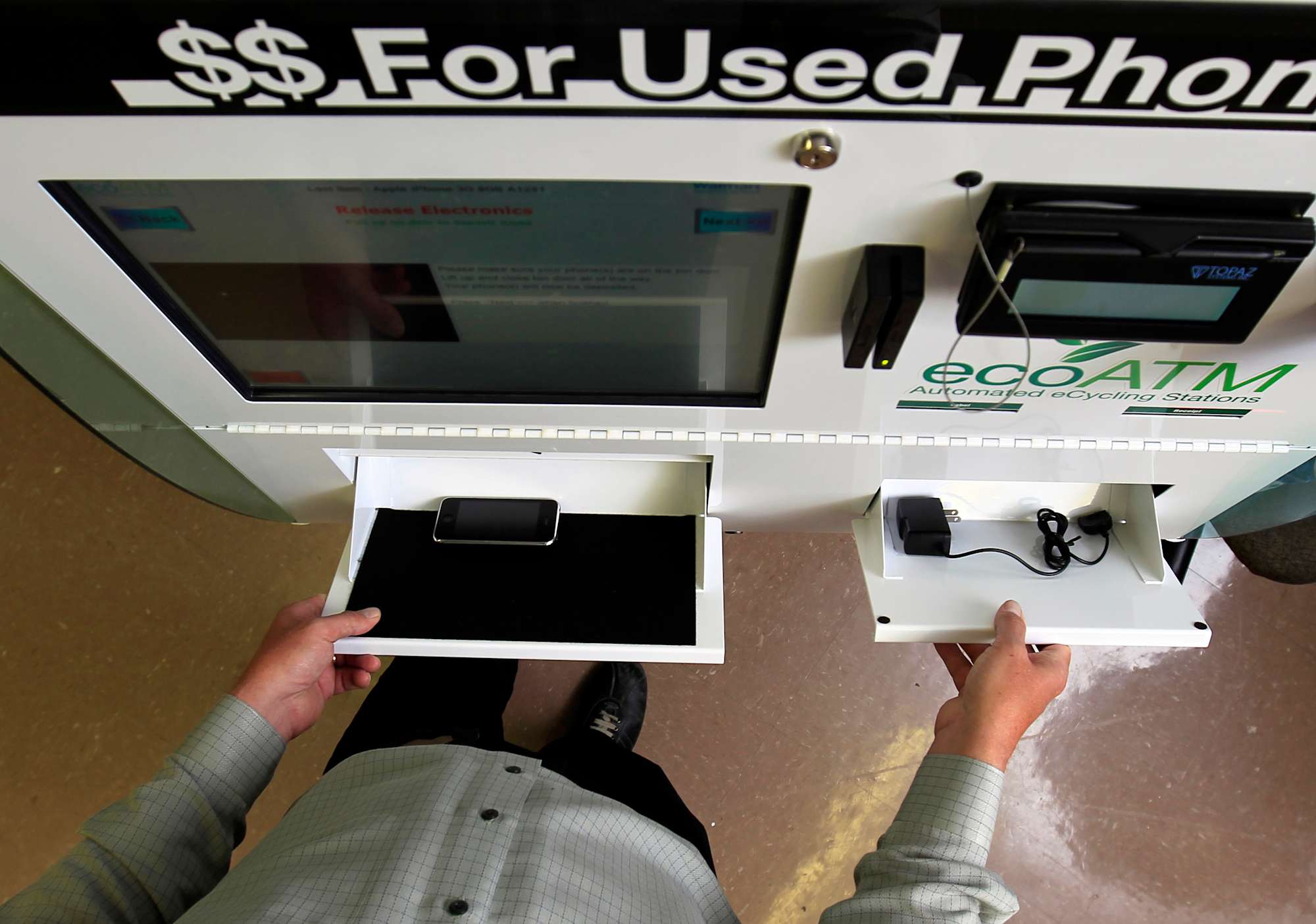
If you don’t want to have to worry about packaging up your old device and mailing it off, or would like to receive your payout right away, there’s always ecoATM. It’s literally all in the name: the company operates automated machines that you place your device into to get it examined, and it pays you out on the spot. It accepts the biggest brands (i.e., Apple, Google and Samsung), along with devices from a wide variety of manufacturers, including LG, Motorola and ZTE. If the machine determines that your device isn’t worth anything at all, you can still use ecoATM to responsibly recycle your old gadget. You’ll find ecoATM kiosks in Walmart and Kroger locations, as well as malls and check-cashing stores across the country.

Amazon

While browsing Amazon listings, it’s likely you’ve come across products marked as “refurbished.” Well, if you’ve ever wondered where those come from, a lot of them likely hail from Amazon’s trade-in program. The company will put its own products, like Kindle ereaders and Fire tablets front and center, but you can also send in phones and gaming products in for an Amazon gift card as well. It’s not great if you want cash, but if you’re looking to upgrade an Amazon device, this option is your best bet, as trading in an older one also nets you a 20 percent discount in addition to the store credit. You’ll need to print out a shipping label, or you can drop off your electronics at select Amazon Locker, Whole Foods or uBreakiFix locations.

Apple

This is a good option if you’re looking to upgrade to a newer Apple device. You can trade in iPhones, iPads, Macs and even Apple Watches. That’s notable as wearables are a category you don’t often see on trade-in sites. Apple will even take your old Android phone if you were thinking of making the switch. The trade-in values are on par with other sites, but you can get a smaller payout in the form of a gift card instead if you’d rather wait before making a new purchase, want to put it toward media purchases or even just use it in an Apple Store. The latter, by the way, also accepts trade-ins in case you’re not comfortable shipping your old but still expensive device.

It’sWorthMore

The nice thing about It’sWorthMore is that its on-site forms handle a larger variety of gadgets than other sites, incorporating companies such as Microsoft, AMD and even GoPro in addition to standards like Apple, Samsung and Google. You’ll answer a few standard questions about your device’s condition and whether you still have the original box — obviously, the more you’ve kept from the original packaging, the better. You’ll then get a ballpark estimate of its worth and a prepaid shipping label to print out. Once your device has been received, you’ll generally get the assessment and payment via check, PayPal, Zelle or a gift card in under 10 days.

BuyBackWorld

The appeal of BuyBackWorld is that device assessment is a streamlined process: Instead of having to answer a barrage of detailed questions for your device you give it a general assessment and let the site handle the rest. Just like with It’sWorthMore, BuyBackWorld will provide a printable shipping label in your confirmation email but, if you don’t have a printer or boxes to pack your device up, you can always have the site send you a free shipping kit, which can handle everything the site takes except desktop computers.

GadgetGone

If you’ve read through the other site descriptions, GadgetGone’s modus operandi should be familiar: To sell a product, you’ll have to answer a few questions about what type of device you have and what condition it’s in, after which the site will generate a prepaid shipping label. At least here you can find brands like OnePlus included among the options, and you can also sell MacBooks and Mac minis here. You can get paid a number of ways, too, including PayPal, virtual VISA card, Amazon and Target gift cards or just good, old-fashioned bank transfer.

Store trade-ins

Sometimes you need your money right now, or just don’t want to trust your device to the vagaries of various shipping companies. There are a few nationwide retailers that accept trade-ins for cash or store credit. Additionally, wireless carriers like Verizon, T-Mobile, and AT&T will all give you credit toward a new phone.

Best Buy

Best Buy also offers trade-ins both by mail and in-store — with more than 1,000 locations, this might be extremely convenient for you. You fill out the form online and bring that to customer service. It’s easy, but there’s one big downside: You can get your payout only via a Best Buy gift card. This is great if you spend a lot of money with them anyway, but not ideal if you need cash.

Target

Target isn’t as well known for its trade-in program, but it’s certainly a welcomed option. With over 1,900 locations across the US, it’s easy enough to bring your unwanted phones, tablets, game consoles, smart speakers and video games to a nearby Target’s electronics department for a quote. They’ll even package it up and ship it off to the processing facility for you. You’ll get a Target gift card via email within a week. If you can’t make it to a store, Target also offers a mail-in option.

GameStop

GameStop is infamous for buying games back at ridiculously low prices and flipping them at near retail, but don’t let that stop you from making some easy cash when you need to quickly clear your closet of old electronics and games. And yes, I said cash: GameStop offers store credit, a Visa prepaid card or actual money if you want to take your bounty elsewhere. For example, you can trade in Super Mario Bros. Wonder for the Switch and get $35 in store credit or $24.50 cash, which isn’t bad when new copies are going for $50 on Amazon. GameStop also accepts phones, tablets and Apple Watches, though the prices aren’t going to match what you’d get from an online trade-in site.

Consumer to consumer

Sometimes you prefer to cut out the middleman and get a bit more personal — a transaction where you’re selling your device directly to another person instead of letting a faceless site flip it for you as a “refurbished” unit. In those cases, you want a site that’s more user-to-user, though a few will still automate certain bits to make your sale as smooth and secure as possible.

Swappa

Swappa is a marketplace site, which means sellers can set their own price. So if you’re getting rid of a newer phone, this is probably the best way to go — the iPhone 14 fetches around $533, for example. That’s a huge improvement over what you’d get selling through a site like Decluttr, which is offering only $267 for a 128GB unit.

Amazon

When shopping on Amazon, you’ve probably been tempted by some of those marketplace deals in the past and, chances are, if you list an item on there, someone will give your old device a look. Since almost everyone on earth seems to have an Amazon account, your potential customer base is huge, and it costs only $0.99, plus a percentage based on category, to sell an item through the site. The downsides are that Amazon isn’t really optimized for individual sales; you’ll be competing with wholesale companies and even bots that will tweak the price of a product automatically in response to the competition.

eBay

eBay is sort of the Wild West of sales sites, but the biggest advantage is that you can sell anything there and hopefully find a buyer, regardless of how old a product is. Even so, the site has come a long way in the past decade or so, adding structured categories that can help lead customers to your product. For phones, you can search by network, color or storage capacity, and even filter for features like 4K video or fingerprint sensors.

In the end, it still works as it always did: You list a product and set an end date for the listing with a minimum price, or just set a “Buy It Now” price if you don’t want to wait to see how an auction turns out. Chances are you already have an eBay account with a feedback score, so there’s no extra setup required on your part. Your first 250 listings are free every month, and you’ll pay up to 15 percent of the purchase price only if an item sells. The biggest downside is that you’re competing with a lot more sellers, and chances are there’s always someone willing to undercut you on price.

Cash-back comparison

Ultimately, the site you go with should be whatever’s most useful and convenient, but if you just care about how much money you’ll get, we’ve priced out a few recent flagship handsets just to give you an idea of what each site will pay out.

All phone prices are for the lowest storage capacity, usually 128GB, and for devices that are in generally good condition with no cracks or scratches. The prices are for the unlocked models when available, or the carrier where it’s being traded. These prices were valid the day this post was written, but they fluctuate daily or, in the case of sites like Amazon and eBay, hourly.

Apple iPhone 13 Pro Max

Samsung Galaxy S22 Ultra

Google Pixel 7

Declutter

$361

$268

$153

uSell

$455

N/A

N/A

ecoATM

$275

$185

$55

Verizon

$364

$223

$127

T-Mobile

$315

$210

$115

AT&T

$330

$230

$130

Best Buy

$340

$235

$115

GameStop

$498 credit / $349 cash

$181 credit / $127 cash

N/A

Swappa

$664

$539

$293

Amazon

$578

$460

$229

eBay

$350

$340

$214

BuyBackWorld

$375

$275

$150

It’sWorthMore

$446

$382

$165

GadgetGone

$476

$411

$218

If you were looking to sell some games, we’ve also got a shorter list, because not every site accepts trade-ins. GameStop will offer you more money than what’s listed below if you’re a member of its Elite or Elite Pro programs.

The Legend of Zelda: Tears of the Kingdom (Switch)

Final Fantasy XVI (PS5)

Diablo IV (Xbox)

Decluttr

$20

$16

$18

GameStop

$30 credit / $21 cash

$17 credit / $12 cash

$12 credit / $8 cash

Amazon

$10 trade-in / $45 marketplace

$34 marketplace

$34 marketplace

eBay

$12

$10

$15

Once you’ve picked a site and listed your item, there are a few important things to remember before you ship off your device. At the top of the list is to do a full factory reset before disposing of a phone or laptop (or any other device) containing personal data. That also means turning off “Find My iPhone” and the activation lock on iOS devices. See if you can unlock the phone, too; you’ll actually get more money selling it carrier-free. And finally, make sure you’ve backed up any important data you may have, like contact info, game saves and, of course, photos. Cash is great, but it won’t save your memories.

Images: Mike Blake / Reuters (ecoATM); Alamy (Gamestop); Getty Images for eBay (eBay)

This article originally appeared on Engadget at https://www.engadget.com/where-to-sell-used-electronics.html?src=rss 

LG’s CineBeam Q 4K projector with a crank-like handle will cost you $1,299

At the Consumer Electronics Show earlier this year, LG officially unveiled a curious little box-like projector that comes with a handle that kinda looked like a crank. Well that model, called the CineBeam Q, is now available for pre-order for $1,299 and will come with some extras and freebies if you make your purchase on or before April 7. LG called the CineBeam Q “one of the smallest projectors available” and one that was designed to be portable so that you could easily take it outdoors or indoors, depending on where you want to hold your projector watch party. As long as there’s a power source, of course, since it does need to be plugged in. 

Its display has a 4K UHD resolution, can go as big as 120 inches and has an RGB laser light source. The model comes with LG’s webOS software, which means you can easily stream movies and shows from Netflix, YouTube, Apple TV, Prime Video and Disney+. You can also use it to play media from your other devices, since it’s compatible with Apple AirPlay 2 and screen share, as well as Miracast. And when you’re not watching anything, you can activate its Light Drawing function to project images on your walls. 

If you pre-order from LG’s website, you’ll get a CineBeam Q Case and the company’s new $200 XBOOM XO2T wireless speaker along with your projector. Just make sure you also add the speaker to your cart before you check out. You can also get a $200 Virtual Mastercard Prepaid Card, though you must submit a claim for it by May 31. LG will start shipping pre-orders for the CineBeam Q on April 8. 

This article originally appeared on Engadget at https://www.engadget.com/lgs-cinebeam-q-4k-projector-with-a-crank-like-handle-will-cost-you-1299-090018016.html?src=rss 

BMW’s Vision Neue Klasse X concept gives us a peek at BMW’s future SUV

Last year, at the IAA show in Berlin, BMW gave us a first look at what it calls the Neue Klasse, a “new class” of sedan that would not only drive BMW into its electric future, but also create a platform with greater efficiency and driving dynamics than we’ve yet seen from the German brand.

Now, the company is showing us an evolution of that concept. A taller one at that, to see just how that same idea for future electrification would apply to an SUV. In keeping with BMW’s naming conventions, this one’s called the Neue Klasse X. The styling is somewhat predictable in that regard, since it is a taller version of what we saw in the Neue Klasse sedan.

What’s more interesting is what we can see on the inside, with a more-functional interior that gives us a look at BMW’s Panoramic Vision, a heads-up display that spans the entire windscreen. That, plus cool ambient lighting and other interesting features, including the large language model voice assistant they demoed at CES. We’re about a year away from seeing this at dealerships, but you can take an early sneak peek with us from a preview event right now.

This article originally appeared on Engadget at https://www.engadget.com/bmws-vision-neue-klasse-x-concept-gives-us-a-peek-at-bmws-future-suv-081517652.html?src=rss 

How to clean all the screens in your home

Whether you’re talking about your aging laptop’s screen or that brand new OLED TV you just bought, all of them will get dusty and dirty over time. You may be hesitant to give the screens in your home a thorough cleaning, and the fact that there are so many products out there that claim to do it best doesn’t help. But we’ve found that the best route is actually the simplest. If you want to refresh all of the screens in your home, we’ll outline the best methods that will help you do so properly without damaging any of your gear.

How not to clean your screens

Photo by Igor Bonifacic / Engadget

Before we get to how to clean a screen, there are a few ways you don’t want to go about the process. The first, and most important, is that you don’t want to clean a display using substances like isopropyl alcohol or Windex. Alcohol- and ammonia-based cleaners can damage your screen’s anti-reflective coating. Using those substances repeatedly can lead to clouding and the coating becoming uneven.

Companies like Whoosh make cleaning agents that won’t damage your screen, but in my experience, you’re best off using distilled water. It’s more affordable than a dedicated cleaning agent and more versatile too since you can use it on a variety of surfaces. It also won’t leave behind any residue on your display, which is something I’ve seen products like Whoosh do occasionally. You can buy distilled water at a grocery store or make it yourself with some simple cookware.

In a pinch, you can use tap water, but we recommend against it. Depending on the hardness of the water in your area and how your municipality treats it, there may be minerals and chemicals that will again either leave behind residue or, worse yet, damage your display’s coating.

Once you have some distilled water, you’ll want a separate spray bottle. One option is to reuse one you already have at home, but if you don’t have a spare, Muji makes these handy travel bottles in 100ml, 50ml and 30ml sizes that are perfect for the task, and you can find similar bottles on Amazon.

Next, be mindful of what you use to wipe your screen. You want to avoid using paper towel, dish rags and anything else that may have an abrasive surface that will damage the coating on your screen. You can use the sleeve of an old but clean t-shirt. That said, you’ll get the best results using microfiber cloths. That’s because the fabric they’re made from is extremely soft and good at attracting dust. We suggest buying a pack of them so that you always have a clean one on hand. The last thing you want to do is use a dirty one and transfer any dirt and grime onto your display.

Lastly, avoid spraying any liquid directly on a display. You’ll have a lot more control if you deposit it on your microfiber cloth and it’s much easier to avoid any of it making its way into the more sensitive parts of the display.

How to clean your screens

Photo by Igor Bonifacic / Engadget

With all that out of the way, the actual process of cleaning a display is straightforward. If you’re only dealing with some dust, use a can of compressed air or an air blower to dislodge it. You can also turn to a dry microfiber cloth.

For anything more than that, dampen your microfiber cloth with a small amount of distilled water and then gently wipe the display. Once you’ve gone over the entire surface, turn over the cloth and use the dry side to remove any excess water. At this stage, avoid buffing the screen or using excessive pressure. You don’t want to work any particles into the surface of the screen.

That’s it. You should have a clean display now. Obviously, it will take longer to clean a bigger screen, but you can put to use the tips mentioned for all types of displays, including TVs, monitors and glass smartphone displays.

This article originally appeared on Engadget at https://www.engadget.com/how-to-clean-a-tv-screen-and-all-the-other-screens-in-your-home-150049478.html?src=rss 

House passes bill that would bar data brokers from selling Americans’ personal information to ‘adversary’ countries

The House of Representatives approved a measure targeting data brokers’ ability to sell Americans’ personal data to “adversary” countries, like Russia, China, Iran and North Korea. The Protecting Americans’ Data from Foreign Adversaries Act passed with a unanimous 414 – 0 vote.

The bill, which was introduced alongside a measure that could force a ban or sale of TikTok, would prohibit data brokers from selling Americans’ “sensitive” data to people or entities in “adversary” countries. Much like a recent executive order from President Joe Biden targeting data brokers, the bill specifically covers geolocation, financial, health, and biometric data, as well as other private information like text logs and phone call history.

If passed — the bill will need Senate approval before landing on Biden’s desk — it would represent a significant check on the relatively unregulated data broker industry. US officials have previously warned that China and other geopolitical rivals of the United States have already acquired vast troves of Americans’ information from brokers and privacy advocates have long urged lawmakers to regulate the multibillion-dollar industry.

The bill is the second major piece of bipartisan legislation to come out of the House Energy and Commerce this month. The committee previously introduced the “Protecting Americans from Foreign Adversary Controlled Applications Act,” which would require TikTok to divest itself from parent company ByteDance or face a ban in the US. In a statement, Representatives Frank Pallone and Cathy McMorris Rodgers, said that the latest bill “builds” on their work to pass the measure targeting TikTok. “Today’s overwhelming vote sends a clear message that we will not allow our adversaries to undermine American national security and individual privacy by purchasing people’s personally identifiable sensitive information from data brokers,” they said.

This article originally appeared on Engadget at https://www.engadget.com/house-passes-bill-that-would-bar-data-brokers-from-selling-americans-personal-information-to-adversary-countries-004735748.html?src=rss 

Here’s a video of the first human Neuralink patient controlling a computer with his thoughts

Earlier this year, Elon Musk announced that the first human patient had received a Neuralink brain implant as part of the company’s first clinical trial. Now, the company has shared a brief public demo of the brain-computer interface (BCI) in action.

The company briefly live streamed a demo on X with a 29-year-old man named Nolan Arbaugh, who said he was paralyzed from the neck down after a diving accident eight years ago. In the video, Arbaugh explains that after receiving the implant — he said the surgery was “super easy” — he had to learn how to differentiate “imagined movement versus attempted movement” in order to learn to control a cursor on a screen.

“A lot of what we started out with was attempting to move,” Arbaugh said. “I would attempt to move, say, my right hand left, right forward, back. And from there, I think it just became intuitive for me to start imagining the cursor moving.”

https://t.co/OMIeGGjYtG

— Neuralink (@neuralink) March 20, 2024

In the clip, which also features a Neuralink engineer, Arbaugh demonstrates the BCI by moving a cursor around the screen of a laptop, and pausing an on-screen music player. He said the implant has allowed him to play chess and Civilization VI. He noted that he has previously used other assistive devices like mouthsticks, but that the Neuralink implant has enabled longer gaming sessions, as well as online play. He said that he can get about eight hours of use before the implant needs to recharge (it’s not clear how charging works).

Arbaugh became the first human patient to receive the implant in January after Neuralink began recruiting patients last year. The company previously tested the BCI in animals, including chimps, and some of its animal testing practices have been the subject of federal investigations.

In the video, Arbaugh indicated his experience with the brain implant has so far been positive, despite some initial issues. “It’s not perfect, I would say that we have run into some issues,” he said. “I don’t want people to think that this is the end of the journey. There’s a lot of work to be done, but it has already changed my life.”

This article originally appeared on Engadget at https://www.engadget.com/heres-a-video-of-the-first-human-neuralink-patient-controlling-a-computer-with-his-thoughts-235659486.html?src=rss 

The EPA reveals final auto industry regulations to try to keep the world habitable

The Environmental Protection Agency (EPA) unveiled its final pollution emissions standards for the auto industry on Wednesday. The regulations, which include a looser timeframe than those proposed last year, mandate that by 2032, most new passenger car and light truck sales in the US must be electric or hybrid.

Earth is on a disastrous trajectory with climate change, and no amount of baseless conspiracy theories or talking points from the oil and gas industry, Donald Trump or anyone else will change that. Only phasing out fossil fuels and emissions will beat back its worst effects. The Biden Administration’s EPA is trying to do that — while throwing a bone to stakeholders like unions and automakers to navigate the landmines of today’s political realities.

The final rules present a timeline to wind down gas-powered vehicle purchases, making most US auto sales fully electric, hybrid, plug-in hybrid or advanced gasoline by 2032. The transition begins in 2027 but moderates the pace until after 2030. That’s a key change from last April’s proposed standards, which called for EVs to make up two-thirds of vehicle sales by 2032.

The shift was an election-year compromise for Biden, who has to balance the crucial battle against climate change with 2024 auto union endorsements. Labor unions had pushed for the more relaxed pace out of fears that a more aggressive transition, like the EPA proposed last year, would lead to job losses. EVs typically require fewer assembly workers than traditional gas-powered vehicles.

Last year, United Auto Workers (UAW) President Shawn Fain withheld support for Biden’s reelection due to concerns about the EV transition. But (perhaps after hearing assurances about the revised rules) the UAW endorsed his reelection bid in January.

“The EPA has made significant progress on its final greenhouse gas emissions rule for light-duty vehicles,” the UAW wrote in a statement about the new rules published by the EPA. “By taking seriously the concerns of workers and communities, the EPA has come a long way to create a more feasible emissions rule that protects workers building ICE vehicles, while providing a path forward for automakers to implement the full range of automotive technologies to reduce emissions.”

Contrary to what online misinformation or your uncle may tell you, the rules — aimed at the auto industry and not consumers — don’t make gas-powered cars and trucks illegal. Instead, they require automakers to meet specific emissions standards throughout their product lines. The rules apply to new vehicle sales, not used ones.

The EPA says the final rule will lead to $99 billion in benefits and save the average American driver $6,000 in fuel and maintenance over the life of their vehicles. Other advantages include avoiding 7.2 billion additional tons of CO2 emissions through 2055 and offering “nearly $100 billion of annual net benefits to society.” The reduction in fine particulate matter and ozone will allegedly prevent up to 2,500 premature deaths in 2055 while reducing associated health problems like heart attacks, asthma and other respiratory illnesses.

“Three years ago, I set an ambitious target: that half of all new cars and trucks sold in 2030 would be zero-emission,” President Biden wrote in a statement supplied by The White House to Engadget. “I brought together American automakers. I brought together American autoworkers. Together, we’ve made historic progress. Hundreds of new expanded factories across the country. Hundreds of billions in private investment and thousands of good-paying union jobs. And we’ll meet my goal for 2030 and race forward in the years ahead. Today, we’re setting new pollution standards for cars and trucks. U.S. workers will lead the world on autos making clean cars and trucks, each stamped ‘Made in America.’”

This article originally appeared on Engadget at https://www.engadget.com/the-epa-reveals-final-auto-industry-regulations-to-try-to-keep-the-world-habitable-195612588.html?src=rss 

Meta, Microsoft, X and Match Group come out swinging against Apple’s third-party payment rules

Several notable names have joined Epic Games in taking a stance against Apple’s decision to charge a fee for iOS payments made outside of the App Store. Meta, Microsoft, X and Match Group filed an amicus brief in the case, as The Wall Street Journal reports. That lends some heavyweight backing to Epic’s cause.

Apple was forced to enable third-party payments on iOS due to the European Union’s Digital Markets Act (DMA) and a court ruling in the US. It also has to allow alternative app marketplaces on iOS in the EU. The company takes up to a 30 percent cut of App Store purchases. Perhaps fearing that it was about to lose out on a significant chunk of commission, Apple said it would charge a fee of up to 27 percent when developers process purchases outside of the App Store.

Epic this month filed a petition asking District Judge Yvonne Gonzalez Rogers to enforce a permanent injunction she issued against Apple in 2021 as part of her ruling in the case between the two companies. The decision compelled Apple to allow developers to direct users to alternative payment systems.

Most of Rogers’ ruling was in Apple’s favor, however, and both companies appealed the decision all the way up to the Supreme Court. However, in January, the highest court in the US declined to hear the appeals. That means Rogers’ permanent injunction against Apple stood, but Epic was not happy about the way Apple implemented the third-party payment changes.

The four companies supporting Epic’s petition claim that the fee Apple is charging on external payments effectively leaves the previous rules in place. “The Apple Plan comports with neither the letter nor the spirit of this Court’s mandate,” their brief states.

As X put it, the 27 percent fee doesn’t give developers much incentive to link to external payment methods. Microsoft, which has been working on its own mobile game store, noted that Apple’s latest policy limits its ability to offer users subscriptions and discounts. Match Group argued that Apple’s decision will affect many developers and users, and that it stymies the court’s attempt to offer consumers competition on pricing.

Meta, meanwhile, charges more for its ad-free plans and boosted posts on its iOS apps than it does on the web. (The ad-free subscription is also more expensive in the company’s Android apps, as Google takes a cut of in-app payments too). Meta states in the amicus brief that it ought to be able to direct users to other payment options for boosted posts.

Apple claims to have complied with the court order. According to the Journal, the company (which is reportedly facing a Justice Department antitrust case) says its current external link policies are important to protect user privacy and security. Apple has also been dinged over its compliance with the DMA, with critics suggesting the company might be adhering to the letter of the law, but not its spirit. 

For what it’s worth, Meta, Microsoft, X and Match Group filed their petition one day after the EU’s antitrust chief warned Apple over new fees it’s charging developers (and Meta over its ad-free subscription). Margrethe Vestager told Reuters that feedback from developers would play an important factor in whether the bloc investages Apple, Meta or any other company subject to the DMA’s rules. She noted that she had received “quite a lot” of comments from third parties.

Meanwhile, Epic is gearing up to debut its game store on both iOS and Android later this year. The company said at the Game Developer Conference that the store would be cross-platform between mobile, PC and macOS. The company plans to charge developers of mobile games the same 12 percent cut it takes from PC game sales.

This article originally appeared on Engadget at https://www.engadget.com/meta-microsoft-x-and-match-group-come-out-swinging-against-apples-third-party-payment-rules-200705867.html?src=rss 

Generated by Feedzy
Exit mobile version