ASUS Zenbook Duo (2026) review: Two screens really are better than one

It takes time for novel designs to catch on. But even so, I am still wondering why the Zenbook Duo hasn’t had a bigger impact on the market after ASUS released its first true dual-screen laptop two years ago. Notebooks like these provide the kind of screen space you’d typically only get from a dual monitor setup, but in a much more compact form factor that you can easily take on the road. It could be that people were wary of an unfamiliar design, shorter battery life or buying a first-gen product — all of which are understandable concerns. However, now that ASUS has given the ZenBook Duo a total redesign for 2026, the company has addressed practically all of those barriers to entry while making it an even more convincing machine for anyone who could use more display space. Which, in my experience, is pretty much everyone.

Editor’s note: The 2026 ASUS Zenbook Duo is expected to be available for pre-order sometime in late February, with general availability slated for March.

Design

For the new model, ASUS didn’t mess with the laptop’s basic layout too much. Instead, the company polished and tightened everything up, resulting in a system that weighs about the same (3.6 pounds) while reducing its overall size (12.1 x 8.2 x 0.77 to 0.92 inches) by five percent. Critically, you still get a built-in kickstand on the bottom and a detachable keyboard that you move wherever you want. There’s also a decent number of ports, including two USB-C with Thunderbolt 4, one USB-A 3.2 jack, HDMI 2.1 and a combo audio port. That said, I do wish ASUS had found room for an SD card reader of some kind, though given the Zenbook Duo’s unique design, I get why that didn’t make it. 

The Zenbook Duo’s detachable keyboard gives users a ton of flexibility when it comes to utilizing both of the laptop’s displays.

Sam Rutherford for Engadget

One of the Zenbook Duo’s most important design upgrades is a new “hideaway” hinge that reduces the gap between the laptop’s two screens. Not only does this make the laptop easier and more pleasant to use in dual-screen mode, it also allows the entire system to lay flat on a table, which is nice for drawing or sharing your screen with someone sitting opposite you. Unfortunately, while my review unit didn’t come with one, ASUS says its forthcoming Pen 3.0 will come bundled with the Zenbook Duo in the US, so you won’t need to pay extra for it.

Another small but appreciated improvement is the new pogo pins below the lower display, which provides a more secure and reliable way of keeping the laptop’s detachable keyboard topped up. In my experience, even after running multiple rundown tests that completely drained the Duo’s battery, I never had to charge up the keyboard on its own. It was always smart enough to sip electricity from the main system in the background, though it also has a built-in USB-C port for power just in case. On the flipside, if you’re not scared of typing on glass, you can still use the lower screen as a keyboard and touchpad, or as a place to display widgets for news, the weather, performance and more. 

Displays

As someone who loves a desktop with dual monitors, I can’t overstate how nice it is to have similar built-in functionality on a laptop.

Sam Rutherford for Engadget

The standout feature on the Zenbook Duo continues to be its dual displays, and now for 2026, they look better than ever. Both OLED panels have a 144Hz refresh rate with a 2,880 x 1,800 resolution while also covering 100 percent of the DCI-P3 spectrum. And while its nominal brightness of 500 nits for SDR content is just OK, ASUS makes up for that with peaks of up to 1,000 nits in HDR. And to make both screens even more enjoyable, ASUS managed to shrink the size of their bezels down to just 8.28mm. That’s a reduction of 70 percent compared to the previous model, so now there’s even less getting in the way of you utilizing these screens to their fullest.

Performance

The Zenbook Duo can be configured with a range of new Intel Core Ultra 7 and Core Ultra 9 processors, including the X9 388H chip used on our review unit. For general use and productivity, the laptop is super smooth and responsive, though that shouldn’t be a surprise coming from Intel’s latest top-of-the-line mobile CPU. However, for those seeking max performance, some of the benchmark numbers aren’t quite as impressive as you might expect. That’s because ASUS has limited the Duo’s TDP (thermal design power) to 45 watts — which is shy of the chip’s 80-watt turbo power limit.

The kickstand in back adds a bit a bulk, but it’s better than not having one at all like with Lenovo’s Yoga Book.

Sam Rutherford for Engadget

In PCMark 10, the Zenbook Duo only managed a score of 7,153 compared to 9,651 from a Dell XPS 14, despite the latter having a lower-tier Intel Core Ultra X7 358H processor. That said, in other tests like Geekbench 6, the Duo had no trouble staying on top with a multicore score of 17,095 versus 9,651 for the Dell. 

Another pleasant surprise is that because the Duo’s chip comes with Intel’s upgraded Arc B390 integrated GPU, this thing has plenty of oomph to game on, let alone edit videos or other similar tasks. In Elden Ring at 1,920 x 1,200, the Zenbook maintained a relatively stable framerate between 55 and 60 fps on high settings, which is great considering this thing doesn’t have discrete graphics. This means as long as you don’t mind fiddling with game options a bit, you should be able to play newer AAA games without too much trouble. 

Battery life

The left side of the Zenbook Duo features a full-size HDMI connector along with a USB-C port, plus a backup USB-C jack for charging the detachable keyboard.

Sam Rutherford for Engadget

You’d think a laptop with two displays would be super power hungry. However, by increasing the capacity of its cell from 75WHrs to 99WHrs, ASUS has made the Zenbook Duo’s endurance (or lack thereof) a complete non-issue. On PCMark 10’s Modern Office rundown test, the laptop lasted 18 hours and 33 minutes in single-screen mode. Granted, that’s nearly four hours less than what we got from MSI’s Prestige 14 Flip AI+, but considering that’s the longest-lasting notebook we’ve ever tested, I’m not bothered. When compared to ASUS’ own Zenbook A14 (18:16), things are basically a wash, which I think is a win for the Duo, as the A14 is meant to be an ultralight system with an emphasis on portability and longevity. 

Obviously, battery life takes a hit when you’re using both displays. However, when I re-ran our battery test with its two displays turned on, the Duo still impressed with a time of 14:23. This is more than enough to give you the confidence to set this thing up in dual-screen mode even when an outlet isn’t close at hand. Thankfully, for times when you do need a power adapter, the charging brick on ASUS’ cable is rather compact, so it’s not a chore to lug it around. 

Wrap-up

The Zenbook Duo’s battery life is good enough you won’t always need its power brick. Thankfully, when you do, ASUS’ 100-watt adapter is relatively compact.

Sam Rutherford for Engadget

I’m a believer that one day people will eventually embrace typing on screens with laptops just like they have for smartphones. However, even if you’re not willing to make that jump just yet, the Zenbook Duo still has all of its bases covered. Its detachable keyboard gives you a pleasant experience while freeing up the bottom of the notebook to be a second display. This allows you to have something similar to a traditional dual-monitor desktop but in a chassis that you can easily take on the road without any major compromises. 

The 2026 Zenbook Duo combines a compact design with strong performance, plenty of ports and surprisingly good battery life. Sure, it’s a touch heavier than a typical 14-inch laptop, but its two screens more than make up for a little added weight and thickness. That leaves price as the Duo’s remaining drawback, and starting at $2,100 (or $2,300 as reviewed), it certainly isn’t cheap. 

However, when you consider that a similarly equipped rival like a Dell XPS 14 costs just $50 less for a single screen, that price difference is rather negligible. Alternatively, if you opt for a more affordable ultraportable and then tack on a decent third-party portable monitor, you’re still likely looking at a package that costs between $1,500 and $1,800. Plus, that setup is significantly bulkier and more annoying to carry around. So while the Zenbook Duo might be an unconventional pick right now, it has all the tools to deliver unmatched portable productivity and I don’t think it will be too much longer until the masses catch on.

This article originally appeared on Engadget at https://www.engadget.com/computing/laptops/asus-zenbook-duo-2026-review-two-screens-really-are-better-than-one-140000982.html?src=rss 

Spotify now has more than 750 million monthly users

Spotify announced Tuesday that it hit 751 million total monthly active users (MAUs) for quarter-four of 2025. That record-high is an 11 percent jump from the year before and a significant bump from the third quarter’s 713 million MAUs. 

The quarterly earnings report also showed a 10 percent jump year-over-year in Premium subscribers, from 263 million to 290 million. Europe makes up the greatest number of the Swedish company’s premium subscribers (36 percent), with North America coming second at 25 percent. 

Spotify contributes a few factors to its growth, including AI. “We consider ourselves the R&D department for the music industry. Our job is to understand new technologies quickly and capture their potential, which we’ve done time and again,” Gustav Söderström, Co-CEO of Spotify, said in a statement. The entire industry stands to benefit from this [AI] paradigm shift but we believe those who embrace this change and move fast, will benefit the most.” In late 2025, Spotify announced it would get rid of some of the AI “slop” on its platform and have “artist-first AI music products” — though the specifics were very vague. 

The company also claims that December’s Spotify Wrapped was bigger than ever, with over 300 million engaged users and 630 million shares across 56 languages. 

This article originally appeared on Engadget at https://www.engadget.com/entertainment/music/spotify-now-has-more-than-750-million-monthly-users-124103630.html?src=rss 

Toyota and Pony.ai start mass producing robotaxis for China

The first Pony.ai bZ4X robotaxi, made in partnership with Toyota, has just rolled off the production line and is ready to be deployed. It’s the first of many, if the companies stick to their plan, which is to produce more than 1,000 bZ4X robotaxis this year. The bZ4X is one of the three autonomous vehicle models Pony.ai intends to use for commercial services in Tier 1 Chinese cities, including Beijing and Shanghai. The other two vehicles are already being used for Pony.ai’s ride-hailing service, while the bZ4X robotaxis will be gradually integrated into its fleet. Pony.ai’s goal is to operate 3,000 vehicles by the end of 2026.

Toyota introduced the new bZ4X last year, and the non-autonomous versions are available for purchase to the public. Pony.ai’s version comes equipped with the company’s Gen-7 autonomous driving system, which features Bluetooth-based automatic vehicle unlocking and in-cabin voice interaction. It also comes integrated with online music services and braking patterns that can help minimize motion sickness for passengers. Pony.ai was founded in 2016 and has been testing and operating self-driving vehicles since then. It received permission from Beijing to offer self-driving car services to the general public back in 2022. While It’s a Chinese company, it has headquarters in Silicon Valley and filed for an IPO in the US in 2024.

This article originally appeared on Engadget at https://www.engadget.com/transportation/evs/toyota-and-ponyai-start-mass-producing-robotaxis-for-china-130833065.html?src=rss 

UK takes ‘light touch’ approach to regulating Apple and Google’s app stores

Last year the UK declared that Apple and Google were a duopoly with “strategic market status” in the mobile platforms market, making them subject to special regulations. However, the UK’s Competition and Markets Authority (CMA) will not regulate Google and Apple’s app stores like the EU has done. Rather, government plans to enforce its own digital markets rules in a “pragmatic” way by accepting “commitments” from Apple and Google in areas like app rankings, the CMA announced

Google and Apple agreed to work with the CMA to address concerns on the following matters: app review, app ranking, use of data and interoperability process. Effectively, regulators require the tech giants to treat developers fairly, particularly when they compete against Google and Apple’s own apps. However, the UK’s rules are more like suggestions and “not legally binding in any case,” former CMA director Tom Smith told the Financial Times.

This is in stark contrast to Europe’s Digital Markets Act, which forced Apple to make changes to open up iOS features and data to rivals, allow app installations from outside its Store and reduce fees collected on purchases. 

That could change if the companies fail to comply with its measures, though. The CMA plans to check metrics like the number of apps approved or rejected, app review times and developer complaints received. New requirements could then be brought forward if deemed necessary. “For example, if we find Apple is routinely declining interoperability requests without good reason… we could bring forward specific interoperability requirements. Non-compliance would also mean we would be unlikely to consider commitments as a similar approach in [the] future.”

Google said in a blog today that it “welcomed the opportunity to resolve the CMA’s concerns collaboratively.” Apple, meanwhile, seemed similarly pleased with the deal. “The commitments announced today allow Apple to continue advancing important privacy and security innovations for users and great opportunities for developers,” an Apple spokesperson told Bloomberg.

The UK is possibly taking a light touch on app store rules to avoid antagonizing the Trump administration. Earlier today, French President Emmanuel Macron predicted that the US could go after the EU on areas like data privacy, digital taxation and the plan of multiple EU countries to ban children from social media. “The US will, in the coming months — that’s certain — attack us over digital regulation,” Macron said at a special summit yesterday. 

This article originally appeared on Engadget at https://www.engadget.com/big-tech/uk-takes-light-touch-approach-to-regulating-apple-and-googles-app-stores-131119575.html?src=rss 

Waymo’s vehicles are now fully driverless in Nashville

Waymo has gotten a step closer to offering robotaxi rides to the public in Nashville, Tennessee. The company the city and making sure they can operate as fully autonomous rides before launching a paid service in the location. Waymo announced that it was planning to bring its robotaxis to Nashville in September 2025, with the intention opening up rides to the public sometime this year. The company has been testing its technology in Nashville since then, but it has yet say when it’ll start accepting bookings for rides.

The company conducts extensive testing in every new city before deploying its robotaxi service. It starts by having safety drivers map the area and then updating its software with information learned from those tests, since each city has its own driving rules and conditions. Despite its testing, Waymo has had to issue a software recall several times in the past after its vehicles malfunctioned when faced with real hazards on the road. Its vehicles were previously seeing hitting gates, chains, telephone poles and stationary vehicles. Most recently, it issued a recall because its robotaxis failed to stop for school buses.

At the moment, Waymo vehicles are already open to the public in Los Angeles, San Francisco, Miami and Phoenix, as well as in Atlanta and Austin through a partnership with Uber. It’s active in a lot more locations, including New York, New Orleans, Seattle and even Tokyo, Japan, but it’s not serving riders in those locations yet. Nashville is in the list of new locations where Waymo is conducting or planning to conduct driverless trials, along with Boston, Dallas, Denver, Detroit, Houston, Las Vegas, Orlando, Sacramento, San Antonio, San Diego, Washington and London, UK.

This article originally appeared on Engadget at https://www.engadget.com/transportation/waymos-vehicles-are-now-fully-driverless-in-nashville-120412343.html?src=rss 

The Morning After: DOJ may face investigation over removal of ICE agent tracking apps

The House Judiciary Committee wants the US Department of Justice to turn over all its communications with both Apple and Google regarding the companies’ decisions to remove apps that shared information about sightings of US Immigration and Customs Enforcement officers. 

Several apps were removed from both Apple’s App Store and Google’s Play Store in October. Politico reported that Raskin has contacted Attorney General Pam Bondi. 

“The coercion and censorship campaign, which ultimately targets the users of ICE-monitoring applications, is a clear effort to silence this Administration’s critics and suppress any evidence that would expose the Administration’s lies, including its Orwellian attempts to cover up the murders of Renee and Alex,” Raskin wrote to Bondi.

— Mat Smith

The biggest stories you might have missed

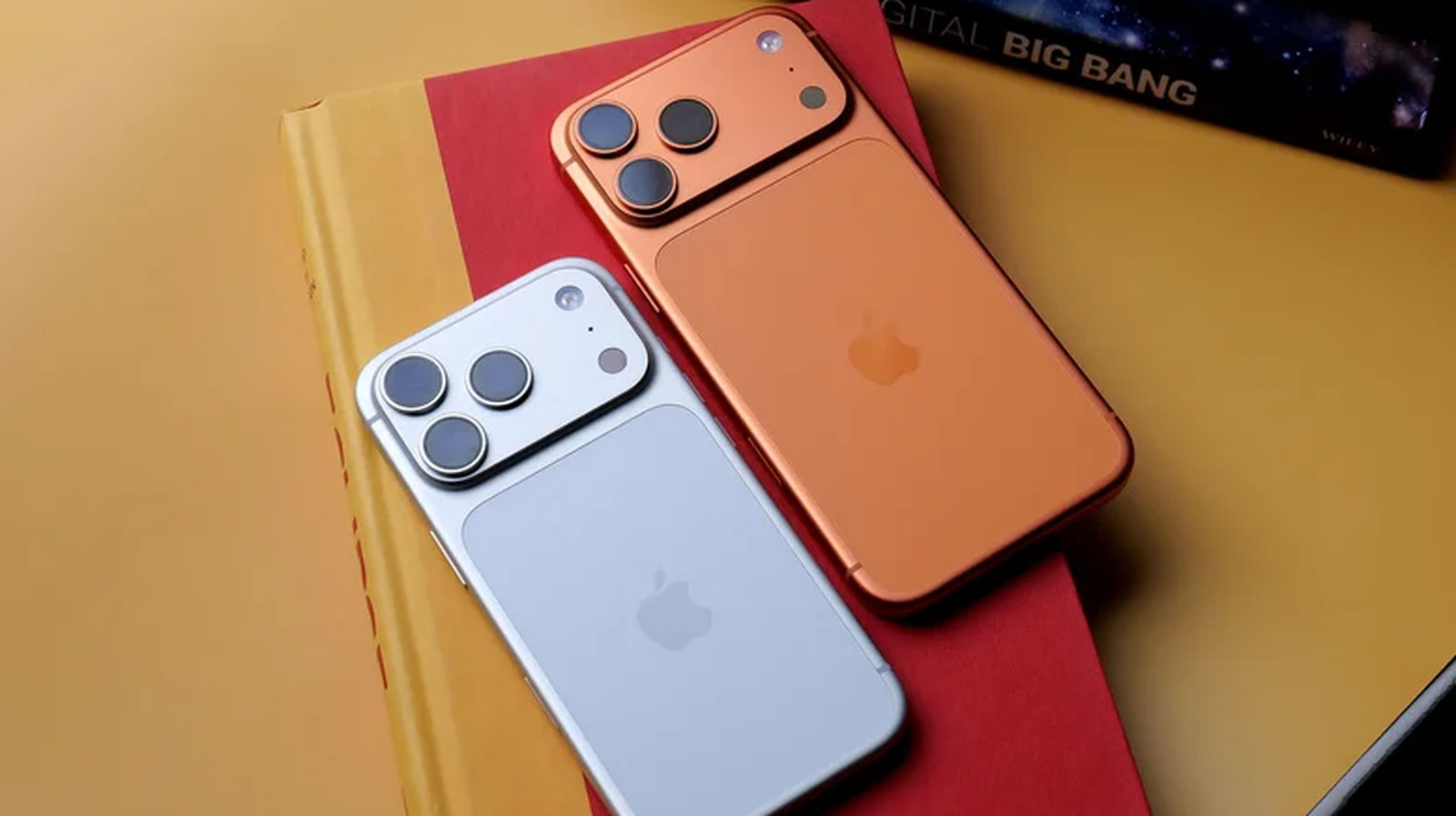
The iPhone 17e will reportedly bring some key upgrades without raising the price

HBO Max is finally coming to the UK and Ireland 

SpaceX is pivoting to focus on a Moon base before Mars

How to disable Ring’s creepy Search Party feature

Say goodbye to AI-assisted mass surveillance… for now.

RING

Ring

Ring’s Super Bowl ad showcased its Search Party feature, scaring the pants off anyone concerned about a mass surveillance state and, well, the state of everything at the moment. Search Party turns individual Ring devices into a surveillance network. Each camera uses AI to detect pets running within its field of view, and feeds are pooled to help identify lost animals. If it can handle pups, why not people? Here’s how to disable it. 

Continue reading.

Inside the Ive-designed interior of Ferrari’s luxe EV

The Luxurious Luce.

Ferrari

Ferrari

On a lighter note, consumer tech! Ferrari’s new car is no Apple Car. This is the Ferrari Luce (“light” in Italian), the actual name for the EV formerly known as Elettrica, and we (well, Tim Stevens) were lucky enough to get a walkthrough with Sir Jony Ive himself. 

That’s because the interior was designed by LoveFrom, founded by Ive after leaving Apple in 2019. OpenAI acquired the design firm for $6.5 billion, and while the company has had numerous projects, the Luce could be its biggest yet. It’s filled with playful touches and a lot of, well, glass. If that tilting screen doesn’t shout iPhone design, what does?

Continue reading.

This article originally appeared on Engadget at https://www.engadget.com/general/the-morning-after-doj-may-face-investigation-over-removal-of-ice-agent-tracking-apps-121500737.html?src=rss 

Riot Games is laying off half of the 2XKO development team

Another day, another wave of gaming layoffs. Today it’s Riot Games with the announcement that it’s cutting jobs on its pair-based fighting game 2XKO. For context, a representative from Riot confirmed to Game Developer that about 80 people are being cut, or roughly half of 2XKO’s global development team. 

“As we expanded from PC to console, we saw consistent trends in how players were engaging with 2XKO,” according to the blog post from executive producer Tom Cannon. “The game has resonated with a passionate core audience, but overall momentum hasn’t reached the level needed to support a team of this size long term.”

The console launch for 2XKO happened last month. Cannon said the company’s plans for its 2026 competitive season have not altered with the layoffs. He added that Riot will attempt to place the impacted people at new positions within the company where possible.

This article originally appeared on Engadget at https://www.engadget.com/gaming/riot-games-is-laying-off-half-of-the-2xko-development-team-215423279.html?src=rss 

DOJ may face investigation for pressuring Apple, Google to remove apps for tracking ICE agents

House Judiciary Committee member Jamie Raskin (D-MD) has asked the US Department of Justice to turn over all its communications with both Apple and Google regarding the companies’ decisions to remove apps that shared information about sightings of US Immigrations and Customs Enforcement officers. Several apps that allowed people to share information about where they had seen ICE members were removed from both Apple’s App Store and Google’s Play Store in October. Politico reported that Raskin has contacted Attorney General Pam Bondi on the issue and also questioned the agency’s use of force against protestors as it executes the immigration policy set by President Donald Trump.

“The coercion and censorship campaign, which ultimately targets the users of ICE-monitoring applications, is a clear effort to silence this Administration’s critics and suppress any evidence that would expose the Administration’s lies, including its Orwellian attempts to cover up the murders of Renee and Alex,” Raskin wrote to Bondi. He refers to Minneapolis residents Renee Good and Alex Pretti, who were both fatally shot by ICE agents. In the two separate incidents, claims made by federal leaders about the victims and the circumstances of their deaths were contradicted by eyewitnesses or camera footage, echoing violent interactions and lies about them that occurred while ICE conducted raids in Chicago several months ago.

This article originally appeared on Engadget at https://www.engadget.com/apps/doj-may-face-investigation-for-pressuring-apple-google-to-remove-apps-for-tracking-ice-agents-212145181.html?src=rss 

Here’s how to disable Ring’s creepy Search Party feature

Ring aired a Super Bowl ad touting its Search Party feature that didn’t quite get the intended buzz. Instead, the commercial scared the pants off of anyone concerned about a mass surveillance state.

The feature is advertised as a way to reunite missing dogs with their owners, a noble cause indeed, but Search Party does this by turning individual Ring devices into a surveillance network. Each camera uses AI to identify pets running across its field of vision and all feeds are pooled together to potentially identify lost animals. I’ve never seen a slope quite so slippery, as the technology could easily be rejiggered to track people.

Government: how can we get Americans to accept constant surveillance?

Ring: Puppies

Americans: PUPPIES!!!!!!

— mark david (@M___D____M_____) February 9, 2026

It’s also worth noting that this isn’t a new feature. Search Party was first announced last year. In that time it has been used to find 99 lost dogs in 90 days of use, according to Amazon CEO Andy Jassy. Approximately ten million pets go missing in America each year. Many people aren’t keen on helping to create a surveillance state for a tool with what looks to be around a 0.005 percent success rate. That percentage is sure to rise with mass adoption, but you get the jist.

With that said, many Ring users are looking for a way to disable the feature, as it’s enabled by default. Engadget has got you covered.

How to Disable Search Party

Thankfully, this is fairly easy to do. Just open the Ring app and tap the menu in the top-left corner. Next, select Control Center. Then, tap Search Party and toggle the settings to Disable for both Search for Lost Pets and Natural Hazards. Repeat this process for each camera.

PSA: If the Ring search party commercial weirded you out during the Super Bowl, it is very easy to turn off

1. In the menu, go to Control Center
2. Scroll down to Search Party
3. Go into whichever options are available in your area (not pictured)
4. Tap the blue icon to turn off pic.twitter.com/L3qaxu2pJQ

— Nick Veronica (@NickVeronica) February 9, 2026

There has also been some confusion as to what Ring will share with law enforcement agencies. If you want to go a step further, delete all of your saved videos by tapping the History icon and then “Delete All.”

This article originally appeared on Engadget at https://www.engadget.com/big-tech/heres-how-to-disable-rings-creepy-search-party-feature-185420455.html?src=rss 

OpenAI starts testing ads in ChatGPT

Users on ChatGPT’s free and Go plans in the US may now start to see ads as OpenAI has started testing them in the chatbot. The company announced plans to bring ads to ChatGPT. At the time, the company said it would display sponsored products and services that are relevant to the current conversations of logged-in users, though they can disable personalization and “clear the data used for ads” whenever they wish.

“Our goal is for ads to support broader access to more powerful ChatGPT features while maintaining the trust people place in ChatGPT for important and personal tasks,” OpenAI wrote in a blog post. “We’re starting with a test to learn, listen and make sure we get the experience right.”

These ads will appear below at the bottom of chats. They’re labeled and separated from ChatGPT’s answers. Ads won’t have an impact on ChatGPT’s responses.

Ads won’t appear when users are conversing with ChatGPT about regulated or sensitive topics such as health, mental wellbeing or politics. Users aged under 18 won’t see ads in ChatGPT during the tests either. Moreover, OpenAI says it won’t share or sell users’ conversations or data to advertisers. 

A source close to the company told CNBC that OpenAI expects ads to account for less than half of its revenue in the long run. Currently the company also takes a cut of items bought through its chatbot via the shopping integration feature. Also according to CNBC, OpenAI CEO Sam Altman told staff on Friday that the company will deploy “an updated Chat model” this week.

The tests come on the heels of Anthropic running Super Bowl ads that poked fun at OpenAI for introducing advertising. Anthropic’s spot asserted that while “ads are coming to AI,” they won’t appear in its own chatbot, Claude.

This article originally appeared on Engadget at https://www.engadget.com/ai/openai-starts-testing-ads-in-chatgpt-191756493.html?src=rss 

Generated by Feedzy
Exit mobile version