Nintendo’s Virtual Boy accessory lets you play VR Mario and Zelda on Switch 2

The forthcoming Nintendo Virtual Boy accessory for Switch and Switch 2 can play VR-supported games, as reported by Video Games Chronicle. There are four available games to play, including Super Mario Odyssey, Super Smash Bros Ultimate, The Legend of Zelda: Breath of the Wild and Captain Toad: Treasure Tracker.

These aren’t new VR builds of the games, rather they are the versions previously released for the Nintendo Labo VR set. This was a kit for the original Switch that allowed users to build a cardboard VR headset, among other items.

However, this is very good news for Switch 2 owners as Labo creations generally don’t work with Nintendo’s shiny new console. So this is the only way to experience the VR versions of the aforementioned four games. It’s also worth noting that the Switch 2 upgrade for Breath of the Wild still includes the VR mode.

There are some caveats. The Virtual Boy accessory is available to purchase as a hardware unit or in cardboard. The cardboard version is much cheaper, at $25, and is actually the preferred method for playing these games in VR.

That’s because the hardware version sits on a stand, like the original Virtual Boy, making it harder to move one’s head around. The cardboard headset is free from those constraints. The hardware also includes red filters over the lenses, to better mimic the original experience, but these can be removed.

However, the hardware version is better for playing actual Virtual Boy games, as they were designed for a static headset resting on a table. You’ll have to decide if that trade-off is worth $100. It’s also worth noting that Virtual Boy games will not work with the original Labo VR headset, which is a bummer for OG Switch fans.

Both versions of the Virtual Boy accessories will be available on February 17, which is the same day several of the retro console’s games head to the Nintendo Switch Online + Expansion Pack subscription service. They can be purchased at the My Nintendo Store. We got a chance to try the headset and came away fairly impressed, though noted that the revamped accessory is “just as eccentric and ungainly as the original was three decades ago.”

For those wondering what all the fuss is about, the Virtual Boy was an actual console released by Nintendo all the way back in 1995. It was one of the first mass-market VR devices and, as such, was decades ahead of the curve. It was cumbersome, the games were only in red and there was nothing by way of motion control. Americans only got 14 games before the console was discontinued.

This article originally appeared on Engadget at https://www.engadget.com/gaming/nintendo/nintendos-virtual-boy-accessory-lets-you-play-vr-mario-and-zelda-on-switch-2-172138483.html?src=rss 

Good Luck, Have Fun, Don’t Die rails against AI in style

You’ve seen this movie before: A disheveled man (Sam Rockwell) busts into a restaurant, threatening to blow up the joint unless a crew of people joins him. Like Groundhog Day, he’s been through this countless times before, and he immediately starts recounting otherwise unknowable details to convince the diner patrons. Like 12 Monkeys, he’s from the future — the timely twist in Good Luck, Have Fun, Don’t Die is that, rather than a world-ending virus, he needs help preventing a humanity-ending AI from being born. 

Good Luck is more of a primal scream than a thoughtful articulation about where everything went wrong. There’s a bit of “old man yells at cloud” energy here (director Gore Verbinski is 61, and screenwriter Matthew Robinson is 47), but it fits the film’s satirical tone. Looking around at the world today, who doesn’t wish they could warn their past selves about the tech industry and the new ruling class it helped breed. 

Rockwell’s character eventually wrangles a ragtag crew of future saviors: Mark and Janet (Michael Pena and Zazie Beetz), a married couple of high school teachers; Susan (Juno Temple), a distraught mother; and Ingrid (Haley Lu Richardson), a sad woman wearing a princess dress. There’s also Asim Chaudhry’s Scott, who mostly serves as comic relief, but doesn’t get any real backstory like the others. 

Good Luck wastes no time fleshing out its present near-dystopia in episodic chapters. It turns out Mark and Janet are also on the run from smartphone-obsessed high schoolers, who spend their days scrolling through endless TikTok-like feeds. Susan is forced to confront a horrific situation around her son (I won’t get into specifics here, but it’s a distinctly American phenomenon). And Ingrid is literally allergic to Wi-Fi and smart devices, which makes it hard to fit into the modern world. 

Each of these scenarios play out like mini Black Mirror episodes. Everything is heightened to the absurd, and all the problems can be traced back to unchecked technological encroachment and capitalism. Nothing subtle there. The glimpses of an apocalyptic future are even less so — all we see are destroyed cities, people trapped in VR headsets (which place them in an AI-generated reality) and robots hunting down anti-AI humans. 

Sam Rockwell in Good Luck, Have Fun, Don’t Die.

Briarcliff Entertainment

Good Luck is at its best when it’s simply having fun. As Rockwell and crew make their way to their final destination — a child who is about to invent true AI — they encounter pig-faced assassins, Stepford-esque parents and an adorably horrific kaiju. Even when faced with half-baked scripts, Verbinski always manages to impress visually (think back to the creepiness of The Ring, or the wildly entertaining set pieces in Pirates of the Caribbean). That’s as true as ever here, where the final scene evokes the hyper-tech chaos of Akira.

As much as Good Luck, Have Fun, Don’t Die, evokes classic sci-fi, it still can’t hold a candle to the sheer terror of seeing AI unleash a nuclear bomb in Terminator 2. And despite its zanines, it doesn’t reach the madcap heights of Gilliam’s Brazil or 12 Monkeys. But if you’re sick of having AI products shoved down your throat, and you think the notion of “true AI” is a farce, it’s a fun way to channel your rage.

This article originally appeared on Engadget at https://www.engadget.com/entertainment/tv-movies/good-luck-have-fun-dont-die-rails-against-ai-in-style-154437854.html?src=rss 

Meta is reportedly working to bring facial recognition to its smart glasses

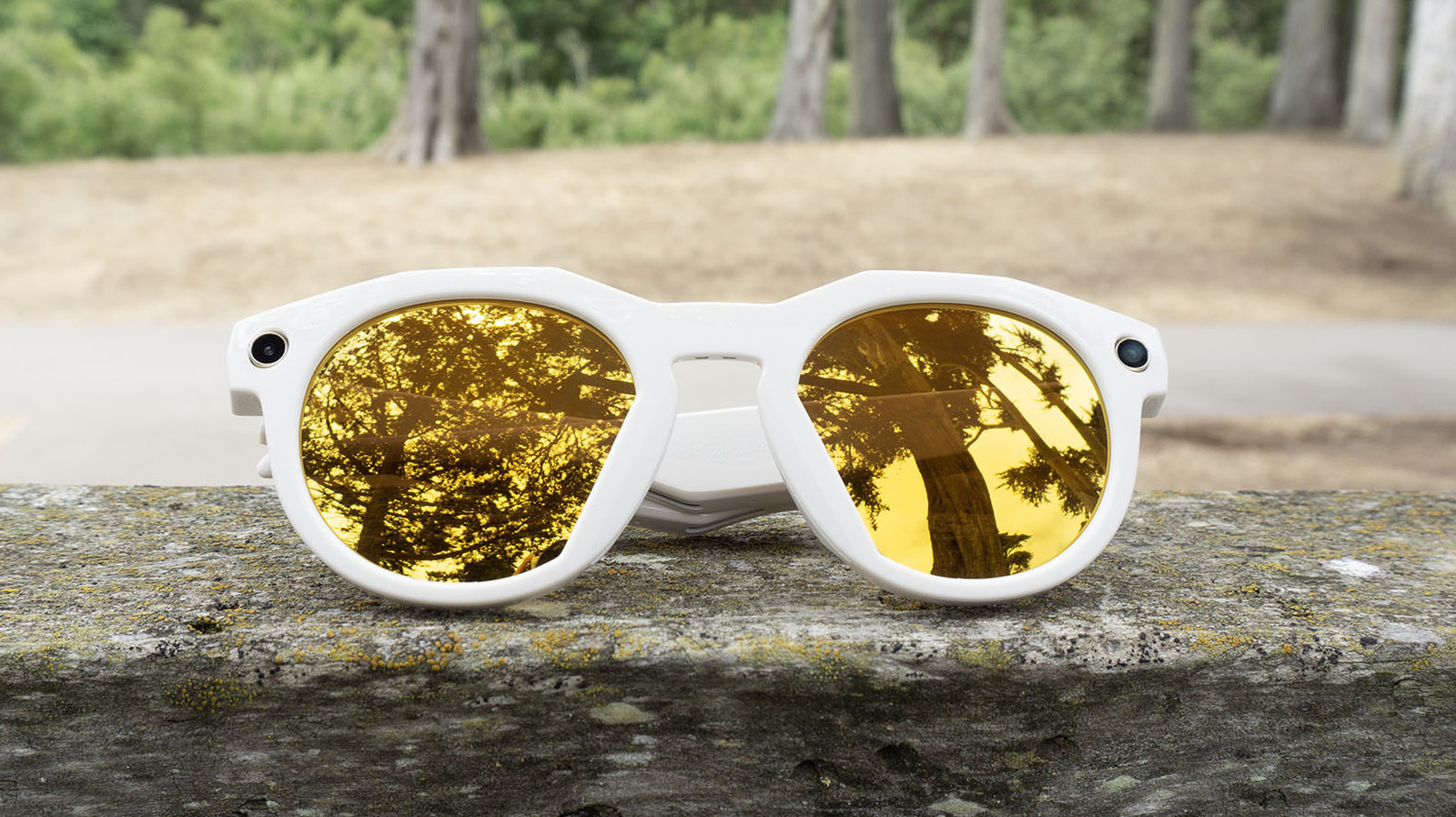
Meta has backed away from highly controversial facial recognition tech in its products and services before, but seemingly not so far that it isn’t willing to have another crack at it. A new report from The New York Times claims Mark Zuckerberg’s company wants to add facial recognition to its lineup of branded smart glasses at some point this year.

The NYT spoke to four anonymous people with knowledge of Meta’s plans, who told the publication that the feature is codenamed “Name Tag” internally. As you’d expect, it would let people wearing Meta-powered Oakley or Ray-Ban glasses identify people and “get information about them” using AI.

Such technology naturally carries huge privacy and ethical risks, which is reportedly why Meta was hesitant to unveil Name Tag at a conference for the blind last year. It also may have shelved plans to include facial recognition in the first version of its smart glasses, which launched in 2023.

In an internal memo from Meta’s Reality Labs viewed by the NYT, Meta said that the current political instability in the US presents a good opportunity for it to push ahead with its plans. “We will launch during a dynamic political environment where many civil society groups that we would expect to attack us would have their resources focused on other concerns,” it said.

With the smart glasses market expected to become more competitive in the coming years, Meta seemingly believes facial recognition would give it an edge on rival products from the likes of OpenAI. As for how it would work, the company is considering its options. It could recognize people the wearer is already connected to via one of Meta’s apps, or potentially display information from public Instagram accounts. The NYT’s sources said that universal facial recognition, effectively allowing you to look up the identity of anyone you walked past, would not be possible.

Meta shut down Facebook’s Face Recognition system, used when tagging people in photos, in 2021, following widespread public backlash over privacy concerns. Three years later, it brought it back, this time as a tool for Instagram and Facebook designed to detect scam ads that use the faces of celebrities and other public figures. Last year Meta rolled out the feature beyond the US, so Facebook and later Instagram users in the UK, Europe and South Korea could also use it on their accounts.

This article originally appeared on Engadget at https://www.engadget.com/ai/meta-is-reportedly-working-to-bring-facial-recognition-to-its-smart-glasses-144721330.html?src=rss 

Stephen ’tWitch’ Boss’ Wife Allison Holker: Everything to Know About Their Marriage & Family

Stephen ’tWitch’ Boss was married to his dancer wife Allison Holker for nearly 10 years before he died. They shared three children.

Stephen ’tWitch’ Boss was married to his dancer wife Allison Holker for nearly 10 years before he died. They shared three children. 

The ridiculously tiny Kodak Charmera captured our hearts (and lots of shoddy pictures)

Every once in a while, a product comes along that sparks a bit of joy in our jaded hearts. This is what happened with the Kodak Charmera, a $30 tiny toy camera that was nearly impossible to get ahold of in the first couple of months after its release, selling out immediately over waves of blind box restocks. Despite the gimmick of it all, the Charmera was just too cute for some of us to resist, and we sprang when they finally started becoming more readily available. 

A few of us on the Engadget team have one now, and even with all of its shortcomings, we kind of love this thing. Here’s what two of our writers think about it. 

Lately, it feels like a chore to carry around a full-frame mirrorless camera. My Nikon definitely feels like the right tool to precisely capture a moment in time with fast autofocus and plenty of image resolution. Other times, that perfect moment is more casual, like catching up with friends over dim sum or killing time while you’re snowed in at a cabin in Vermont. In these cases, there’s no reason to carry around a hulking camera and lens to snap a flawless photo that I have to edit later. Instead, something light, discreet and playful feels like the right tool for the occasion.

Jackson Chen for Engadget

That’s where the Kodak Charmera comes in. It’s a toy camera with a 35mm lens with a fixed f/2.4 aperture and a 1/4-inch sensor. In other words, the photos this thing takes are about equivalent to what you would get with a crappy flip phone from the 2000s that also plays Snake.

Kodak is clearly trying to wring out the longing for nostalgia within all of us, and has nailed it with the Charmera, which is even inspired by its old-school disposable Fling cameras. It’s definitely not as good as the smartphone in your pocket, but there’s something disarming about snapping a quick shot with a tiny block of plastic that’s lighter than your keys.

Playing around with the Charmera for a few weeks gave me a healthy reminder that the sillier and more transient parts of life don’t need the technical prowess of an expensive camera. Obviously, the Chamera produces photos of terrible quality at 1.6 megapixels and can’t really capture anything fast-moving or in low light, but it’s undeniably fun and hard to resist shooting with. And sometimes, you and your friends are just doing wildly unserious things and you want a camera that matches that energy.

Jackson Chen, Contributing Reporter

Every time I pull out the Kodak Charmera in public to snap a few pictures, I’m immediately met with a barrage of questions and squeals of delight from full-grown adults: “What is that?”; “Is that a camera?”; “Does it really take pictures?”; “Can I see it?” It is the kind of accessory that doubles as a conversation starter, an effect that’s turned out to be as joyous as taking pictures with the camera itself. I’ve been trying really hard to spend less time on social media and my phone in general lately, and having a two-inch camera clipped to me has made for a pretty fun shift in how I document the day-to-day. 

As the resurgence of compact digital cameras has shown us, a lot of people are yearning for a time of simpler tech — when we had personal devices that could do useful things, like take decent photos and connect us to our friends, but didn’t consume our lives entirely. Companies like Camp Snap have shaped their entire brands around recapturing that magic, and some consumers have shown that they’re willing to sacrifice in areas like image quality in exchange for a taste of it, too. The Kodak Charmera isn’t the kind of product you go into purchasing with high expectations. It is clearly a toy that is only going to be capable of so much. 

Cheyenne MacDonald for Engadget

As Jackson noted, the low-resolution 1,440  x 1,080 pictures look about on par with those you’d have taken on a flip phone 15 or 20 years ago. In the right lighting conditions with a clearly defined subject, they’re not so bad. But selfies, portraits and nature photos will generally look washed out. It can record videos too — and you should set similarly low expectations for these. 

Despite all that, I’ve been pleasantly surprised by how much I’m enjoying the Charmera experience. Its crunchy photos are just good enough to feel like they’re successfully preserving a moment in time. And being so tiny, it’s really convenient to bring everywhere. It even came with me to CES. The Charmera takes a microSD card (sold separately), allowing for tons of storage and easy transferring. There are a bunch of built-in filters you can apply, too, which have been fun to play around with.

If I want high-quality photos, this isn’t the camera I’m going to reach for. But it’s great for low-stakes situations when all I care about is taking some pictures I can look back on fondly later. Consider me charmed. — Cheyenne MacDonald, Weekend Editor

This article originally appeared on Engadget at https://www.engadget.com/cameras/the-ridiculously-tiny-kodak-charmera-captured-our-hearts-and-lots-of-shoddy-pictures-140000245.html?src=rss 

Meet Xiangyi (Maggie) Zhu, the 3D Artist Behind Fortnite’s Newest Star: The Daft Punk Experience

After announcing their split on February 22, 2021, Daft Punk surprised fans once again by becoming the newest stars inside Fortnite. Fortnite is always exploring unexpected artistic collaborations, and on September 27, 2025, the iconic duo officially entered one of the world’s most popular video games with the Daft Punk Experience. Behind the immersive worlds…

After announcing their split on February 22, 2021, Daft Punk surprised fans once again by becoming the newest stars inside Fortnite. Fortnite is always exploring unexpected artistic collaborations, and on September 27, 2025, the iconic duo officially entered one of the world’s most popular video games with the Daft Punk Experience. Behind the immersive worlds… 

Instagram Likes and Follows, Tracked Weekly: What It Shows, What It Doesn’t, and Why It Matters

The Instagram mystery people keep chasing Instagram used to make it quite easy to keep an eye on other people’s online behavior. Subsequently, the UI changed, transparency diminished, and the use of screenshots became more common, leading to conjecture about playing investigator. Although it feels secure to rely on instinct, sheer speculation frequently leads to…

The Instagram mystery people keep chasing Instagram used to make it quite easy to keep an eye on other people’s online behavior. Subsequently, the UI changed, transparency diminished, and the use of screenshots became more common, leading to conjecture about playing investigator. Although it feels secure to rely on instinct, sheer speculation frequently leads to… 

Generated by Feedzy
Exit mobile version