The martial arts film will hit theaters in October 2026. While we wait, meet the main cast of the movie here.
The martial arts film will hit theaters in October 2026. While we wait, meet the main cast of the movie here.
The martial arts film will hit theaters in October 2026. While we wait, meet the main cast of the movie here.
The martial arts film will hit theaters in October 2026. While we wait, meet the main cast of the movie here.
Reddit has filed a lawsuit in Australia’s High Court aiming to overturn the country’s under-16 social media ban, Reuters reported. The forum platform called the law contrary to Australia’s constitution as it intrudes on free political discourse. It also argued that Reddit shouldn’t have been included in the ban since it isn’t a social media site, based on the law’s definition. The action is likely to set in motion a protracted legal battle, given Reddit’s resources and its popularity in Australia
Australia’s minimum age social media ban, the first of its kind in the world, went into effect on December 10. The ten platforms affected, including Reddit, must bar underage users or face a fine of up to A$49.5 million ($33 million). Platforms are using a variety of means to determine age, including age inference based on activity and selfies.
However Reddit argued that the law comes with some “serious privacy and political expression issues” for users. “Australian citizens under the age of 16 will, within years if not months, become electors. The choices to be made by those citizens will be informed by political communication in which they engage prior to the age of 18,” it wrote in the filing.
The government disagreed, noting that Reddit filed the lawsuit to protect is profits, not children’s right to free expression. “It is action we saw time and time again by Big Tobacco against tobacco control and we are seeing it now by some social media or big tech giants,” said Health Minister Mark Butler.
With a market capitalization of $44 billion, Reddit certainly has the means to sustain a long fight. It would be motivated to do so as well, given that Australia is its fourth-largest market after Canada, the UK and the United States.
This article originally appeared on Engadget at https://www.engadget.com/social-media/reddit-sues-australia-over-underage-social-media-ban-143018208.html?src=rss
Last week, Netflix surprised us all when it announced plans for an $82.7 billion acquisition of Warner Bros., a move that would fundamentally reshape the world of streaming video and Hollywood. But Paramount isn’t giving up on WB — this week it launched a $108 billion hostile takeover effort. In this episode, we discuss why everyone is fighting for WB, and why Netflix may be the best worst option for the storied movie studio.
What the Netflix bid for Warner Bros. means for at-home streamers and moviegoers – 1:55
Disney characters are coming to Sora after OpenAI struck a deal – 32:59
Meta may be giving up on open source for Llama – 43:53
Google CEO says we’re just going to have to grin and bear societal disruption via AI – 46:46
Around Engadget: The Kindle Scribe Colorsoft is good, but is it $630 good? – 49:06
The best trailers and announcements from The Game Awards’ Day of the Devs stream – 51:28
Here’s why projectors won in 2025 – 54:31
Working on – 56:15
Pop culture picks – 57:33
Host: Devindra Hardawar
Guest: Nathan Ingraham
Producer: Ben Ellman
Music: Dale North and Terrence O’Brien
This article originally appeared on Engadget at https://www.engadget.com/social-media/engadget-podcast-why-netflix-is-the-best-worst-option-for-warner-bros-132156232.html?src=rss
You may be surprised to learn electricity only accounts for 21 percent of the world’s energy consumption. Fossil fuels and the rest all play their part to make the world go around, but their role is likely to diminish no matter what happens. The International Energy Agency believes electricity’s share of global energy consumption is going to double in the next decade alone. You all know the causes: Electrification, EVs, data centers and AI mean the planet needs to dramatically increase its power generation, transmission and storage capacity. It’s a shame, then, that the world is nowhere near ready to satisfy such an outrageous surge in demand.
The US has certainly spent the year opening doors to dramatically increase domestic energy production. Part of that has to give the signal that the US will embrace nuclear power in ways it hasn’t for generations. This January, an executive order titled Unleashing American Energy included an instruction for the government to eliminate rules and regulations related to power generation. Its primary focus was to destroy environmental regulations limiting the extraction of oil, natural gas and coal, but also to remove roadblocks to the construction of new nuclear plants. Then, in May, a subsequent order declared a desire to ensure the deployment of “advanced nuclear technologies.”
As the driving force behind the AI push, big tech has made some high profile moves to buy up extra generation capacity. Meta signed a 20-year deal with Constellation to own the output of the Clinton Power Station, preserving the 1.1GW facility once its state tax credit expires next year. Microsoft has its own 20-year deal with Constellation to own the power generated by reactor 1 at Three Mile Island, now renamed the Crane Clean Energy Center. On November 18, that project was also given the backing of the Department of Energy which authorized a $1 billion loan. But even without the backing of big tech, other mothballed reactors are being restarted, like the Palisades plant in Michigan. Earlier this year, the Department of Energy handed out a $1.52 billion loan to get the facility, capable of generating 800MW, back up and running.
Big tech is also betting on the future of nuclear power, signing deals with a number of startups looking to build out a new generation of reactors. Google, for instance, has backed Kairos Power and its plan to build a series of small, modular reactors. Amazon, meanwhile, invested in X-Energy and has published plans for its own buildout in Washington State.
It’s not just the US that is learning to fall back in love with nuclear power, as the rest of the world is also building out new capacity. The World Nuclear Association says there are 70 reactors currently under construction across 15 countries. Russia, India, Argentina, Turkey, South Korea, Japan, and Brazil, to name just a few, are all working on new reactors.
China on its own is presently building 33 reactors and, as Nuclear Business Platform reported earlier this year, greenlit a further 10 this April. That same report adds that China’s policy of producing multiple reactors at a time has seen costs crater. It says that while the UK’s two new reactors at Hinkley Point will cost in excess of $60 billion, each of these new reactors will cost $2.7 billion.
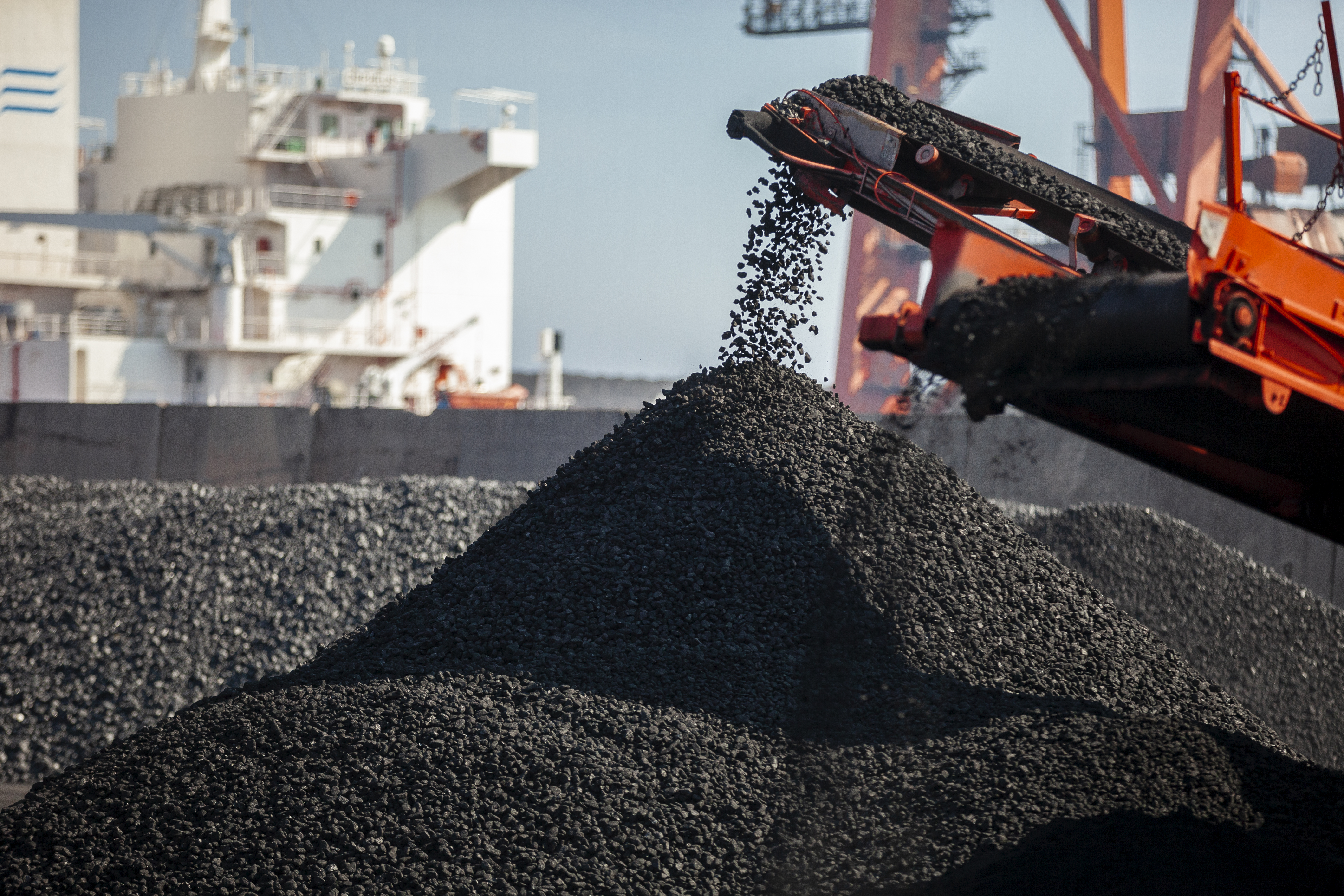
coal handling in a port
Building a nuclear reactor is not a swift process, and construction of a facility can take the better part of a decade. You can add on a few more years if you include the necessary procedural steps that need to be undertaken before a single piece of concrete is poured. Consequently, any major shift in the US’ power generation fleet will be measured in generations, rather than years. It’s a concern that, for all of the attention nuclear power is getting, it’s merely a smokescreen for a renewed push for fossil fuel extraction.
After all, one major casualty from the Big, Beautiful Bill was the eradication of subsidies for the US’ solar industry. As we reported back in July, the act has kicked the legs out from domestic solar panel manufacturing, handing renewable energy dominance to China. This goes hand in hand with the US Department of Energy setting up a $625 million funding stream to revive America’s coal industry and recommission old power plants. Or that it is also awarding contracts to grow America’s strategic petroleum reserve.
Back in September, Energy Secretary Chris Wright made the implausible claim to BBC News that fossil fuel extraction was nothing to worry about as fusion power would be on the grid in the next decade. Wright, himself the former CEO of fracking company Liberty Energy, was taken to task by a number of climate experts for publishing a report riddled with “misleading or fundamentally incorrect” assertions. Similarly, on November 20, the Department of Energy reshuffled its org chart to eliminate several departments responsible for renewable energy and energy efficiency while forming the Office of Fusion.
This stunning aerial view captures an array of solar panels arranged in neat, parallel rows across the landscape. From above, the panels shimmer under the bright sunlight, creating a striking contrast against the natural terrain below. The organized rows of solar panels stretch across acres of land, symbolizing the growing global shift toward renewable energy. The grid-like pattern highlights the efficiency and scale of modern solar farms, contributing to sustainable energy production.This high-resolution image showcases the incredible reach and potential of solar power as a clean, renewable energy source. Whether situated in rural fields, expansive deserts, or atop rooftops, these solar panels represent a major step toward reducing carbon footprints and combating climate change. The solar farm’s orderly rows and reflective surfaces create a visually appealing scene, demonstrating both technological innovation and environmental responsibility.
The US may have kneecapped its domestic solar industry, but it may not be enough to defeat renewables’ momentum. In October, the International Energy Agency projected renewable energy will grow by 4.6 TW by 2030 — a figure equal to the combined generation capacity of China, the EU and Japan combined. 77 percent of that figure is expected to come from solar power alone, despite the loss of subsidies in the US and less favorable circumstances in China.
The domestic US forecast has been revised downward significantly as a consequence of its policy choices. But despite this, the obvious benefits of solar power haven’t gone away even if the price may be higher than it was at the start of the year. It remains the fastest and cheapest way to add new power in many countries, and can be installed on a grid or individual basis. Not to mention its utility in remote areas with poor generation resources, where it can reduce dependency on fossil fuels. This year, clean energy think-tank Ember reported on the growth of solar power in the last decade, and how it went from adding just one percent of global power generation in 2015 to 8.8 percent in the first half of 2025.
“AI demand for electricity is the macro driver of US made solar,” said Rob Gardner, VP at the Solar Manufacturers for America Coalition. “AI investments can’t deliver expected returns without quickly deployed power, and US solar is the fastest and cheapest to deploy,” he said. Gardner cited a recent FERC forecast which predicts that 92.6GW of solar will come online between now and July 2028.
Construction inside the reactor of ITER.
The US is pinning a lot of its hopes on fusion power to wipe away the debt of our fossil fuel past. Earlier this year, the Department of Energy released a roadmap to get fusion out of the lab and into the world. It wants to coordinate the remaining resources of the federal government to close the fusion world’s “critical science, materials and technology gaps.” In the next three years, officials have been tasked with designing facilities for reactors and developing sources of fuel. Within the next decade, it’s hoped the government will be able to offer large-scale fuel cycle plants to help private sector plants start operations.
If fusion power can be harnessed, it has many of the same upsides as nuclear fission with a lot fewer downsides. If nuclear fission harnesses the energy released when an atom is broken apart, then fusion harnesses the energy released when two smaller atoms are smashed together to create a larger one. It harnesses the same principle as you’ll find inside our sun: Superheated hydrogen atoms fusing to create helium. And while nuclear fusion requires radioactive material, we can source deuterium and tritium from water and lithium.
ITER (International Thermonuclear Experimental Reactor) is a giant experimental fusion reactor under construction in France which, when operational, will be the world’s largest. It is backed by a coalition of nations, including the US, EU and China, and has the aim of both generating power and developing the technologies necessary to make Fusion a reality. The organization claims that there is enough of both materials available on the planet to run fusion plants for at least a thousand years, if not longer. There are also a raft of safety benefits, as there’s no creation of the sort of long-lived and dangerous waste associated with nuclear power, no risk of a meltdown, and its raw materials can’t be used to make weapons.
But while fusion is entirely possible, and on paper could be the salve to all of the world’s energy ills, it’s not yet a reality. There are a large number of engineering challenges sitting between us and a viable commercial reactor. The shift that has happened this year is that fusion is now being treated as a “strategic national priority,” according to the International Atomic Energy Agency. More than 160 fusion facilities are operational worldwide, each one looking to explore ways of solving the hard problems standing between us and limitless power.
But as well as ITER, there are other major nations working to build out their own fusion capacity. The biggest would likely be China’s Experimental Advanced Superconducting Tokamak (EAST) which has already set a record for energy generation. At the start of this year, it was able to produce a steady state for 1,066 seconds.
But what we are seeing now, which may offer some degree of hope, is the surge in interest from the private sector. Companies like Commonwealth Fusion, Type One Energy, Helion and Pacific Fusion are all working on their own fusion facilities. These projects have received billions in funding, but it’s likely all will need time to work out if their approaches are viable.
Stuart White is a spokesperson for Tokamak Energy, a British-Japanese startup spun out from the UK’s Atomic Energy Authority which is developing its own fusion technologies. In 2022, the company’s own reactor was able to reach a plasma temperature of 100 million degrees celsius. “It’s an incredible achievement but that isn’t going to power homes around the UK or anywhere,” he said. White believes the fusion world will spend the next decade “scaling up,” projects to find the right pathway to building commercial reactors. He cited national programs, like the UK’s STEP which is targeted to begin working in 2040, while the US’ plan for the mid-2030s he feels is “aggressive.”
White also explained that, as equally important as solving the key physics issues, is building out the supply chain to actually make the equipment. He cited the importance of manufacturing in Japan and China to produce the hardware necessary to build fusion reactors. And that this process, while time consuming now, will help accelerate the eventual development of the technology down the line. White added that another positive sign is that regulators aren’t likely to want to scrutinize fusion reactors with the same intensity as they do nuclear reactors. That will both speed up the construction of new facilities and reduce costs when they do eventually enter service.
What’s clear, however, is that Fusion is not going to be able to swoop in and decarbonize the world’s energy needs in the sort of time scale it’s likely to be required. (White said it is likely to arrive in time to complement other clean sources of energy over the next half century, rather than so quickly that every other power station gets mothballed instantly.) Consequently, the government of the world must keep prioritizing the rollout of renewables rather than hoping that fusion will simply bail everyone out in the next decade.
This article originally appeared on Engadget at https://www.engadget.com/science/in-2025-ai-and-evs-gave-the-us-an-insatiable-hunger-for-power-133000673.html?src=rss
F1: The Movie, the cinematic love letter to Formula One and — quite possibly even more so — consumer products made by Apple, is finally available to stream on Apple TV if you’re a subscriber. It follows the sports thriller’s long theatrical run, during which it raked in more than $630 million globally, comfortably making it Apple’s most successful original film.
Directed by Joseph Kosinski (Top Gun: Maverick, Tron: Legacy), F1: The Movie follows the washed-up former F1 prodigy Sonny Hayes (Brad Pitt), who is convinced by an old friend (Javier Bardem) to get back in the driver’s seat and help rescue his failing team. Seven-time F1 world champion Lewis Hamilton served as a producer on the film to ensure it represented the sport as authentically as possible.
Engadget’s Devindra Hardawar reviewed F1: The Movie when it arrived in theatres in the summer, calling it a “shameless Apple ad that will blow your socks off.” Should you manage to keep your eyes from rolling straight out of their sockets when a pair of AirPods Max appear on screen before anyone says a word, then a deliriously entertaining blockbuster awaits.
For all of the film’s formulaic storytelling and generic characters, the Really Fast Car bits are so well done that they put F1: The Movie among the very best racing movies, as far as our reviewer is concerned. In truth, it’s the kind of film that deserves to be seen on the biggest screen you can find, but failing that, the TV in your living room should do the job just fine, too.
Apple recently dropped the “+” from its streaming service’s name, so it’s now just called Apple TV (yes, the same name as one of its products). If you’re a new subscriber you can take advantage of a seven-day free trial, after which it costs $13 per month following a recent price hike.
This article originally appeared on Engadget at https://www.engadget.com/entertainment/streaming/f1-the-movie-now-streaming-on-apple-tv-following-a-long-theatrical-run-133531702.html?src=rss
Honestly, compiling the biggest losers for Engadget is more fun than talking up the winners. While we reviewed nothing as atrocious as those ill-fated AI assistant gadgets from 2024, AI companies and services straddled both the winner and loser podiums.
The losers might be you, the American consumer. (Sorry.) In the US, anyone wanting a drone will have to find something that isn’t made by DJI. The company has been targeted by regulators since 2017 over concerns its products could spy on sensitive US infrastructure on behalf of China.
The problem is DJI has such a high market share (over 75 percent) that its absence will effectively upend the industry. Oh, and its drones are consistently the best too. The US government hasn’t yet attempted to work with DJI to assess whether its products pose a risk. DJI recently made a final plea for a security review, sending letters to five US agencies that could assess its products. If that fails, US drone options will shrink massively.
In the same 12 months, EV sales across the globe are up around 25 percent this year. Germany set a record in the first half of 2025, with electric cars accounting for nearly one in five new registrations. In China, EV sales are growing so fast (over 50 percent market share) that the country is flooding the global market with gas-powered cars it can’t sell at home. However — remember this is about losers — in the US, the Trump administration ended the EV tax credit. And shock! Sales of EVs in the US slumped, with some automakers, such as Ford, seeing a 60 percent year-over-year decline.
As Sam Rutherford puts it, this policy change puts more roadblocks (his inadvertent pun, not mine) in the way of making cheaper battery-powered cars. It also affects EV investment and could mean US automakers fall even further behind their rivals elsewhere.
We also point and shake our heads at Xbox, Grok and TV streaming. Check it all out right here.
— Mat Smith
Kindle Scribe Colorsoft review-in-progress
Control Resonant steps into a larger world inspired by Neon Genesis Evangelion
OpenAI’s house of cards seems primed to collapse
Trump orders creation of litigation task force to challenge state AI laws
If you missed The Game Awards 2025, you missed a historic sweep by Sandfall Interactive’s Clair Obscur: Expedition 33. The Belle Epoque saga, which was expected to win several categories, even bagged Game of the Year and eventually picked up more wins than any title in the show’s 12-year history.
Naturally, there were trailers and game reveals too, which were pleasantly notable. We got a first look at the Control sequel, Resonant, Star Wars: Fate of The Old Republic is coming, headed by Mass Effect veterans, while Larian Studios is returning to the Divinity series following the success of Baldur’s Gate 3. Heck, if you want a good chance of winning at The Game Awards, hire Jennifer English to voice one of your main characters — she was in both BG3 and Clair Obscur.
Disney announced a three-year licensing agreement with OpenAI to bring more than 200 of its characters, including those from Star Wars and Pixar, to the Sora app and ChatGPT. With the deal in place, OpenAI users will be able to prompt ChatGPT to generate images that tap into Disney’s intellectual property, with costumes, props, vehicles and environments covered. Additionally, Disney will invest $1 billion in OpenAI, with the option to purchase additional equity down the road.
If you’re struggling to find a good present for the holidays, MasterClass has discounted its subscriptions by up to 40 percent. I secured a similar deal for myself and was pleasantly surprised by the solid interface and the number of courses. I also forgot to update my subscription, whoops. Maybe this offer will get me back on board.
Amazon’s plan to offer AI-generated recaps of Prime Video shows isn’t off to a great start. The company’s recap of the first season of Fallout has multiple errors. First, the AI-generated recap incorrectly identifies the era of the show’s Los Angeles-set flashbacks as being the 1950s — they’re actually 2077. Perhaps more egregiously for a recap, it misunderstands the ending of the first season, which sets up season two’s partnership between vault dweller Lucy and The Ghoul.
This article originally appeared on Engadget at https://www.engadget.com/general/the-morning-after-engadget-newsletter-121506303.html?src=rss
This year at The Game Awards, if your game wasn’t melodramatic, mechanically innovative, beautifully presented and aggressively French, it didn’t stand a chance. The Game Awards 2025 wrapped up on the evening of Thursday, December 11 with a record-breaking showing by Clair Obscur: Expedition 33 from Sandfall Interactive. The game received the most nominations and wins in the show’s 12-year history.
But, we know that’s not really why you’re here. Between the award presentations and musical numbers, there were heaps of new game trailers, announcements and updates, and we’ve collected them all for you right here. The award winners are also there.
Capcom’s Pragmata is coming your way on April 24
Bradley the Badger looks like Wreck-It Ralph as a real video game
Star Wars: Fate of the Old Republic is a new action RPG from the director of Mass Effect and KOTOR
Larian Studios is returning to the Divinity series with… Divinity
Coven of the Chicken Foot is the debut game from Naughty Dog alum Bruce Straley’s indie studio
The devs of SOMA are back with a spiritual successor called Ontos
4:LOOP is a co-op shooter from the creator of Left 4 Dead and JJ Abrams’ Bad Robot
South of Midnight is coming to PS5 and Switch 2 next spring
Exodus is delayed to early 2027
Control Resonant steps into a larger world that’s inspired by Neon Genesis Evangelion
Lego Batman: Legacy of the Dark Knight swoops onto PC and consoles on May 29
Lara Croft will return in Tomb Raider: Catalyst and a new remake
Housemarque’s Saros is delayed to April 30
Star Wars: Galactic Racer is a podracing game set for 2026
Best family game: Donkey Kong Bananza
Innovation in accessibility: Doom: The Dark Ages
Best esports game: Counter-Strike 2
Best esports athlete: Chovy
Best esports team: Team Vitality
Best mobile game: Umamasume: Pretty Derby
Best indie game: Clair Obscur: Expedition 33
Best adaptation: The Last of Us season 2
Best action game: Hades II
Best performance: Jennifer English, Clair Obscur: Expedition 33
Games for impact: South of Midnight
Best ongoing game: No Man’s Sky
Best audio design: Battlefield 6
Content creator of the year: MoistCr1TiKaL
Best fighting game: Fatal Fury: City of the Wolves
Most anticipated game: Grand Theft Auto VI
Best action/adventure game: Hollow Knight: Silksong
Best art direction: Clair Obscur: Expedition 33
Best sim/strategy game: Final Fantasy Tactics: The Ivalice Chronicles
Best debut indie game: Clair Obscur: Expedition 33
Best score and music: Clair Obscur: Expedition 33
Best sports/racing game: Mario Kart World
Best community support: Baldur’s Gate 3
Best VR/AR game: The Midnight Walk
Best RPG: Clair Obscur: Expedition 33
Players’ voice: Wuthering Waves
Best narrative: Clair Obscur: Expedition 33
Best multiplayer game: Arc Raiders
Best game direction: Clair Obscur: Expedition 33
Game of the year: Clair Obscur: Expedition 33
Don’t forget to check out our Day of the Devs: The Game Awards 2025 roundup, which included six world premieres, three release date announcements and a whole bunch of awesome indie goodness. The Women-Led Games and Latin American Games showcases tied to the awards were also downright delightful.
This article originally appeared on Engadget at https://www.engadget.com/gaming/everything-announced-and-all-the-winners-at-the-game-awards-2025-044101761.html?src=rss
Why have one Star Wars game announcement at an edition of The Game Awards when you can have two? Star Wars: Galactic Racer is a podracing (and speeder racing) game from Fuse Games, a studio established in 2023 by former Burnout and Need for Speed developers. It’s scheduled to hit PS5, Xbox Series X/S and PC in 2026.
The action here is set after the fall of the Empire. With the galaxy in rebuild mode after dealing with that whole mess, an unsanctioned, underground racing circuit called the Galactic League comes into being in the Outer Rim. Here, according to the game’s Steam page, “syndicates bankroll chaos and champions are forged.”
Star Wars: Galactic Racer is run-based, so if your podracer blows up, it might be game over. The action takes place across well-known Star Wars planets in addition to some new ones. The races have branching routes and you’ll unlock new abilities on each run.
There’s a story-driven, single-player campaign, as well as PvP modes. The vehicles are customizable too. Dig it. Where do I sign up, Watto?
This article originally appeared on Engadget at https://www.engadget.com/gaming/star-wars-galactic-racer-is-a-podracing-game-set-for-2026-035508891.html?src=rss
The next game from Left 4 Dead designer Mike Booth is putting a sci-fi spin on his last game’s co-op action, based on a trailer Booth and producer JJ Abrams shared at The Game Awards 2025. The new game is called 4:LOOP, and it’s the first project entirely developed by Bad Robot Games, film production company Bad Robot’s game studio.
4:LOOP combines the four-player co-op action of Left 4 Dead, with roguelike elements enabled by what seems like a time loop mechanic. Based on the trailer, players fight a mixture of aliens and robots in each mission, all in the hopes of eventually drawing the attention of an alien mothership and destroying it.
“Each time the four-player team succeeds in a mission, they make choices to improve their equipment, building out a unique kit to survive the epic boss battle at the end of the Act,” Booth said in an interview with PlayStation Blog. “If the team completes all three Acts, they defeat the Mothership and save the world. All of this is, of course, easier said than done.”
Sony Interactive Entertainment announced that it would be publishing 4:LOOP earlier in December, so naturally the game will be available on PS5 and PC when it launches. Players interested in trying 4:LOOP can sign up on the game’s website.
This article originally appeared on Engadget at https://www.engadget.com/gaming/playstation/4loop-is-a-co-op-shooter-from-the-creator-of-left-4-dead-and-jj-abrams-bad-robot-035835461.html?src=rss
PlayStation had said on X that it would have news about Saros at The Game Awards, and unfortunately, fans excited for the new Housemarque project will need to wait a little longer to get their hands on it. The game has been delayed from its planned March release. But there’s only a short time until the new date of April 30, and pre-orders are open now. Star Rahul Kohli appeared at The Game Awards to introduce the newest trailer for the game.
I’m glad we won’t be waiting too much longer, because Saros looks very cool. Housemarque made its name on titles like Resogun and Returnal, and Saros seems like a great addition to their library. The latest trailer shows off all the golden and solar vibes in Carcosa. It also has more glimpses of the characters and story as well as the dangerous and deadly beings that will be trying very hard to kill you.
This article originally appeared on Engadget at https://www.engadget.com/gaming/housemarques-saros-is-delayed-to-april-30-041813989.html?src=rss