Vivo’s X300 Ultra goes global and gets a huge 400mm Zeiss telephoto lens

Vivo barely has a presence outside of China but that seems to be changing with the company’s next flagship phone. At Mobile World Conference 2026, the company unveiled the X300 Ultra smartphone that comes with a 200MP sensor along with two accessories designed for pro photographers and content creators: a SmallRig video cage and 400mm Zeiss telephoto extender lens.

Vivo didn’t go into detail about the phone’s specs, but you can likely expect a high-end processor, screen, battery and other internal components when it’s fully unveiled later on. Vivo did say that like the X300 Pro, the X300 Ultra will have an impressive 200MP main camera sensor, and is likely to offer features like 4K 120fps Dolby Vision HDR recording. 

Mat Smith for Engadget

Another thing Vivo revealed is that you’ll be able to get the Vivo X300 Ultra with a 400mm equivalent lens accessory called the Vivo Zeiss Telephoto Extender Gen 2 Ultra. That will allow about an eight times zoom compared to the native field of view, plus a lot more when combined with the high-quality digital zoom. It will also offer “gimbal-grade” optical image stabilization and motion-tracking focus technology, Vivo says. 

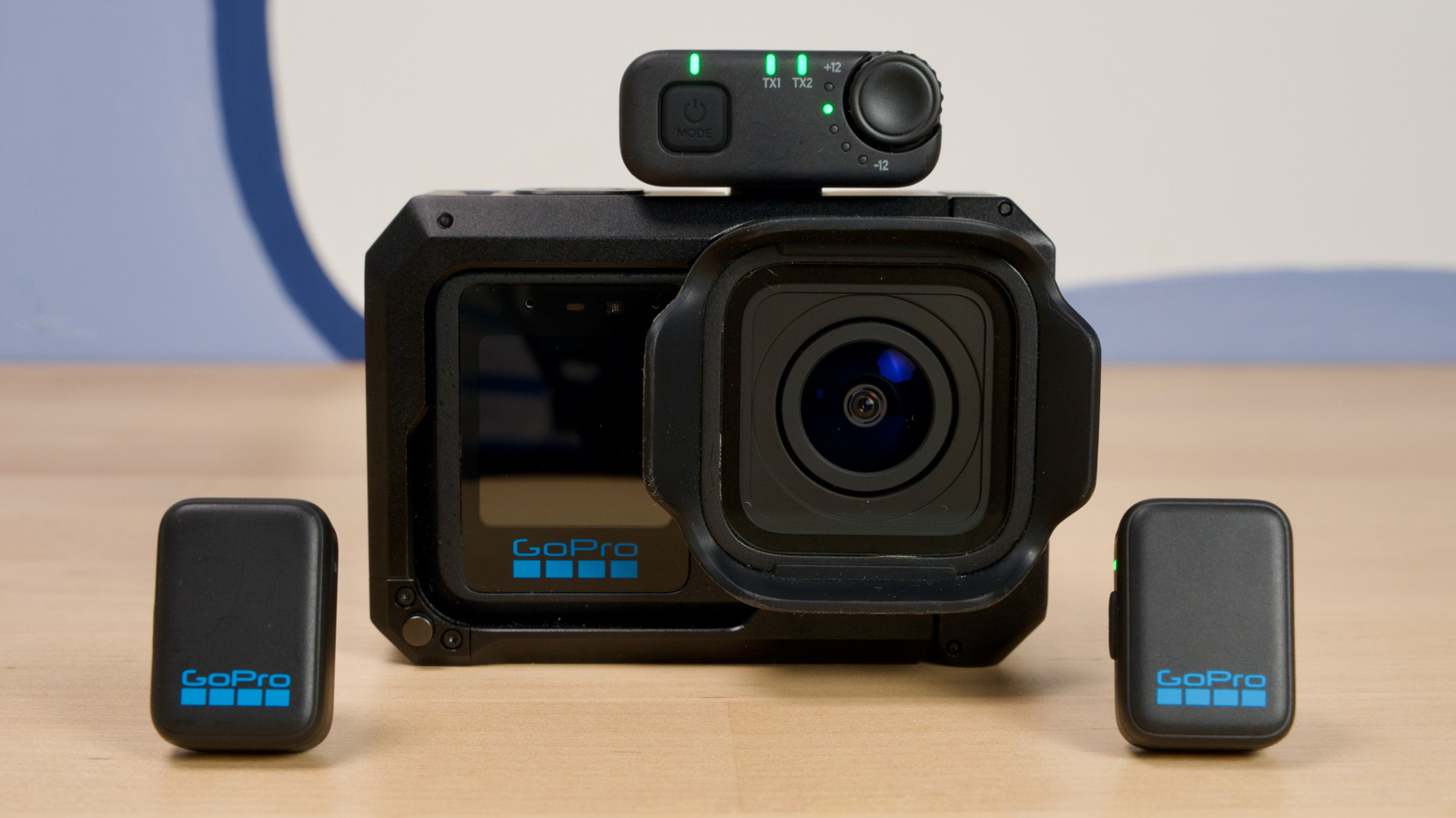
Along with the lens, Vivo is introducing a “pro-grade camera cage” designed by the well-known accessory company SmallRig. It’s expandable and offers multiple cold shoe mounts and quick-release ports so you can easily add things like handles, lights and microphones. It also comes with dedicated physical buttons for tactile shutter and zoom adjustment, plus a multi-level cooling fan to keep the phone running cool. You also get an “External Lens Expansion Frame” to accommodate the X300 Ultra Telephoto Extender.

Mat Smith for Engadget

Vivo showed off the phone at MWC 2026 in Barcelona to a fair amount of enthusiasm. The company emphasized that the X300 Ultra will come to international markets, but it didn’t say which for now or at what price (the X300 Pro costs about €1,400 in Europe). That decision, it said, “signals Vivo’s more proactive and confident approach to expanding its presence in the global premium smartphone segment.” Given the likely price, though, it’s debatable if pro creators will want to buy this instead of, say, a pretty nice mirrorless camera and lens

This article originally appeared on Engadget at https://www.engadget.com/mobile/smartphones/vivos-x300-ultra-goes-global-and-gets-a-huge-400mm-zeiss-telephoto-lens-105058478.html?src=rss 

TCL is upgrading its easy-on-the-eyes glare-free NXTPAPER display tech with AMOLED

TCL has been making smartphones and tablets at an impressive clip for years. While most companies have focused on foldable display tech — and TCL has dabbled — the focus has been on its NXTPAPER screens. Aimed at being friendlier on the eyes, and pitched as a device somewhere between e-ink slates and traditional tablets, NXTPAPER has gradually been upgraded and refined, reaching an apex at CES 2026 earlier this year with the Kindle Scribe-alike, the Note A1 NXTPAPER and its latest smartphone, the NXTPAPER 70 Pro.

At MWC, just a couple of months later, it’s preparing for a major leap forward on future phones and tablets. It’s been announced (and backed up with tech demos) that it’s developing AMOLED NXTPAPER displays, aiming to combine the eye comfort benefits of TCL’s current displays with flagship visual performance. This involved fundamentally redesigning and re-engineering the display architecture. Still, it should address the biggest problems with current LCD-based NXTPAPER, such as mediocre brightness, poor outdoor performance, and dull colors.

This NXTPAPER AMOLED screen, well, it looks like AMOLED:

Image by Mat Smith for Engadget

On the showfloor at CES, the company had several demo devices showcasing the new screen technology’s brightness. While still photos don’t really do it justice, it’s impressive, and the anti-glare effect seems premium compared to third-party anti-glare protective films. 

TCL says its incoming AMOLED display — it hasn’t announced a device yet — will reach 3,200 nits of brightness. For reference, TCL’s 70 Pro topped out at a mere 900 nits. TCL says it will also feature 120Hz refresh rates, 100 percent color gamut coverage, and blue light reduction that can go as low as 2.9 percent, which is 15 percent less than existing NXTPAPER displays.

The company plans to launch an AMOLED NXTPAPER smartphone before the end of the year.

This article originally appeared on Engadget at https://www.engadget.com/mobile/smartphones/tcl-is-upgrading-its-easy-on-the-eyes-glare-free-nxtpaper-display-tech-with-amoled-085736065.html?src=rss 

Motorola’s Edge 70 Fusion phone has a huge curved 144Hz display

Motorola has unveiled the Edge 70 Fusion, its latest mid-range model with an impressive display and OIS-enabled camera with a Sony sensor. Though other specs are modest, the cameras, display and Pantone-inspired, fabric-like colors make it a good choice for fashion-forward and budget conscious buyers in Europe and other (non-US) territories. 

The Edge 70 Fusion is a more modestly specced version of last year’s Edge 70 that’s thicker at 7.2mm compared to 5.9mm but has a better screen. Motorola says it has the world’s first “quad-curved” display that folds into the sides for smoother lines and a more elegant look. The AMOLED screen is also huge at 6.78 inches and has a 144Hz refresh rate with Pantone-validated color accuracy, while hitting a peak 5,200 nit brightness, easily enough for sunny outdoor use. 

Motorola

The 50MP main camera is also impressive, using Sony’s Lytia 710 sensor with optical image stabilization and an f/1.8 aperture. That’s accompanied by a 13MP ultra-wide macro camera and a 32MP from selfie camera with 4K recording. 

The Edge 70 fusion is powered by Qualcomm’s Snapdragon 7s Gen 3 with Cortex-A720 and A520 cores, along with an Adreno 810 GPU, promising about a 15 percent bump in performance over the last model. It supports 68W wired (no wireless) fast charging and carries a 5,200mAh battery. It will be relatively tough as well, with IP68 and IP69 dust and water resistance ratings and MIL-STD-810H durability. 

It’s a solid value with prices starting at $430 in Europe (about $503) when it goes on sale later this month in colors like Patone Orient Blue, Pantone Country Air and Pantone Sporting Green. There’s no indication that it will be available in the US, though. 

This article originally appeared on Engadget at https://www.engadget.com/mobile/smartphones/motorolas-edge-70-fusion-phone-has-a-huge-curved-144hz-display-093035809.html?src=rss 

Qualcomm’s Snapdragon Wear Elite chip is made for smartwatches and AI devices

Qualcomm’s Snapdragon Elite chips are reserved for the best Android phones and laptops, and now the company has introduced the first in the Elite series for wearables. The Snapdragon Wear Elite processor is designed for smartwatches and AI devices like pendants and promises up to a fivefold increase in single-thread CPU performance, Qualcomm announced

The new processor is built on a 3nm process to improve speed and efficiency over previous models, while boosting the number of cores to five (one big core at 2.1GHz and 4 little cores at 1.9GHz). With those changes, the company is promising up to five times faster single-threaded performance, with GPU speeds boosted up to seven times. 

Qualcomm

The Snapdragon Wear Elite is also equipped with a new NPU that allows low-power AI use cases like keyword recognition along with noise cancellation. It’s also the first Snapdragon wearable processor with a dedicated Hexagon NPU supporting AI models with two billion parameters. That will allow new “personal AI experiences,” the company said, like context-aware recommendations, natural voice interactions, life logging and AI agents that can orchestrate tasks on your behalf. 

Wear OS devices with the chip should see up to 30 percent improved battery life and charging speeds of up to 50 percent in ten minutes. It also allows for more types of connectivity, including 5G reduced capability, micro-power Wi-Fi, NB-NTN for satellites, Bluetooth 6.0, GNSS and UWB. However, manufacturers will be able to source versions of the chip without some of those wireless features. 

Whether the Snapdragon Wear Elite will give Wear OS watch manufacturers a better chance to chip into the 50-plus percent market share of Apple’s Watch remains to be seen. The first devices using the chip will start to ship in the “next few months,” Qualcomm said. “Leading global partners are supporting the platform including Google, Motorola and Samsung.”

This article originally appeared on Engadget at https://www.engadget.com/wearables/qualcomms-snapdragon-wear-elite-chip-is-made-for-smartwatches-and-ai-devices-080744412.html?src=rss 

Motorola Razr Fold hands-on at MWC 2026: Bright screens, inside and out

After briefly announcing its new foldable at CES, Motorola is now ready to debut its first book-style foldable in full at MWC 2026. There are several features we already knew, including support for Motorola’s new Pen Ultra stylus and no fewer than five cameras. However, many specs were still unknown. There are some pleasant surprises.

Motorola decided to make both screens brighter than any of its rivals by quite a margin. The main 8.1-inch foldable display of the Razr Fold has a peak brightness of 6200 nits, while the external screen almost matches it with 6000 nits. For comparison, both screens on the Pixel 10 Fold Pro have a peak brightness of 3000 nits and other foldables’ internal screens typically have substantially lower brightness levels. Inside Motorola’s demo room, filled with windows and Barcelona sun, I had no trouble reading either screen.

The main display is a 2K (2,484 x 2,232) LTPO display that can reach a peak refresh rate of 120Hz, while the external display has a 2,520 x 1,080 resolution and peaks at 165Hz. Both screens also support Dolby Vision.

Image by Mat Smith for Engadget

With those high-brightness levels, Motorola has opted for a silicon-carbon 6,000mAh battery, another leading specification among foldables at the time of writing. It’ll be interesting to see how battery life fares, powering those big, bright screens. The Razr Fold also supports fast charging at up to 80W with the company’s own (sold separately) TurboPower charger and up to 50W wireless charging.

With a silicon-carbon battery that offers higher energy density, Motorola’s biggest foldable yet remains surprisingly svelte, despite its huge battery. The Razr Fold is 4.6mm (0.181 inches) thin when open and 9.9mm (0.39 inches) when closed. Yes, Samsung’s latest Z Fold is thinner (4.2 mm; 8.9 mm), but it has a substantially smaller 4,400mAh battery.

Image by Mat Smith for Engadget

The Razr Fold’s hardware continues with many of the design touches found on recent Razr phones. I spent most of my time with the Blackened Blue iteration of the Razr Fold, with a woven piqué design that felt both easy to hold and didn’t seem to hold onto fingerprints. There will also be a Lily White color that doesn’t have the piqué design, but a more satin finish.

The Razr Fold has a Snapdragon 8 Gen 5 processor, the de facto flagship Android processor at this point. The foldable also has its own liquid-cooling system to maintain consistent performance during tougher tasks and gaming sessions.

The Razr Fold’s cameras will have to do more than what we’re used to seeing on the flip-style Razr smartphones, which have underwhelmed in the past. Fortunately, it looks like it could be a very capable smartphone camera. The main 50-megapixel sensor has a f/1.6 lens and 3.5 degrees of optical image stabilization. It’ll also work alongside a multi-spectral 3-in-1 light sensor to improve color accuracy. The Razr Fold’s ultrawide camera has a 50MP sensor, a 122-degree field of view, and support for macro photography. The 50MP periscope telephoto camera can reach up to 3x optical zoom and 100x SuperZoom, through image cropping and AI-boosted image processing. And finally, there are two selfie cameras: a 32MP internal camera that can record up to 4K video and a 20MP external selfie cam, both with a f/2.4 lens.

Image by Mat Smith for Engadget

Motorola is already claiming this is the best camera on a foldable smartphone, with the highest DXOMARK score among foldables. If you haven’t heard of DXOMARK before, it’s a benchmarking website and lab in France that offers professional image quality testing for smartphones, camera lenses and cameras. It also offers a consultancy service to help manufacturers improve their devices’ camera performance.

It’s too early to tell whether this is objectively a better cameraphone than Samsung’s Z Fold 7, but I was particularly impressed by the Razr Fold’s telephoto camera results. Similarly, I’m intrigued by Motorola’s decision to support its newest stylus, the Moto Pen Ultra. It warrants further testing when the foldable lands for review.

Motorola hasn’t announced pricing and availability for the Razr Fold. It’ll be coming to North America “in the coming months.”

This article originally appeared on Engadget at https://www.engadget.com/mobile/smartphones/motorola-razr-fold-hands-on-mwc-2026-050027092.html?src=rss 

The Lenovo Modular AI PC concept is a remixed dual-screen laptop with hot swappable ports

The potential of modular laptops has never fully translated to the real world. While companies like Framework have made major strides in recent years, there’s still quite a bit of room for improvement. At MWC, Lenovo is looking to address that with its Modular AI PC concept. It features not one but two displays and a detachable keyboard to create something that strains the definition of a laptop, thanks to an innovative and very adaptable design.

Compared to Framework’s gadgets, which primarily use modularity to make upgrading the system and extending its lifespan easier, Lenovo’s concept is based around a 14-inch chassis with hot swappable components. This allows you to move its keyboard and secondary display around at will, so the system can better adjust to its environment or workload. By default, its bonus screen is mounted on its lid, allowing you to do easy face-to-face sharing with someone sitting opposite you. However, without even needing to turn the system off, you can yank away the notebook’s keyboard and put the display in its place to provide additional real estate. 

The Lenovo Modular AI PC concept’s second screen can be attached to its lid or moved off to the side like a traditional dual monitor setup.

Sam Rutherford for Engadget

Or if you prefer a more traditional dual-screen setup, you can move it off to the side, prop it up via a built-in kickstand and connect to the laptop over USB-C. You even get the flexibility to arrange the display in vertical or landscape orientation, which is nice if you’re doing stuff like coding or writing in a word doc (I feel targeted, but in a good way). And because the keyboard can connect to the notebook using pogo pins or Bluetooth, you have the freedom to position it practically anywhere you want. 

Meanwhile, Lenovo borrowed one aspect of Framework’s modularity by including the ability to swap ports on the fly. During my demo, the company showed off modules featuring USB-C, USB-A and HDMI connectors, though I was told there are a ton of additional possibilities for those who might need things like a proper Ethernet jack or additional ports for audio. 

The Lenovo Modular AI PC concept’s keyboard and be completely removed at a moment’s notice and positioned anywhere you like thanks to its Bluetooth connectivity.

Sam Rutherford for Engadget

But what impressed me the most was that despite being a concept device, the whole setup felt quite polished. That almost suggests that this thing might be closer to becoming an actual retail product than some of the company’s other demo gadgets. Build quality felt really sturdy and I had no issues changing out ports or moving the secondary display around without needing to troubleshoot or reboot the system. Everything just kind of worked. And while Lenovo isn’t sharing details about what processor it’s running or how much memory it has, its performance felt snappy too. 

My only question is that I’m not quite sure where AI fits into all of this. I was able to break down and reconfigure the system without any help from machine learning or a digital assistant. That said, I’m not complaining, because even with a lot of moving parts, its modular design is very approachable and easy to use. 

Ports on the Lenovo Modular AI PC concept can be hot swapped between to add USB-C, USB-A and HDMI connectors as needed.

Sam Rutherford for Engadget

Unfortunately, Lenovo isn’t planning on turning this concept into a true retail device. But even so, I hope the company will at least consider bringing some of the modular laptop’s features like its hot swappable ports to future products.

This article originally appeared on Engadget at https://www.engadget.com/computing/laptops/the-lenovo-modular-ai-pc-concept-is-a-remixed-dual-screen-laptop-with-hot-swappable-ports-230000158.html?src=rss 

The Lenovo Legion Go Fold gaming handheld concept looks awkward but its versatility is endless

Lenovo already has a large roster of gaming handhelds. However, it seems there’s always room for another because at MWC the company showed off an ambitious concept device based around a flexible OLED display. And while the whole setup looks ungainly, after getting my hands on it, I’m very intrigued by its adaptability. 

Now I’ll be the first to admit that an 11.6-inch display feels oversized on a handheld that, in theory, is meant to be somewhat portable. That said, the beauty of the Legion Go Fold’s screen is that it can be bent in half to create a more appropriately-sized 7.7-inch panel. In this configuration, the system feels a lot less cumbersome while also sporting a more traditional aspect ratio. Then, at a moment’s notice, you can extend the display to provide extra room when you need it. 

How silly does this look when its flexible display is fully extended in portrait mode?

Sam Rutherford for Engadget

However, the thing I like most about the Legion Go Fold is that its controllers are detachable and that the tablet has several different mounting points. This means if you have the space, you can remove the controllers, rotate the display into landscape mode and then reattach them to get an immersive widescreen experience. Alternatively, you can connect the gamepads together using one of Lenovo’s accessories (which is similar to Nintendo’s Joy-Con Grip) and then prop the system up using the Go Fold’s folio cover, which doubles as a kickstand. 

But wait, there’s more: The handheld also features a strip of pogo pins for connecting a wireless keyboard, effectively transforming the whole setup into a miniature gaming laptop. Depending on how you’re counting, that’s at least four different modes you’re getting from the Legion Fold, which is really quite impressive and speaks to the versatility of Lenovo’s design.

Another feature I really like is the small 1-inch OLED display on the right gamepad. It supports a handful of widgets that can display the time, performance settings and more. It also doubles as a small touchpad, which can be really handy when playing PC titles that were originally developed for mouse and keyboard. And just like on the Legion Go and Legion Go 2, the Fold’s right gamepad has a small scroll wheel and a hidden sensor, so it can also turn into a vertical mouse for playing FPS titles. 

At this point, it’s important to mention that Lenovo doesn’t have concrete plans to put this thing into production, so its specs don’t really matter. That said, the Legion Go Fold I tried featured an Intel Core Ultra 7 258V chip with 32GB of RAM and a 48WHr battery, which is more than respectable. Though if this thing does become an actual retail device, I would like to see a power cell with a bit more capacity. 

I really love how the Legion Go Fold can turn into a miniature laptop just by moving some of its accessories around.

Sam Rutherford for Engadget

But as a concept gadget, I think the Legion Go Fold is a great showcase of how new technology (in this case, a flexible display) can bring new capabilities and greater flexibility to existing categories. And who knows, if a lot of people like the idea, it might encourage Lenovo to refine it and put it on sale for real. I would just be a bit worried about pricing, because all these components won’t come cheap. 

This article originally appeared on Engadget at https://www.engadget.com/gaming/pc/the-lenovo-legion-go-fold-gaming-handheld-concept-looks-awkward-but-its-versatility-is-endless-230000816.html?src=rss 

Lenovo’s latest gaming tablet goes big on battery

Lenovo’s buzziest gaming-related MWC announcement is undoubtedly its foldable Legion Go handheld-cum-laptop hybrid, which you can read all about here. But that wasn’t all the company showed off. We’re also getting an updated Legion Tab, Lenovo’s powerful gaming tablet.

Like the Gen 4 and 3 models before it, the latest Legion Tab features an 8.8-inch LCD display with an 165Hz refresh rate. The 3K panel can get up to 600 nits of brightness. The notable spec boosts come in the form of a jump up to a Snapdragon 8 Gen 5 chipset and a larger 9,000mAh battery, which should help you power through those long-haul flight gaming sessions.

The 360g Gen 5 Legion Go Tab is equipped with 16GB of RAM and up to 512GB of storage. It also features what looks like an RGB light ring next to the rear camera cutout (just in case anyone needs reminding that you’re a capital G on-the-go gamer), and two USB-C ports.

The latest Legion Go Tab also supports Lenovo AI Engine+, which uses AI for audio enhancement and noise cancellation. Available in Eclipse Black, Glacier White and Surge, it will be available to buy in May, with prices starting at $849.

Lenovo also unveiled a new 15-inch variant of its Gen 11 Legion 7a gaming laptop, after announcing an updated 16-inch model at CES in January. It features a slightly smaller version of the same PureSight OLED display and is powered by a Ryzen AI Max+ 392 processor with integrated Radeon 8060S graphics. Weighing in 1.65kg, the Legion 7a is a slimline laptop designed to be easily portable without compromising too much on power, and its 84Whr battery is good for the size. It will be available with up to 2TB of storage in July, starting at $2,299.

This article originally appeared on Engadget at https://www.engadget.com/gaming/pc/lenovos-latest-gaming-tablet-goes-big-on-battery-230017436.html?src=rss 

Lenovo’s ThinkPads get a spec bump at MWC 2026

Lenovo is updating its business-focused laptop lineup at MWC 2026. The best-selling ThinkPad T-series is getting a full refresh, and there’s an updated ThinkBook 2-in-1 and an all-new Android tablet.

The ThinkPad T-Series, the backbone of Lenovo’s business PC lineup, now (optionally) ships with a 5MP camera that supports computer vision and vHDR. The 2026 versions of the laptops have larger speakers and a new color (“cosmic blue”) on some models.

The ThinkPad T14 Gen 7 and ThinkPad T16 Gen 5 (each starting at $1,799) are the all-around workhorses of the ThinkPad lineup. Lenovo touts the 2026 models’ 10/10 iFixit repairability score. They ship with either an Intel Core Ultra Series 3 (with Intel vPro) or an AMD Ryzen AI Pro 400 Series processor.

ThinkPad T14s Gen 7

Lenovo

Meanwhile, the T14s Gen 7 ($1,899+) is an even lighter version of Lenovo’s slim ThinkPad variant. The 2026 model weighs 2.45 lbs (1.1kg), making it the lightest T-series model to date. The T14s Gen 7 is powered by Intel Core Ultra Series 3 (with Intel vPro) or AMD Ryzen AI Pro 400 Series processors.

Rounding out the T-Series is the second-generation of the 360-degree-folding ThinkPad T14s 2-in-1. The 2026 model ($1,849+) is ever-so-slightly lighter than its predecessor, now weighing in at 3.06lbs (1.39kg). The new version includes a garaged pen, with its storage slot living above the screen.

ThinkPad X13 Detachable

Lenovo

The ThinkPad X13 Detachable is the lineup’s take on the Surface Pro. The tablet has Intel Core Ultra Series 3 processors and up to 64GB of RAM. Its 13-inch display supports up to 500 nits of brightness. It has a pair of Thunderbolt 4 ports, and its keyboard has full-sized keys with 1.5mm of travel. It ships with a “full-size ergonomic pen” that you can stash (and charge!) in a dedicated slot on the keyboard. The X13 Detachable starts at $1,999.

The $499 ThinkPad X11 is a rugged Android tablet for industrial environments. Powered by the Snapdragon 7s Gen 3 Mobile Platform, it has a 10.95-inch display with 2,560 x 1,600 resolution and 600 nits of brightness. It’s MIL-STD-810H certified, meaning it passes stringent military testing for durability.

ThinkTab X11

Lenovo

Finally, there’s the ThinkBook 14 2-in-1 Gen 6 ($1,754+). This Yoga-like folding device has a 14-inch WUXGA touch display. It runs on an Intel Core Ultra 7 (Series 3) processor and supports up to 32GB of RAM.

Most of the devices start shipping in Q2 2026. (That includes the ThinkPad T14, T16, T14s, T14s 2-in-1, ThinkTab X11 and ThinkBook 14 2-in-1.) The lone exception is the ThinkPad X13 Detachable, which is slated for Q3 2026. You can learn more about the new business-focused devices on Lenovo’s website.

This article originally appeared on Engadget at https://www.engadget.com/computing/laptops/lenovos-thinkpads-get-a-spec-bump-at-mwc-2026-230100419.html?src=rss 

Lenovo unveils the 2026 refresh of its Yoga 9i 2-in-1 convertible laptop at MWC

Lenovo has given the Yoga 9i 2-in-1 Aura Edition a refresh for 2026 and launched the new device at this year’s Mobile World Congress. The convertible laptop comes with a new Canvas Mode when the Yoga Pen Gen 2 case it’s bundled with is attached to the A-cover. When you lay the device down on a flat surface with the case attached, you’ll get a slight elevation on the display, which may make it easier to sketch or draw.

The Copilot+ laptop is powered by Intel Core Ultra Series 3 processors with integrated graphics, has up to 32GB in memory and runs Windows 11. Its 14-inch screen has a resolution of 2,880 x 1,800 pixels, has a variable refresh rate of 120 Hz and supports multi-touch. In addition to the new Canvas Mode, the device also supports Tablet, Tent, Stand and traditional Laptop Modes like its predecessors do. The Yoga 9i 2-in-1 Aura Edition Gen 11 will be available in May, with prices starting at $1,949.

Lenovo has also launched the new Yoga Pro 7a at MWC 2026. This Copilot+ laptop is powered by AMD Ryzen AI Max+ Series processors and comes with up to 128GB of RAM, so it can be used for heavy AI tasks. It has a 15.3-inch 2.5K PureSight Pro OLED display and is equipped with a big Force Pad trackpad that doubles as a drawing tablet. You can get the device starting in August this year for at least $2,099.

For a more affordable option, there’s the new IdeaPad Slim 5i Ultra laptop, which also has Copilot+ features. It’s powered by Intel Core Ultra processors and comes with either a WUXGA OLED or a WQXGA IPS LCD 14-inch display that has a VRR of 120 Hz. The device was designed for portability, with its thinnest part measuring just 11.9 mm in depth, and weighs 2.5 lbs. It will be available starting in October for at least $799.

Another affordable option is the new Idea Tab Pro Gen 2, which is specifically targeted towards students. It’s powered by theSnapdragon 8s Gen 4 Mobile Platform and has a 13-inch 3.5K display. The Tab Pro Gen 2 is Lenovo’s first tablet to ship with its Qira AI assistant and the company’s AI tools. It will be sold with a Lenovo Tab Pen Plus included for $419 starting in July.

This article originally appeared on Engadget at https://www.engadget.com/computing/laptops/lenovo-unveils-the-2026-refresh-of-its-yoga-9i-2-in-1-convertible-laptop-at-mwc-230100644.html?src=rss 

Generated by Feedzy
Exit mobile version