Hailee Steinfeld looked incredible when she showed off her toned legs in a high-slit skirt at the ‘Spider-Man’ premiere.
Hailee Steinfeld looked incredible when she showed off her toned legs in a high-slit skirt at the ‘Spider-Man’ premiere.
Hailee Steinfeld looked incredible when she showed off her toned legs in a high-slit skirt at the ‘Spider-Man’ premiere.
Hailee Steinfeld looked incredible when she showed off her toned legs in a high-slit skirt at the ‘Spider-Man’ premiere.
Gotta love Sherri! The comedian lost her wig on her daytime talk show and the hilarious moment has gone viral on the internet.
Gotta love Sherri! The comedian lost her wig on her daytime talk show and the hilarious moment has gone viral on the internet.
During his tour stop with the E Street Band in Amsterdam, Bruce Springsteen took a tumble onstage.
During his tour stop with the E Street Band in Amsterdam, Bruce Springsteen took a tumble onstage.
Garmin has just announced a pair of new smartwatches intended for explorers and extreme fitness enthusiasts. However, these are high-end gadgets with high-end specs and, accordingly, high-end price tags.
First up, the Epix Pro series. The main draw of these watches is that they ship with a bright and crisp AMOLED display, a design choice Garmin has begun to fully embrace, providing a vivid picture without drawing too much battery life. There’s also a built-in flashlight with multiple intensities and a strobe mode, a red-only visual display option for darker conditions and plenty of advanced fitness features.
To that end, the Epix Pro series includes “dozens” of new, preloaded activities like soccer, basketball, horseback riding, racquet sports and plenty more. The fitness trackers now offer endurance scores and hill scores for advanced metrics. Runners and walkers will also receive notifications regarding points of interest along the route. There are new weather map overlays to view local environmental conditions and upgraded shading for making it easier to understand elevations within topographic maps. The Epix Pro line is available now and launches in three sizes (42mm, 47mm and 51mm.) Prices start at $900.
The Fenix 7 Pro series is for serious explorers, with solar charging, a powerful LED flashlight, mapping upgrades and a red safety light, all of which are intended to provide greater awareness when training in the dark, like a ninja. The heart rate sensor also got a significant boost, with new optical sensors and sport-specific algorithms that track your pulse rate across a diverse array of activities. There’s no ECG app, however, so you’ll have to look elsewhere if that’s a primary concern.
The new endurance score feature measures how easy it is to engage in prolonged physical activities, combining V02 sensors, hill scores and previous training data. Just like the Epix Pro, the Fenix 7 boasts an updated mapping system with weather overlays, points of interest and improvements to topographic maps. There’s also new preloaded activities like whitewater rafting and motocross. The Fenix 7 Pro is available in multiple sizes and designs, starting at $800.
This article originally appeared on Engadget at https://www.engadget.com/garmin-reveals-high-end-smartwatches-for-explorers-with-deep-pockets-110022376.html?src=rss
With the rise of AI language models and tools like ChatGPT and Bard, we’ve heard warnings from people involved, like Elon Musk, about the risks posed by AI. Now, a group of high-profile industry leaders has issued a one-sentence statement: “Mitigating the risk of extinction from AI should be a global priority alongside other societal-scale risks such as pandemics and nuclear war.”
That’s… heavy. It was posted to the Center for AI Safety, an organization with the mission “to reduce societal-scale risks from artificial intelligence,” according to its website. Signatories include OpenAI chief executive Sam Altman and Google DeepMind head Demis Hassabis. Turing Award-winning researchers Geoffrey Hinton and Yoshua Bengio, the godfathers of modern AI, also put their names to it. Hinton recently left Google over ethical concerns.
It’s not the first statement like this. In March, Elon Musk, Steve Wozniak and more than 1,000 others called for a six-month pause on AI to allow industry and the public to effectively catch up to the technology. “Recent months have seen AI labs locked in an out-of-control race to develop and deploy ever more powerful digital minds that no one – not even their creators – can understand, predict or reliably control,” the letter stated. No specific scenarios elaborate on how AI could threaten humanity, but there’s been more than enough science fiction to make me think of worst cases. Thanks, The Matrix.
– Mat Smith
The Morning After isn’t just a newsletter – it’s also a daily podcast. Get our daily audio briefings, Monday through Friday, by subscribing right here.
Twitter is testing Community Notes for images
Apple Music’s dedicated classical app arrives on Android
Sony’s new WH-CH720N wireless headphones drop to $128 on Amazon
The best Nintendo Switch controllers for every player level
The best mobile microphones for 2023
The story of Diablo IV opens decades after the end of Diablo III, with the world still reeling from the events of that game. Your character is in pursuit of Lilith, the daughter of Mephisto, one of the Prime Evils you defeated in Diablo II. Sometimes, you’ll discover some interesting lore or a named enemy that will drop an item with unique flavor text. Still, those moments are few and far between, according to Engadget’s Igor Bonifacic. Diablo IV will be available on PC, PlayStation and Xbox on June 6th.
Amazon is ditching all of its Alexa-enabled celebrity voices, including Shaquille O’Neal, Melissa McCarthy and Samuel L. Jackson. The celebrity voice assistant features were fairly limited when compared to Alexa’s full feature set as the celebs won’t do reminders and don’t integrate with many skills. They do, however, tell jokes, answer questions and complete simple voice-assisted tasks. Why get rid of the voices now? Reports suggest Amazon is building its own large language model (LLM), like ChatGPT, to transform Alexa radically, and celebrity voices may no longer fit that setup.
Razer has introduced Hammerhead Pro HyperSpeed buds that include a 2.4GHz RF adapter to plug into the USB-C port (there’s an included USB-A adapter) on your computer or console. This expands support to more devices, of course, but it also drops latency to 40ms versus 60ms for the Bluetooth-based Gaming Mode. The Hammerhead Pro Hyperspeed earbuds are available now for $200.
A report from 9to5Google claims the Pixel Watch 2 will switch from Samsung’s 2018-era Exynos 9110 to one of Qualcomm’s much newer Snapdragon W5 models. Although the battery in the new smartwatch isn’t significantly bigger, the longevity is supposed to be much improved. Reportedly, it can last over a day with the always-on display enabled. The Pixel Watch 2 could also house the same health sensors as the Fitbit Sense 2 – Google owns Fitbit now, remember? That could introduce ways to measure stress, skin temperature and other metrics. When might we see it? Well, a previous rumor hinted the Pixel Watch 2 will debut alongside the Pixel 8 this fall.
This article originally appeared on Engadget at https://www.engadget.com/the-morning-after-industry-leaders-say-ai-presents-risk-of-extinction-on-par-with-nuclear-war-111545269.html?src=rss
Uber launched its Uber One subscription service in 2021 with the promise of various perks like free deliveries, but the main benefit was a five percent discount on eligible rides. Now, the company is eliminating that in favor of six percent cashback (in the form of Uber Cash) to be used toward rides, Uber Eats and more, TechCrunch has reported. This despite the fact that Uber One doubled its subscriber base to 12 million last year with the discount marketed prominently on the app.
“As Uber One is the best way to save across Uber and Uber Eats, we’re making it even easier to use your benefits on Uber’s full suite of products,” Uber’s consumer communications lead Becky Katz Davis told TechCrunch. In a letter to subscribers, the company suggested that consumers use their Uber Cash on fancier vehicles or Uber Eats orders.
The move appears to be a way to help Uber boost its ride count and margins. Uber One subscribers now make up 27 percent of total booking, and over 50 percent in some markets, the company said recently. In addition, the service is “profitable,” Khosrowshahi said in an earnings call earlier this year. “And what we find is it’s a very, very effective way, essentially, to draw frequency and higher engagement with our customer base.”
Uber One arrived effectively as a replacement for Uber Rewards, the company’s airline-like rewards program that was dropped last summer. The shift from discounts to Uber Cash could be a risky play, though. Uber brags on its Uber One landing page that members “save on average $27 per month with Uber One.” Now, though, riders will need to do some calculations to see if the new system is worth the $10 per month or $100 annual subscription price.
This article originally appeared on Engadget at https://www.engadget.com/ubers-one-subscription-swaps-ride-discounts-for-cashback-rewards-085948944.html?src=rss
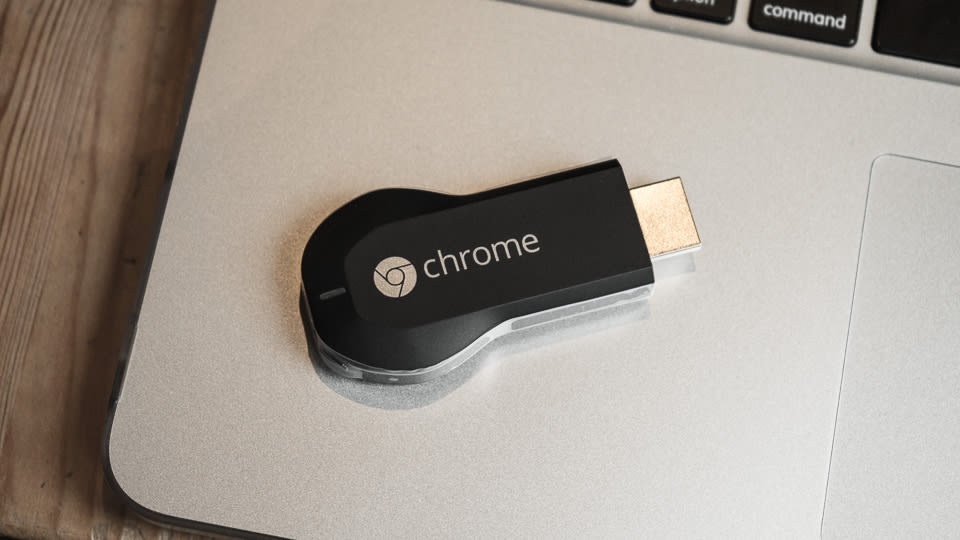
It’s officially the end of an era for the original Google Chromecast, with the first-generation model no longer receiving any updates or support, 9to5Google reports. Chromecast first came on the scene in 2013 as a key-sized device that promised to provide a Smart TV experience for $35, and it has done just that. Google has upgraded the initial Chromecast’s hardware throughout the years to keep up with streaming denands but is now leaving it behind for good.
In a release on Chromecast’s informational hub, Google asserted that “Support for Chromecast (1st gen) has ended, which means these devices no longer receive software or security updates, and Google does not provide technical support for them. Users may notice a degradation in performance.” Google last updated Chromecast’s support page back in April, meaning the announcement has gone unnoticed for some time now.
Through the lens of Google alone, a complete pull-back on the 10-year-old Chromecast original has been a long time coming. The company has only looked after the first-gen’s bug and security issues (rather than larger-scale updates) since 2019. The last update came in November 2022 and was the first in three years. Google has also released newer versions since the first-gen, like the cheaper $30 Chromecast with Google TV (HD) and the $50 4K model.
If you’re a loyal first-gen Chromecast user, the only thing to do now is to make sure it’s fully upgraded and hope for the best.
This article originally appeared on Engadget at https://www.engadget.com/google-has-officially-stopped-supporting-the-first-gen-chromecast-095205330.html?src=rss
Logitech already makes some of the best productivity peripherals around, but with a few key upgrades, the company may have just created an almost perfect travel mouse. And after using the new $80 MX Anywhere 3S for the last week and a half (including on a trip of my own), I’m not sure I want to use anything else ever again.
On the outside, the MX Anywhere 3S features the same basic design as its predecessor, including a similar palette of color options (graphite, pale gray, and rose). The differences are on the inside, where the mouse features a new 8K DPI optical sensor that’s more accurate than before and works on practically any surface you can think of (wood, cloth, glass, et cetera). You also get a new set of super quiet mouse buttons similar to what you find on its larger sibling – the MX Master 3S – which might not sound all that important, but it’s very a welcome feature for families where multiple people are studying/working from home. Finally, as part of Logitech’s efforts to increase the sustainability of its products, the MX Anywhere 3S is made from up to 78 percent post-consumer recycled plastic (though that figure is around 61 percent for the gray and pink models).
Between its new features and the already fantastic foundation, the MX Anywhere 3S is simply a delight to use. Weighing just 95 grams, it’s lighter than pretty much everything aside from a handful of gaming mice while boasting a rechargeable battery that lasts up to a whopping 70 days. You still get the ability to pair the mouse with up to three different devices (PCs, laptops, tablets and more), and thanks to a very travel-friendly ambidextrous design, it works great in tight situations. And while Logitech’s free-spinning MagSpeed mouse wheel isn’t new, scrolling actually feels a tiny bit smoother than before too.
The one big departure from previous MX Anywhere mice is that the 3S doesn’t come with a dongle. Instead, for this model (and likely going forward), Logitech is relying entirely on Bluetooth. One reason for this change is that Logitech believes modern Bluetooth connectivity has gotten good enough that a dedicated wireless receiver simply isn’t necessary, and after using this thing for more than 10 days, I get it. I haven’t had a single laggy mouse stroke or delayed reaction the entire time I’ve used it and even on Bluetooth you still get support for Logitech’s multi-device Flow software. Besides, for frequent travelers, a dongle is just one more thing to keep track of (or lose entirely).
That said, the main reason why the MX Anywhere 3S doesn’t come with a dongle is because Logitech’s Bolt receiver is still only available as a USB Type-A receiver, and with most new laptops these days only having USB-C, it doesn’t make a ton of sense to include something requires an adapter to use. Logitech says that because USB-C ports are so small, there isn’t enough room to fit the electronics without making the whole thing unusually bulky. Meanwhile with USB-A, Logitech is able to build tiny circuit boards that fit inside the connector itself. So while the company is still trying to figure out a solution, we’ll have to wait a little longer for a USB-C version of Logitech’s Bolt receiver. That said, while there are situations where having one would be useful, I haven’t missed having a physical dongle at all when using the MX Anywhere 3S.
Aside from its new mouse, today Logitech also has a couple of other refreshed devices. On the $110 MX Keys S, new features include more control over backlighting brightness and automatic activation settings, an updated function row with additional videoconferencing controls (and that always handy emoji key), and a fresh pale gray model to match the rest of the MX family. Alternatively, for people who need a new suite of office peripherals, Logitech has created a productivity bundle called the MX Keys S Combo which includes the MX Keys S, an MX Master 3S mouse and the MX Palm Rest – all in one box for $200. And while the MX Master 3S and the wrist wrest aren’t new, considering that those three devices would typically cost $230 if purchased separately, this bundle is a nice way to get a discount.
Lastly, while it’s been in beta for some time, today alongside the MX Keys S, Logitech’s Smart Actions feature is finally getting an official release. Available inside the Logi Options+ app, Smart Actions is a neat tool for automating various repetitive tasks across multiple programs with a single keystroke. That means you can create a silence command that will do stuff like mute zoom, turn off your microphone and pause your favorite music app all with a single tap. By default, there are a number of basic templates you can browse, though they can also be customized as needed. And while I’m still testing out the limits of Smart Actions, so far my favorite way to use it has been creating what I call my “game time” command, which opens apps like Steam, Discord, Battle.net and more all with a single shortcut. And the nice thing is that if you don’t want to create your own Smart Actions, Logitech made them easy to share and import. So if you see someone else with a shortcut you like, you can just ask them to send it to you.
The MX Anywhere 3S, the MX Keys S and the MX Keys S Combo are all available today priced at $80, $110 and $200, respectively.
This article originally appeared on Engadget at https://www.engadget.com/logitech-mx-anywhere-3s-hands-on-a-nearly-ideal-travel-mouse-specs-price-availability-070134836.html?src=rss
This week’s new episode of ‘The Family Stallone’ was an emotional one, as Scarlet broke up with her boyfriend. Plus, Jennifer Flavin gushed over the beginning of her romance with Sly.
This week’s new episode of ‘The Family Stallone’ was an emotional one, as Scarlet broke up with her boyfriend. Plus, Jennifer Flavin gushed over the beginning of her romance with Sly.
Microsoft has deployed a critical troubleshooter update for Surface Pro X devices that will give users access to their camera again. On May 23rd, plenty of Surface Pro X owners reported that their cameras had stopped working entirely. Based on stories posted on Reddit, Twitter and the company’s own support forums, reinstalling the camera’s driver didn’t work. Tweaking the device’s date and rolling it back to May 22nd did, but it came with its own set of potential issues, such as authentication and scheduling problems.
In its new patch notes, the tech giant said the affected devices are powered by Qualcomm 8cx Gen 1, Qualcomm 8cx Gen 2, Microsoft SQ1 and Microsoft SQ2 processors. The troubleshooter update will be automatically applied to affected devices, and owners can check if it has been installed by going to their “hardware and devices troubleshooter” history and then looking for an entry that says “[a]utomatically change system settings to fix a problem on your device.”
As Ars Technica notes, users are reporting on the Microsoft support forum that the troubleshooter worked sufficiently, save for some posters saying that their cameras were working in slow motion outside of Teams or Zoom. Microsoft admitted in its announcement this workaround isn’t perfect — it is, after all, only meant to be a temporary fix. It might “disable some features of the camera or lower the image quality,” but it will make the camera functional until Microsoft comes up with a permanent fix. The tech giant is currently working with device manufacturers to release updated camera drivers expected to restore full camera functionality. It doesn’t have an ETA for the driver rollout yet, but it promised to share more information when it becomes available.
This article originally appeared on Engadget at https://www.engadget.com/microsoft-releases-a-temporary-fix-for-surface-pro-x-camera-bug-061524664.html?src=rss