Trump’s Genesis Mission aims to build a centralized AI platform to power scientific breakthroughs

President Donald Trump has issued a new Executive Order that launches the “Genesis Mission,” an AI-focused initiative that will be led by the Department of Energy. It will “harness the current AI and advanced computing revolution to double the productivity and impact of American science and engineering within a decade,” the DOE explained. One of the mission’s main goals is to build a centralized platform that will house a huge collection of datasets collected “over decades of federal investments,” as well as datasets from academic institutions and partners from the private sector.

Those datasets will then be used to train scientific foundation models and to create AI agents, automate research workflows and accelerate scientific breakthroughs, the administration said in its announcement. “The platform will connect the world’s best supercomputers, AI systems, and next-generation quantum systems with the most advanced scientific instruments in the nation,” the Energy department said.

Based on that statement, the platform will be linked to the two sovereign AI supercomputers the agency is building at the Oak Ridge National Laboratory, its famous research and development center. The machines, to be built by Hewlett Packard Enterprises, are meant to be the Trump AI Action Plan’s flagship supercomputers. The DOE previously revealed that the machines will be powered by AMD chips and will help tackle the biggest challenges in energy, medicine, health and national security.

“The Genesis Mission marks a defining moment for the next era of American science. We are linking the nation’s most advanced facilities, data, and computing into one closed-loop system to create a scientific instrument for the ages, an engine for discovery that doubles R&D productivity and solves challenges once thought impossible,” said Dr. Darío Gil, the Under Secretary for Science and Genesis Mission Director.

In the next four months, the Energy department must identify its initial set of data and model assets for the Genesis platform. The department must be able to demonstrate “an initial operating capability of the platform for at least one of the national science and technology challenges” the government has identified within nine months. While the list of challenges is pretty long, the Genesis Mission will focus on addressing three key challenges overall. First, it aims to accelerate nuclear and fusion energy, as well as to modernize the energy grid using AI. It also aims to power scientific discoveries for decades to come. Finally, it aims to create advanced AI technologies for the purpose of national security, such as systems that can ensure the reliability of America’s nuclear weapons and can accelerate the development of materials for defense.

This article originally appeared on Engadget at https://www.engadget.com/ai/trumps-genesis-mission-aims-to-build-a-centralized-ai-platform-to-power-scientific-breakthroughs-043506089.html?src=rss 

Educator Sandeep Singh Reveals the Mindset Behind Sustainable Success

Quick tips and “easy wins” overrun the online space. Sandeep Singh, known as Sandeep Singh, stands apart for preaching patience over profit. As an educator and founder of Sandeep Singh, he teaches people to think differently about goals, discipline, and long-term achievement. His lessons go beyond tactics and techniques to focus on mindset, emotional intelligence,…

Quick tips and “easy wins” overrun the online space. Sandeep Singh, known as Sandeep Singh, stands apart for preaching patience over profit. As an educator and founder of Sandeep Singh, he teaches people to think differently about goals, discipline, and long-term achievement. His lessons go beyond tactics and techniques to focus on mindset, emotional intelligence,… 

‘All’s Fair’ Season 2: Was the Kim Kardashian Hulu Series Renewed?

Despite negative reviews for season 1, Hulu renewed the show for another round. Here’s everything we know so far about ‘All’s Fair’ season 2.

Despite negative reviews for season 1, Hulu renewed the show for another round. Here’s everything we know so far about ‘All’s Fair’ season 2. 

Alexa Home Theater surround sound for Echo speakers is rolling out now

One of the more intriguing prospects Amazon revealed at its devices and services event back in September was Alexa Home Theater, a surround sound mode for select Echo speakers. Amazon has now confirmed to Engadget that it’s rolling out Alexa Home Theater “broadly” starting today.

This could make Echo speakers a more budget-friendly, entry-level alternative to a Sonos setup in some consumers’ eyes — though a good soundbar may be actually a better bet for those just starting to put together a home theater system. You can connect up to five of the company’s new Echo Studio or Echo Dot Max speakers plus a subwoofer to a Fire TV Stick 4K or 4K Max (the original Echo Studio isn’t compatible).

Amazon said that, after you plug in several Echo devices in the same room as your TV and link them to the same Wi-Fi network, the Alexa app can walk you through the setup process. Alexa will automatically tune the speakers for your space.

As it happens, the latest Echo Studio and the Echo Dot Max are both on sale for Black Friday, along with other Amazon devices. The Echo Studio is $30 off at $190 and the Echo Dot Max has dropped by $10 to $90.

This article originally appeared on Engadget at https://www.engadget.com/audio/speakers/alexa-home-theater-surround-sound-for-echo-speakers-is-rolling-out-now-204557932.html?src=rss 

OpenAI can’t use the term ‘Cameo’ in Sora following temporary injunction

Cameo, the app that allows people to buy short videos from celebrities, has won an important victory in its legal battle against OpenAI. On Monday, a federal judge granted the company a temporary restraining order against OpenAI, CNBC reports. Until December 22, the startup is not allowed to use the word “cameo” in relation to any features inside of Sora, its TikTok-like app for creating AI-generated videos. The order covers similar words like “Kameo” and “CameoVideo.”

“We are gratified by the court’s decision, which recognizes the need to protect consumers from the confusion that OpenAI has created by using the Cameo trademark,” Cameo CEO Steven Galanis told CNBC. “While the court’s order is temporary, we hope that OpenAI will agree to stop using our mark permanently to avoid any further harm to the public or Cameo.”

OpenAI did not immediately respond to Engadget’s comment request.

Cameo sued OpenAI in October, claiming the company’s use of the term was likely to confuse consumers and dilute its brand. Before filing the suit, Galanis said Cameo tried to resolve the dispute “amicably,” but claims OpenAI refused to stop using the name. Sora’s cameo feature allows users to upload their likeness to the app, which other people can then use in their own videos. US District Judge Eumi K. Lee, who granted Cameo the temporary junction, has scheduled a hearing for December 19 to determine if the order should be made permanent.

This article originally appeared on Engadget at https://www.engadget.com/ai/openai-cant-use-the-term-cameo-in-sora-following-temporary-injunction-213431626.html?src=rss 

Anthropic’s Opus 4.5 model is here to conquer Microsoft Excel

Hot on the heels of Google’s Gemini 3 Pro release, Anthropic has announced an update for its flagship Opus model. Now at version 4.5, the new system offers state-of-the-art performance in coding, computer use and office tasks. No surprise there, those have been some of Claude’s greatest strengths for a while. The good news is Anthropic is rolling out a handful of existing tools more broadly alongside Opus 4.5. It’s also releasing one new feature.  

To start, the company’s Chrome extension, Claude for Chrome, is now available to all Max users. Anthropic is also introducing a feature called infinite chat. Provided you pay to use Claude, the chatbot won’t fall to context window errors, allowing it to maintain consistency across files and chats. According to Anthropic, infinite chat was one of the most requested features from its users. Then there’s Claude for Excel, which brings the chatbot to a sidebar inside of Microsoft’s app. The tool is now broadly available to all Max, Team and Enterprise users, with support for pivot tables, charts and file uploads built-in. 

A table comparing Opus 4.5’s efforts in various benchmarks.

Anthropic

On the subject of Excel, Anthropic says early testers saw a 20 percent accuracy improvement on their internal evaluations and a 15 percent improvement in efficiency gains. As a complete Excel noob, I’m excited to for the company to trickle down that expertise to its more consumer-oriented models, Claude Sonnet and Haiku. 

Elsewhere, Opus 4.5 also delivers improvements in agentic workflows, with the new model excelling at refining its own processes. More importantly, Anthropic is calling Opus 4.5 its safest model yet. It’s better at rejecting prompt injection style attacks, outpacing even Gemini 3 Pro, according to Anthropic’s own evaluations.

If you want to try Opus 4.5 for yourself, it’s available today through all of Anthropic’s apps and the company’s API. For developers, pricing for the new model starts at $5 per million tokens.

This article originally appeared on Engadget at https://www.engadget.com/ai/anthropics-opus-45-model-is-here-to-conquer-microsoft-excel-190000905.html?src=rss 

Skate Story grinds its way to PlayStation Plus on December 8

It’s been a long road to get here, but the surreal skateboarding sim Skate Story will actually be available to play on December 8. The title will also be a day-one Game Catalog release for PlayStation Plus subscribers, which is a great perk for Sony fans. It’ll be available on other platforms, like Steam and Nintendo Switch, but those versions cost $20. The PS5 version is free for PS Plus subscribers and it’s not currently coming to Xbox.

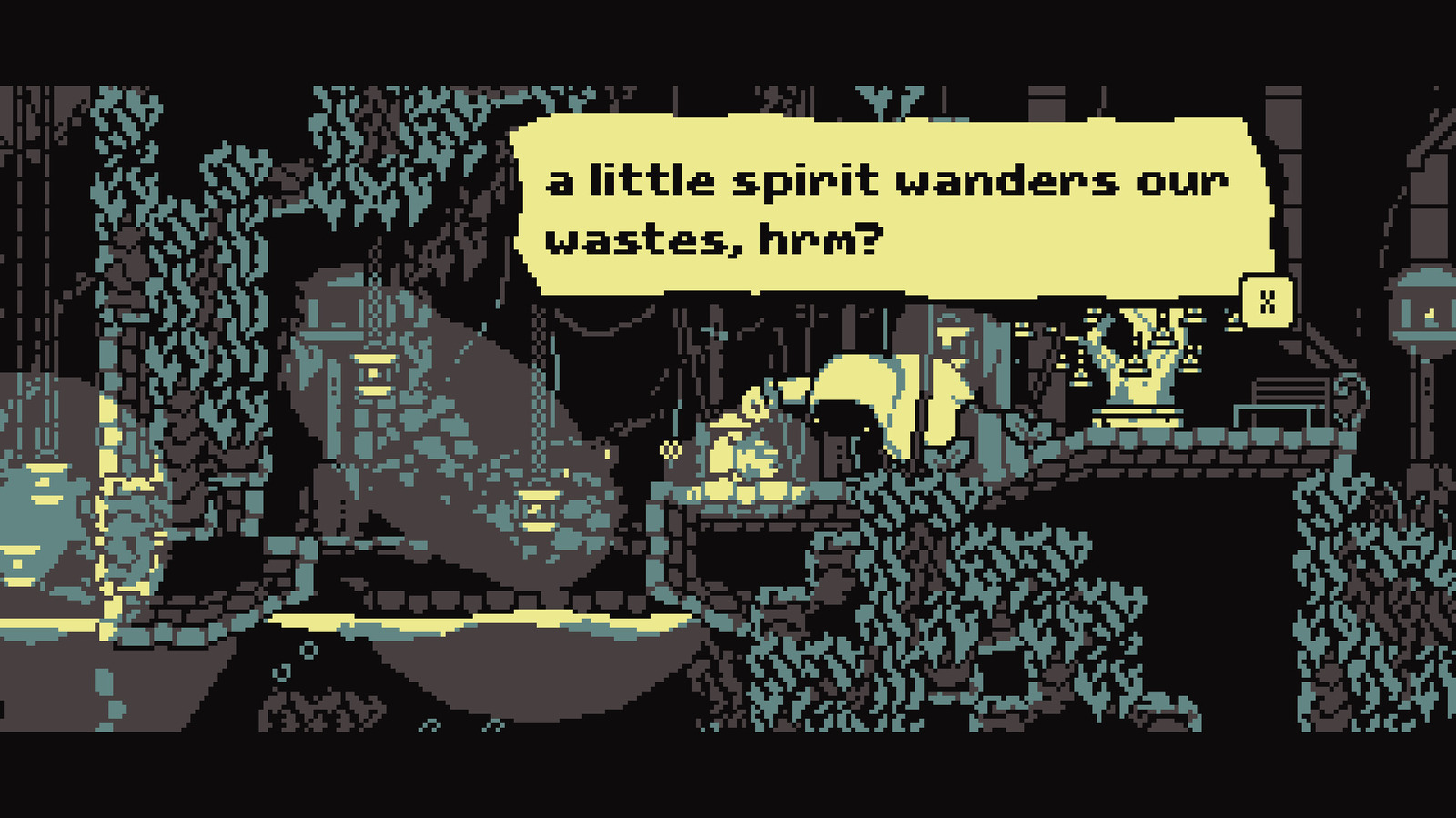
For the uninitiated, Skate Story can only be described as a Lynchian take on skateboarding. Players control a glass avatar and they perform tricks to, well, swallow the moon and defeat the devil. It was announced all the way back in 2020. We got to play it last year and came away impressed. The game was made by Sam Eng, who was behind the indie shooter Zarvot.

It’s also being published by Devolver Digital, a company that knows its way around unique gameplay concepts. It published the utterly sublime Cult of the Lamb and one of our recent favorites, Ball x Pit. The former lets you feed poop to cult followers, which makes performing kickflips as a glass-bodied demon seem downright normal.

Looking to see what all of the fuss is about? There’s a demo right now on Steam. The game’s also available for purchase on the PS5, for those who don’t wanna pony up for a PS Plus subscription.

This article originally appeared on Engadget at https://www.engadget.com/gaming/playstation/skate-story-grinds-its-way-to-playstation-plus-on-december-8-193034939.html?src=rss 

ChatGPT now offers a dedicated shopping assistant

With Black Friday around the corner, OpenAI is upgrading ChatGPT’s shopping capabilities just in time to make spending your money even easier. Starting today, the company has begun rolling out shopping research, a new feature inside of ChatGPT designed to simplify the process of comparing different products. 

The tool is available to all ChatGPT users, including those with free accounts, with the company offering nearly unlimited usage through the holidays. As long as you’re logged into your OpenAI account, you can try out the new experience by selecting “Shopping research” from the + menu. ChatGPT will also automatically route prompts it determines would be best served by the new model OpenAI has trained to answer commerce-related questions. For instance, if you type, “find the quietest cordless stick vacuum for a small apartment,” ChatGPT will know what to do. 

As it works to find products that fit your criteria, ChatGPT will ask clarifying questions.

OpenAI

In addition to comparative shopping, the new experience can help users track down deals, shop for gifts and even find lookalike products. For example, you can snap a photo of a dress and ask ChatGPT to find you something similar that costs less than $250. As you use the tool, ChatGPT will ask clarifying questions to help it narrow down its recommendations. For ChatGPT Pulse users, the tool will even be proactive, generating cards that offer personalized buying guides based on past conversations.  

The feature is powered by a variant of GPT-5 mini designed to excel specifically at shopping-related tasks. “We trained it to read trusted sites, cite reliable sources and synthesize information across many sources to produce high-quality product research,” said OpenAI. In practice, the shopping assistant should be better at accurately citing product details relative to the company’s other systems, including more powerful general-purpose models like GPT-5 Thinking. Still, OpenAI warns the tool isn’t perfect. 

“Shopping research might make mistakes about product details like price and availability, and we encourage you to visit the merchant site for the most accurate details,” the company said. Additionally, OpenAI notes the tool tends to do best in categories like electronics, beauty and home appliances where there are many details and specs the model can compare to generate comprehensive answers.  

It’s no surprise to see OpenAI expand ChatGPT’s shopping capabilities. The company already offers the option to buy items from Etsy from its chatbot, and competitors like Google have been aggressively adding AI shopping features in recent months.    

This article originally appeared on Engadget at https://www.engadget.com/ai/chatgpt-now-offers-a-dedicated-shopping-assistant-180000034.html?src=rss 

Generated by Feedzy
Exit mobile version