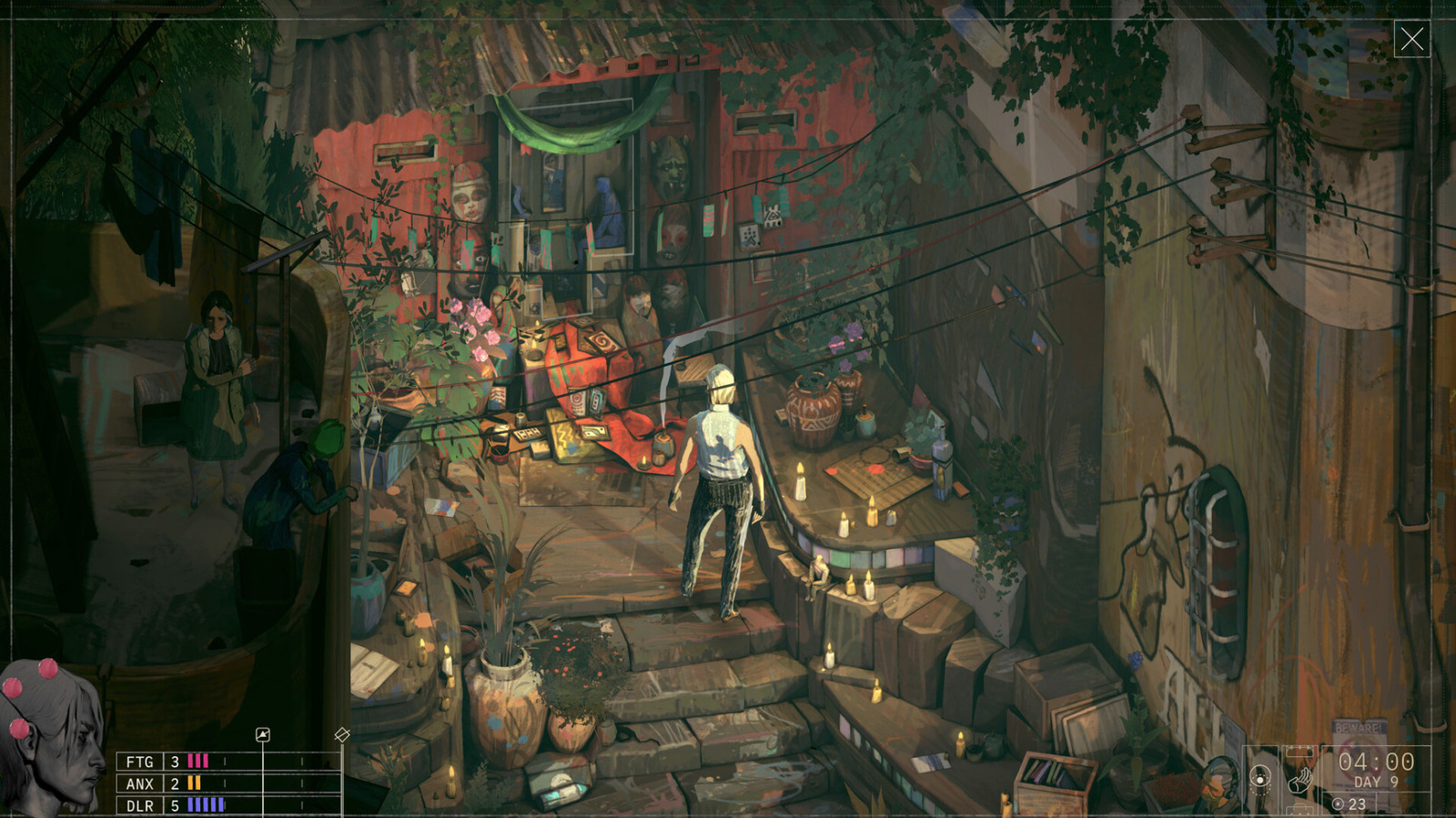
Netflix is getting rid of another of its game studios by selling it back to its founders

The developer of Cozy Grove and Alphabear is leaving Netflix. Spry Fox is being sold back to its original founders, Game File reports, and will continue to work on its upcoming “cooperative village life sim” Spirit Crossing as an independent company. Unlike other shuttered Netflix games studios Team Blue and Boss Fight Entertainment, Netflix will remain involved with the studio as Spirit Crossing‘s publisher on mobile.

As part of the arrangement, Spry Fox founders David Edery and Daniel Cook will be able to shop Spirit Crossing to other publishers for console and PC releases of the game. While reverting to being an independent studio is definitely a happier version of the typical studio closure story, it might not be without issues. Game File reports that layoffs at Spry Fox are still possible and the developer will need to find additional funding to continue long-term. Spirit Crossing may also need to be altered so that Spry Fox can continue to make money from the game after players purchase it.

Netflix acquired Spry Fox in 2022, a little over a year after it acquired Oxenfree developer Night School. Spry Fox released its first game for Netflix subscribers, a sequel to Cozy Grove, in 2024. The studio formally announced Spirit Crossing in March of this year, as an ambitious attempt to fuse the cozy life simulation elements of something like Animal Crossing: New Horizons with the online social experiences of MMOs like World of Warcraft or Final Fantasy XIV

That pitch apparently no longer jives with Netflix’s current game strategy, which changed when Epic Games’ Alain Tascan took over from ex-EA executive Mike Verdu. Whereas Netflix Games under Verdu acquired studios, funded projects and licensed an eclectic collection of mobile games for Netflix subscribers, Tascan has refocused the company’s games business around titles based on Netflix IP, social party games and known quantities, Game File writes. Spirit Crossing doesn’t fit neatly into any of those categories, which might be one reason Netflix is parting ways with Spry Fox.

This article originally appeared on Engadget at https://www.engadget.com/gaming/netflix-is-getting-rid-of-another-of-its-game-studios-by-selling-it-back-to-its-founders-203645232.html?src=rss 

Why Did Alexa & Brennon From ‘Love Is Blind’ Break Up? Here Is the Reason

The Lemieux spouses are divorcing after four years of marriage, and in his divorce filing, Brennon revealed the reason behind their split.

The Lemieux spouses are divorcing after four years of marriage, and in his divorce filing, Brennon revealed the reason behind their split. 

Crucial is a casualty of AI’s hunger for RAM

Micron Technology is winding down its consumer-facing Crucial brand to focus on providing RAM and other components to the AI industry, The Wall Street Journal reports. The company plans to continue shipping Crucial RAM and storage through February 2026, and will honor warranty service and support for its existing Crucial products even after it stops selling directly to consumers.

“The AI-driven growth in the data center has led to a surge in demand for memory and storage. Micron has made the difficult decision to exit the Crucial consumer business in order to improve supply and support for our larger, strategic customers in faster-growing segments,” Sumit Sadana, Micron Technology’s EVP and Chief Business Officer said in an announcement to investors. Micron Technology didn’t share how many jobs could be impacted by shuttering Crucial, but did note that it hoped to soften the blow via “redeployment opportunities into existing open positions within the company.”

The majority of generative AI products used today are supported by a growing network of data centers that train and host large language models. The rapid buildout of servers at these data centers has been a boon to PC parts makers like NVIDIA, who provide the GPUs used to power them, but also companies like Micron, who build the memory components these computers need to run. It’s not surprising the company would want to focus on where growing demand is, but it does put considerable strain on the remaining companies who continue to service both businesses and hobbyist PC-builders.

There were next to no true deals on memory or pre-built PCs for Black Friday due to how costly RAM has become now that AI companies are buying it in bulk. PC maker CyberPowerPC even went as far to say that “global memory (RAM) prices have surged by 500 percent and SSD prices have risen by 100 percent,” forcing it to raise prices on its products. Losing another source of RAM like Crucial likely won’t make things any better.

This article originally appeared on Engadget at https://www.engadget.com/computing/crucial-is-a-casualty-of-ais-hunger-for-ram-185910113.html?src=rss 

Tencent agrees to stop promoting its Horizon ripoff during Sony lawsuit

Tencent has agreed to stop promoting and publicly testing Light of Motiram as a lawsuit with Sony works its way through the courts, according to a report by TheGamePost. This is Tencent’s game that looks suspiciously similar to Sony’s Horizon franchise, so much so that Sony sued the publisher.

Sony wants the court to block the game from sale entirely, but as the case continues Tencent has agreed to keep Light of Motiram out of the spotlight. The company submitted a court filing that says there will be “no new promotion of public testing” of the game as Sony’s injunction request is argued. In return, Sony will give Tencent more time to respond to the injunction.

Tencent has also issued a request to dismiss the lawsuit entirely. Both companies have jointly requested that the injunction request and the motion to dismiss be moved to the same day, which could be as early as January.

For the uninitiated, Light of Motiram is an open-world hunting game that has some obvious similarities to Horizon Zero Dawn and its sequel. The basic setup is similar, as is the visual appearance of the characters and marketing materials. This all caused Sony to refer to it as a “slavish clone” in the lawsuit.

Sony

To be fair, there are differences. The Horizon games are third-person adventures in the mold of Zelda, but Light of Motiram looks to be primarily a cooperative survival game.

Tencent is a giant multi-tentacled company that actually owns Riot Games, Supercell and Funcom. It also has investment stakes in Epic, Ubisoft, Activision and Blizzard and Larian Studios, among many others. 

This article originally appeared on Engadget at https://www.engadget.com/gaming/tencent-agrees-to-stop-promoting-its-horizon-ripoff-during-sony-lawsuit-193043644.html?src=rss 

You can get three months of Amazon Music Unlimited for free right now

Amazon’s Black Friday and Cyber Monday sales might be over, but the company is still running a deal on its premium music streaming service. Right now, you can get three months of Amazon Music Unlimited for free if you’re a new subscriber.

As with most offers of this nature, your subscription will auto-renew for the full price of $12 per month (or $11 for Prime members) after your three months are up. But you can cancel whenever you like and won’t be charged a penny if you do so before the trial ends.

Amazon Music Unlimited offers lossless streaming and podcasts, and as you’d expect, it works best with Amazon’s ever-swelling army of Alexa devices. It’s a bit clunky compared to the likes of Apple Music and Spotify, and not as good for music discovery and curation, but the app has made strides over the years. It even has its own Spotify Wrapped-alike now.

If you do take advantage of this deal, bear in mind that Amazon Music Unlimited is more expensive than Apple Music, YouTube Music and Tidal without a Prime subscription, after Amazon put its prices up earlier this year. A paid Spotify Premium Individual plan costs the same as Amazon’s service (sans Prime), and you can also try that for free right now, with the company offering four months without payment provided you’ve never been a Premium subscriber in the past.

Follow @EngadgetDeals on X for the latest tech deals and buying advice.

This article originally appeared on Engadget at https://www.engadget.com/deals/you-can-get-three-months-of-amazon-music-unlimited-for-free-right-now-175508803.html?src=rss 

Russia blocks Roblox, citing ‘LGBT propaganda’ as a reason

Russia has blocked the popular gaming platform Roblox, according to a report by Reuters. The country’s communications watchdog Roskomnadzor accused the developers of distributing extremist materials and “LGBT propaganda.” The agency went on to say that Roblox is “rife with inappropriate content that can negatively impact the spiritual and moral development of children.”

This is just the latest move the country has taken against what it calls the “international LGBT movement.” It recently pressured the language-learning app Duolingo into deleting references to what the country calls “non-traditional sexual relations.”

Russian courts regularly issue fines to organizations that violate its “LGBT propaganda” law, which criminalizes the promotion of same-sex relationships. President Vladimir Putin has called the protection of gay and transgender rights a move “towards open satanism.”

An update on our safety initiatives. https://t.co/fyJ9mHtWnY pic.twitter.com/uDGlu1EqiM

— Roblox (@Roblox) December 3, 2025

Roblox doesn’t have a “LGBT propaganda” problem because there’s no such thing, but the platform does have plenty of issues that Russia doesn’t seem all that concerned about. It’s a noted haven for child predators, which has caused other countries like Iraq and Turkey to ban the platform. To its credit, the company has begun cracking down on user-generated content and added new age-based restrictions.

Roblox is still one of the more popular entertainment platforms in the world. It averaged over 151 million daily active users in the third quarter of this year alone.

This article originally appeared on Engadget at https://www.engadget.com/gaming/russia-blocks-roblox-citing-lgbt-propaganda-as-a-reason-180757267.html?src=rss 

What Was Elden Campbell’s Cause of Death? Updates on How the Lakers Alum Died

The former Lakers center died at the age of 57 on December 2, 2025. Here’s what we know so far about Campbell’s untimely death.

The former Lakers center died at the age of 57 on December 2, 2025. Here’s what we know so far about Campbell’s untimely death. 

What Is Michael Dell’s Net Worth? How Much the ‘Trump Accounts Investor’ Makes

Michael Dell’s $6.25 billion ‘Trump Accounts’ pledge has renewed attention on his vast fortune. Learn more about him and his net worth here.

Michael Dell’s $6.25 billion ‘Trump Accounts’ pledge has renewed attention on his vast fortune. Learn more about him and his net worth here. 

Zillow removes climate risk scores after agents complain about sales

Zillow has dropped its climate risk score program just one year after it started, according to a report by TechCrunch. It has removed climate risk scores from over one million listings after real estate agents complained that the data was misleading and leading to lost sales.

In their place, listings now feature a small link to data sourced from climate risk startup First Street, which is the organization that provided the original assessment. The startup isn’t too happy about this move, with spokesperson Matthew Eby telling TechCrunch that “the risk doesn’t go away; it just moves from a pre-purchase decision into a post-purchase liability.” First Street’s climate scores still appear on listings from Redfin, Realtor.com and Homes.com.

The California Regional Multiple Listing Service (CRMLS) is pleased with Zillow’s decision, as this real estate database is used primarily by industry professionals. CRMLS CEO Art Carter told The New York Times that “displaying the probability of a specific home flooding this year or within the next five years can have a significant impact on the perceived desirability of that property.”

Carter also questioned the validity of First Street’s data, saying that areas that haven’t flooded in 40 or 50 years were not likely to flood in the next five. First Street responded by saying “our models are built on transparent, peer-reviewed science and are continuously validated against real-world outcomes.”

Zillow

Zillow’s climate risk score labels have been controversial since the company launched the program in 2024, particularly among real estate agents. One agent told The Boston Globe last year that they were “putting thoughts in people’s minds about my listing that normally wouldn’t be there.” More than 80 percent of prospective buyers consider climate risks when shopping for a new home so, yeah, those thoughts are already in there.

First Street maintains that its climate risk scores are extremely useful for consumers, noting that its maps correctly identified risk for over 90 percent of the homes that burned during the Los Angeles wildfires. The company says its internal maps have been “significantly outperforming CalFire’s official state hazard maps.”

Engadget has reached out to Zillow to ask about its reasoning here. We will update this post when we hear back.

This article originally appeared on Engadget at https://www.engadget.com/big-tech/zillow-removes-climate-risk-scores-after-agents-complain-about-sales-164405763.html?src=rss 

India will no longer require smartphone makers to preinstall its state-run ‘cybersecurity’ app

India will no longer require smartphone makers to preinstall the Sanchar Saathi “security” app. After blowback from Apple, Samsung and opposition leaders, the Modi government issued a statement saying it “has decided not to make the pre-installation mandatory for mobile manufacturers.” The app is still available as a voluntary download.

India’s Ministry of Communications framed the U-turn as a result of strong voluntary adoption. The nation said 14 million users (around 1 percent of the nation’s population) have downloaded the app. “The number of users has been increasing rapidly, and the mandate to install the app was meant to accelerate this process and make the app available to less aware citizens easily,” the statement read.

The country had previously given smartphone makers 90 days to preinstall the Sanchar Saathi app on all new phones. They were also required to deliver it to existing devices via software updates. India claims its app exists solely for cybersecurity purposes. It includes tools allowing users to report and lock lost or stolen devices.

But privacy advocates warned that it could be used as a government backdoor for mass surveillance. According to the BBC, the app’s privacy policy allows it to make and manage calls and send messages. It can access call and message histories, files, photos and the camera.

Reuters reports that industry experts cited Russia as the only known precedent for such a requirement. In August, Vladimir Putin’s regime ordered the messenger app MAX to be preinstalled on all mobile devices in the country. Like with India’s example, experts warned that it could be used for surveillance.

On Tuesday, Reuters reported that Apple would not comply with India’s order, citing privacy and security concerns. Samsung reportedly followed. Opposition leaders in the Indian government also joined the fray. Senior Congress leader Randeep Singh Surjewala called on the Modi government to clarify its legal authority for “mandating a non-removable app.” Despite India’s framing, it seems likely that the two companies’ stances, along with domestic political pressure, played no small role in the reversal.

This article originally appeared on Engadget at https://www.engadget.com/cybersecurity/india-will-no-longer-require-smartphone-makers-to-preinstall-its-state-run-cybersecurity-app-171500923.html?src=rss 

Generated by Feedzy
Exit mobile version