Gina Carano Net Worth: How Much Money Does the Actress & MMA Fighter Make?

The former MMA star and actress is returning to the cage to face Ronda Rousey in 2026. Here’s everything to know about Gina Carano’s net worth and career.

The former MMA star and actress is returning to the cage to face Ronda Rousey in 2026. Here’s everything to know about Gina Carano’s net worth and career. 

Looking Glass’ Musubi showcases its holographic display in a consumer-friendly package

Looking Glass has been doggedly committed to making holographic displays the next big thing since 2019, and with its new Musubi digital photo frame, it might finally be offering its tech at a price that’s hard to deny. Musubi is scheduled to start shipping in June, and unlike the company’s previous, more developer-focused kits, the company’s new display only costs $149.

Musubi is a 7-inch frame with a glass border and white matte that acts as the home for whatever content you convert and upload to it. Looking Glass says the Musubi can store up to 1,000 images or 30-second video clips, and is able to display your content for three hours on a single charge, or indefinitely if you plug it in with an included wall adapter. You’ll have to convert your photos and videos into holographic files using Looking Glass’ free desktop app in order to display them, but once they’re converted, all you need to do is transfer them over USB-C to start showing them off on Musubi.

Musubi can also cycle through multiple holographic images.

Looking Glass

Looking Glass has offered multiple versions of this concept before — including the compact, $300 Looking Glass Go from 2023 — but Musubi is supposed to be the best representation of the company’s current display stack. The frame uses the Hololuminescent Display (HLD) technology Looking Glass announced in 2025, which “combines 2D display layers with a 3D holographic volume” to show off holograms that are viewable by multiple people at the same time, without the need for eye-tracking or glasses. It’s hard to get a sense for the whole Musubi experience from the company’s YouTube video alone, but the results seem novel, if a bit limited.

You can pre-order Musubi starting today through Looking Glass’ Kickstarter campaign. For the first 24 hours of the company’s Kickstarter, the frame will be available for $99. Afterwards, Musubi will sell for $149. Anything on Kickstarter should be treated with a certain amount of caution, but Looking Glass’ past campaigns and the company’s commitment to start shipping Musubi in June does suggest it’s confident the frame will be released without issues.

This article originally appeared on Engadget at https://www.engadget.com/ar-vr/looking-glass-musubi-showcases-its-holographic-display-in-a-consumer-friendly-package-130000304.html?src=rss 

Anthropic is opening an office in DC while battling Pentagon in court

Anthropic has launched a new research initiative called Anthropic Institute and has revealed that its Public Policy team is opening its first office in Washington, DC this spring. The company has made the announcement just a couple of days after it sued the US government to challenge the supply chain risk designation it received from the Defense Department. As Axios notes, Anthropic is tripling its Public Policy team at a time when AI companies are establishing a presence in Washington, so that they can influence future policies around artificial intelligence. In Anthropic’s case, it might have to find a way to be re-accepted by the US government first after President Trump ordered federal agencies to stop using its technology.

Sarah Heck, who joined the company as Head of External Affairs, will take over from co-founder Jack Clark as Head of Policy. Meanwhile, Clark has taken the role as Head of Public Benefit and will lead the Anthropic Institute. The company explains that the institute’s role is to “tell the world” what it learns about the challenges that arise as AI firms develop more advanced AI systems. Examples include how powerful AI technologies will reshape jobs and economies and what kinds of threats they’ll magnify or introduce.

The institute will bring together and expand Anthropic’s current research teams: The Frontier Red Team that stress-tests AI systems, the Societal Impacts team that looks at how AI is used in the real world, and the Economic Research team that tracks AI’s impact on jobs and the larger economy. Anthropic has hired Matt Botvinick, a former Senior Director of Research at Google DeepMind, and Zoë Hitzig, who studied AI’s social and economic impacts at OpenAI, to be founding members of the Institute.

This article originally appeared on Engadget at https://www.engadget.com/ai/anthropic-is-opening-an-office-in-dc-while-battling-pentagon-in-court-115700127.html?src=rss 

Meta rolls out new features for scam protection

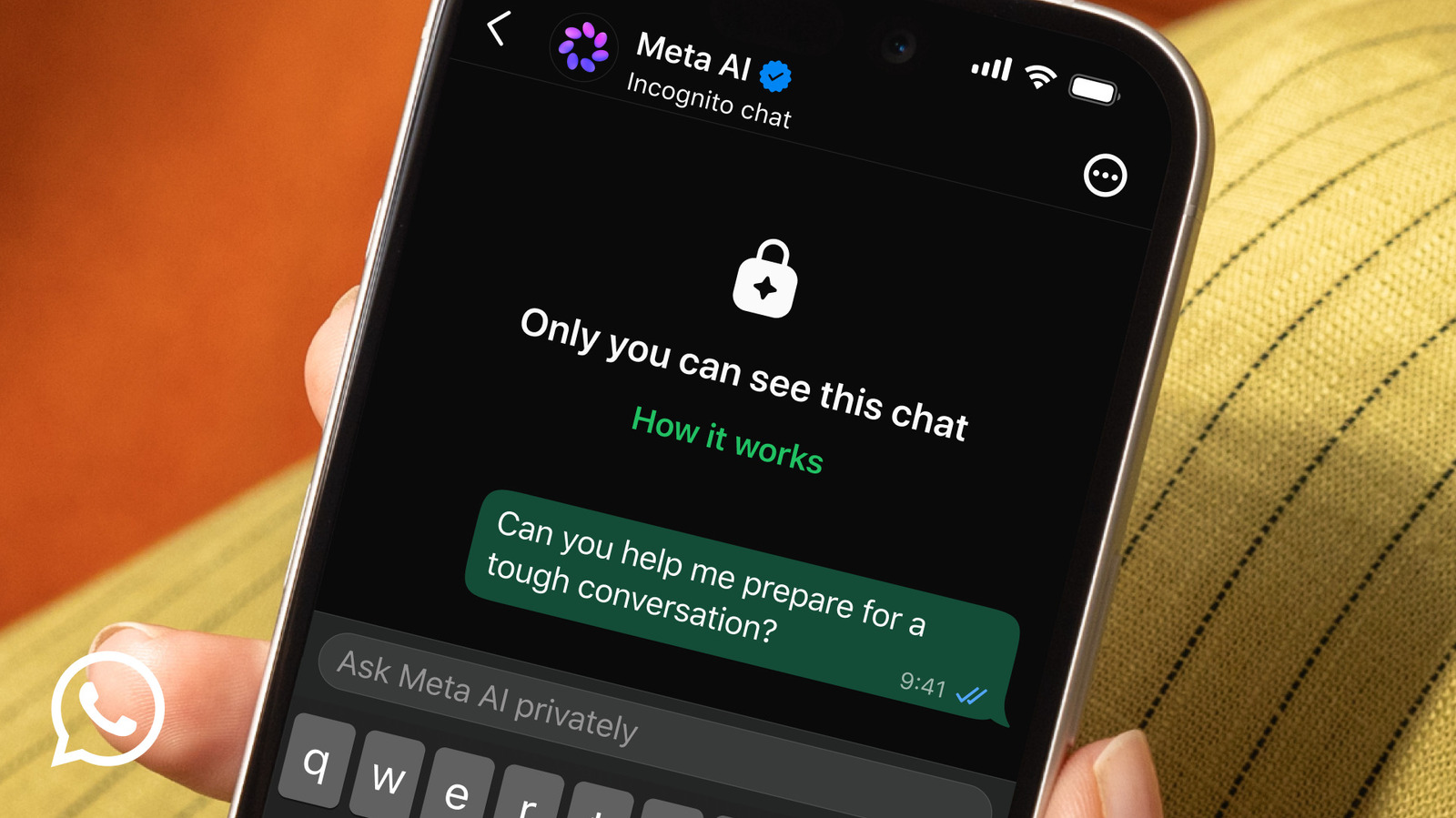
Meta announced new features today aimed at cracking down on scams perpetrated via its platforms. First, Meta is launching AI tools for identifying impersonator of brands and celebrities, as well as for detecting deceptive links, which should help it to quickly take down frauds. Second, it is adding new alerts to caution against interacting with a potentially fraudulent account. Facebook will roll out alerts for suspicious friend requests, WhatsApp is getting warnings for device linking requests, and Messenger will also issue warnings if an account seems suspect.

Finally, Meta is also continuing to expand its processes for advertiser verification. The company said it aims to have verified advertisers account for 90 percent of its ads revenue by the end of the year, up from the current share of 70 percent. Last year, Meta estimated that marketing for scams and banned products could have been responsible for 10 percent of its 2024 revenue. 

The social media company has been ramping up its actions against scams, particularly those known as celeb bait. Last month, it sued three entities from Brazil and China that were behind scams that leveraged images and deepfakes of popular people to promote dubious products and investment schemes. Meta said today that over the course of 2025, it removed 159 million scam ads as well as 10.9 million Facebook and Instagram accounts tied to criminal scam centers.

This article originally appeared on Engadget at https://www.engadget.com/social-media/meta-rolls-out-new-features-for-scam-protection-110000173.html?src=rss 

Google starts rolling out Gemini in Chrome to users in Canada, India and New Zealand

At the start of the year, Google brought a host of new Gemini-powered features, including built-in Nano Banana image generation, to Chrome. After debuting in the United States, those features are now making their way to Chrome users in Canada, India and New Zealand, with support for 50 additional in tow. Among the new languages Gemini in Chrome can now converse in are French, Gujarati, Hindi and Spanish.   

To try out Gemini in Chrome, tap the sparkle icon at the top right of the interface. This will open the sidebar interface Google introduced in January. From there, you can chat with the company’s Gemini chatbot without the need to switch tabs. From the sidebar, you can also access Google’s in-house image generator. Additionally, Gemini in Chrome offers integrations with Gmail, Maps, Calendar, YouTube and other Google apps. If you live outside Canada, India or New Zealand, Google says it will make Gemini in Chrome available in more countries and languages throughout the rest of 2026. Oh, and if don’t want to use Gemini in Chrome, you can right click on the sparkle icon and select unpin to never see it again.

This article originally appeared on Engadget at https://www.engadget.com/ai/google-starts-rolling-out-gemini-in-chrome-to-users-in-canada-india-and-new-zealand-023000528.html?src=rss 

Social Security watchdog investigating claims that DOGE engineer copied its databases

The inspector general’s office of the Social Security Administration is investigating allegations of a security breach by a member of the so-called Department of Government Efficiency operation spearheaded by Elon Musk. A whistleblower has claimed that a former software engineer from DOGE said he possessed two databases from the SSA, “Numident” and the “Master Death File.” The person reportedly asked for help transferring the databases from a thumb drive “to his personal computer so that he could ‘sanitize’ the data before using it at [the company],” an unnamed government contractor where he is currently employed. Those databases include personal information about more than 500 million living and deceased Americans. 

The Washington Post reported that the whistleblower complaint was filed with the inspector general in January. “When The Post contacted the agency and the company in January, both said they had not heard of the complaint. Both said they subsequently looked into the allegations and did not find evidence to confirm the claims,” the publication said. It is unclear why the complaint is now being investigated and neither party offered comment this week for The Post‘s article. The SSA watchdog informed both members of Congress and the Government Accountability Office of its investigation. 

These allegations follow a different whistleblower complaint filed last August about DOGE access and mishandling of data from the SSA. Charles Borges, former chief data officer at the agency, claimed that a SSA database was stored in an unsecured cloud environment. “This is absolutely the worst-case scenario,” Borges told The Post of the latest claims. “There could be one or a million copies of it, and we will never know now.”

This article originally appeared on Engadget at https://www.engadget.com/cybersecurity/social-security-watchdog-investigating-claims-that-doge-engineer-copied-its-databases-212722061.html?src=rss 

Metadata company Gracenote is the latest to sue OpenAI for copyright infringement

AI companies have been spending a lot of time in court arguing copyright cases over the past year and the latest plaintiff is Gracenote, the metadata company owned by Nielsen. Axios reports that Gracenote is suing OpenAI for the unauthorized and unpaid use of both its metadata and its framework for connecting that information.

Gracenote specializes in entertainment metadata, creating descriptions and identifiers for content that clients such as TV providers use to help their own customers with discovery. Most of the lawsuits against AI businesses have focused on the content used to train LLMs, but the Gracenote case brings an extra layer with the alleged infringement of the structure or sequence for a dataset in addition to the actual data. 

“Defendants could have paid Gracenote to license its valuable Gracenote Data. Or they could have sought to train and ground their models only on information in the public domain. They did neither. Defendants instead improperly copied and used Gracenote Data to create their own commercially valuable AI products, all without paying a dime,” the complaint states. The company claims that its previous attempts to work with OpenAI for a licensing agreement were rebuffed or ignored. Gracenote has recently inked deals to back AI ventures from other companies, including Samsung and Google.

This article originally appeared on Engadget at https://www.engadget.com/ai/metadata-company-gracenote-is-the-latest-to-sue-openai-for-copyright-infringement-200347812.html?src=rss 

Amazon wins a temporary injunction against Perplexity’s Comet browser

Amazon has secured a temporary win in its fight with Perplexity over the use of AI shopping bots. Bloomberg reported that a San Francisco federal court has determined that Perplexity must stop using its Comet web browser’s AI agent to make purchases for users on Amazon’s marketplace. The AI company will have a week to appeal the decision, otherwise it has been ordered to stop accessing any password-protected areas of Amazon’s systems and destroy its copies of Amazon’s data while the two companies continue to argue their cases.  

“Amazon has provided strong evidence that Perplexity, through its Comet browser, accesses with the Amazon user’s permission but without authorization by Amazon, the user’s password-protected account,” District Judge Maxine Chesney wrote in placing the temporary block.

“The preliminary injunction will prevent Perplexity’s unauthorized access to the Amazon store and is an important step in maintaining a trusted shopping experience for Amazon customers,” an Amazon spokesperson told Bloomberg.

Amazon sent a cease-and-desist letter to Perplexity over the AI company’s shopping bots in November. According to Amazon, use of the Comet agent to make purchases is a violation of its terms of service. “Perplexity will continue to fight for the right of internet users to choose whatever AI they want,” a representative from Perplexity said of this week’s decision.

This article originally appeared on Engadget at https://www.engadget.com/ai/amazon-wins-a-temporary-injunction-against-perplexitys-comet-browser-184000462.html?src=rss 

Generated by Feedzy
Exit mobile version