Sony adds the Bravia Theater Bar 5 and Bar 7 to its soundbar lineup

Sony already has a robust collection of soundbars in its Bravia Theater lineup. Today, the company is adding two more, as well as new rear speakers and three new subwoofers. The Bar 7 will sit in Sony’s premium tier, alongside the existing (and larger) Bar 8 and Bar 9 models, while the Bar 5 will offer a more compact and more affordable solution just below the current Bar 6.

The Bravia Theater Bar 7 utilizes nine total drivers to produce Dolby Atmos, DTS:X and IMAX Enhanced sound. More specifically, that arrangement includes three woofers, two tweeters, two up-firing units and two side-firing drivers, in addition to four passive radiators. Compare that to the Bar 8 and Bar 9 which house 11 speakers and 13 speakers respectively. Sony says the Bar 7 has new two-way front speakers and the center, up-firing and side-firing drivers all have the company’s oval-shaped X-Balanced design. In terms of features, you get Sony’s 360 Spatial Sound Mapping and Sound Field Optimization for more immersive audio performance.

The Bar 7 will come bundled with Sony’s new Bravia Theater Sub 7 for $870, but you can also purchase it without the subwoofer (pricing TBA). For a more robust system, the Bar 7 can be paired with the company’s Bravia Theater Rear speakers.

Sony Bravia Theater Sub 7

Sony

Speaking of subwoofers, Sony debuted three new models today. The aforementioned Sub 7 is the smallest, employing a 5.1-inch driver for the low-end tone. Move up to the new Sub 8 and you get a 7.9-inch driver for “enhanced atmosphere, clearer bass,” according to the company. The largest of the new options is the Sub 9 which has two opposing 7.9-inch drivers for “powerful, clean bass.” Unfortunately, these add-ons don’t come cheap: the Sub 7 is $330, the Sub 8 is $500 and the Sub 9 is $900.

Sony also touts dual subwoofer connectivity as part of the refreshed Bravia Theater lineup. All three of the new subs can be used as a pair, so long as you have a Theater Bar 7, Theater Bar 8 or Theater Bar 9. You can also use two subwoofers with some of Sony’s receivers (STR-AZ7000ES, STR-AZ5000ES, STR-AZ3000ES, STR-AZ1000ES and STR-AN1000). The company explains that opting for two subs provides “stronger, more balanced bass,” obviously, that fills the room for a more “cinematic effect.” Sony also says two subwoofers enable “richer, fuller bass” at lower volumes.

Rear speakers are something you’ll need if you truly want immersive audio, and the new Theater Rear 9 units are a big upgrade over the current Rear 8s. Most notably, you get an up-firing driver for enhanced overhead sounds along with two passive radiators, in addition to a tweeter and a woofer. The drivers all have aluminum diaphragms instead of paper, and the Rear 9s come with a swivel wall mounts that enable 60-degree movement. A pair of Theater Rear 9 speakers will set you back $750.

Sony Bravia Theater Bar 5

Sony

If all of that sounds too expensive for your living room, Sony has something more affordable in the midrange area. The Bravia Theater Bar 5 is just $350 and still offers Dolby Atmos and DTS:X audio. It doesn’t have up-firing drivers, it’s a 3.1-channel setup, so any overhead effects will be simulated. Still, that’s probably okay if you have a smaller space or live in an apartment as the upmixing tech (S-Force Pro Front Surround and Vertical Sound Engine) should provide ample immersion. The Bar 5 does come with a subwoofer though, and you can employ Sony’s Voice Zoom 3 feature for enhanced dialogue.

The Bravia Theater Bar 7, all three of the new subwoofers and the Rear 9 will be available for pre-order later this spring. The Bar 5 is up for pre-order starting today.

This article originally appeared on Engadget at https://www.engadget.com/audio/speakers/sony-adds-the-bravia-theater-bar-5-and-bar-7-to-its-soundbar-lineup-160000680.html?src=rss 

Sony’s upcoming Bravia 3 II is a mid-range LED TV available in sizes up to 100 inches

Sony just revealed the upcoming Bravia 3 II mid-range LED TV. It’ll be available in sizes all the way up to 100 inches, for those in need of a home theater centerpiece. It’s considered a mid-range device, but is still outfitted with plenty of tech typically reserved for the company’s high-end displays.

First of all, these TVs ship with Sony’s XR processor. This grants access to the company’s proprietary Clear Image algorithm, auto HDR tone mapping and more. It’s nice to see these features expand beyond flagship products.

The 4K LED display supports Dolby Vision, Atmos and DTS:X, with refresh rates up to 120Hz. It also features four HDMI 2.1 ports, so you can hook up a Switch 2, a PS5 and an Xbox Series X all at the same time with a port to spare.

The software here is integrated with Google Gemini, allowing for all kinds of voice commands. Finally, the TVs ship with Sony’s new Inclusive Remote Control, which has been designed for accessibility.

The Bravia 3 II line will start showing up at retailers this spring. Prices start at $600 for a 43-inch model and go all the way up to $3,100 for that 100-inch monstrosity.

This article originally appeared on Engadget at https://www.engadget.com/home/home-theater/sonys-upcoming-bravia-3-ii-is-a-mid-range-led-tv-available-in-sizes-up-to-100-inches-160002697.html?src=rss 

Reddit will prompt some accounts to ‘verify humanness’ in latest bot crackdown

Reddit CEO Steve Huffman has detailed the company’s latest plan to fight bots and it means that some accounts will need to “verify humanness,” though the company is stopping short of widespread identity verification. In an update, Huffman said that in “rare” cases accounts that seem “fishy” will be prompted for additional verification.

Such prompts “will not apply to most users,” according to Huffman, but will apply to accounts where Reddit detects signs of automated posting or bot-like behavior. If the account doesn’t pass the verification test, it may be “restricted” from the platform. For now, verification will take the form of on-device methods, including FaceID and passkeys. But the company is considering alternative methods, including World ID, the face-scanning orb company run by Sam Altman. “I think the internet needs verification solutions like this, where your account information, usage data, and identity never mix,” Huffman writes. 

As part of the new policy, Reddit is also adding an “[APP]” label to existing “good” bots on the platform and making it easier for users to report suspected “bad” bots. The company is also grappling with a growing number of age verification laws. Reddit is “exploring” ways to “comply with these regulations without compromising user privacy,” Huffmans said.

The company is clearly trying to walk a careful line in how it approaches verification. Huffman notes that Reddit intends to “confirm humanness” rather than verify users’ actual identities, which would erode the anonymity that Reddit is known for. But the rise of agentic AI has meant that Reddit is contending with the same sorts of bot-driven spam that took down the short-lived reboot of Digg.

Of course, Reddit is also filled with AI-generated material that’s shared by actual humans but may be considered spammy by other users. The company has no plans to crack down on such content, at least for now, according to Huffman. “For better or worse, using AI to write is part of how people will communicate in the future (albeit annoying), so our current focus is to ensure there is a real, live human behind the accounts you’re seeing.”

This article originally appeared on Engadget at https://www.engadget.com/social-media/reddit-will-prompt-some-accounts-to-verify-humanness-in-latest-bot-crackdown-161000181.html?src=rss 

Spotify is testing a tool to help real artists deal with AI slop on their profiles

Low-quality, mass-produced AI songs have been flooding music streaming platforms like Spotify for a couple of years now. This is annoying, but relatively easy for fans to avoid. However, it leads to real problems for artists. There’s so much slop coming in that some gets falsely attributed to actual musicians on these platforms.

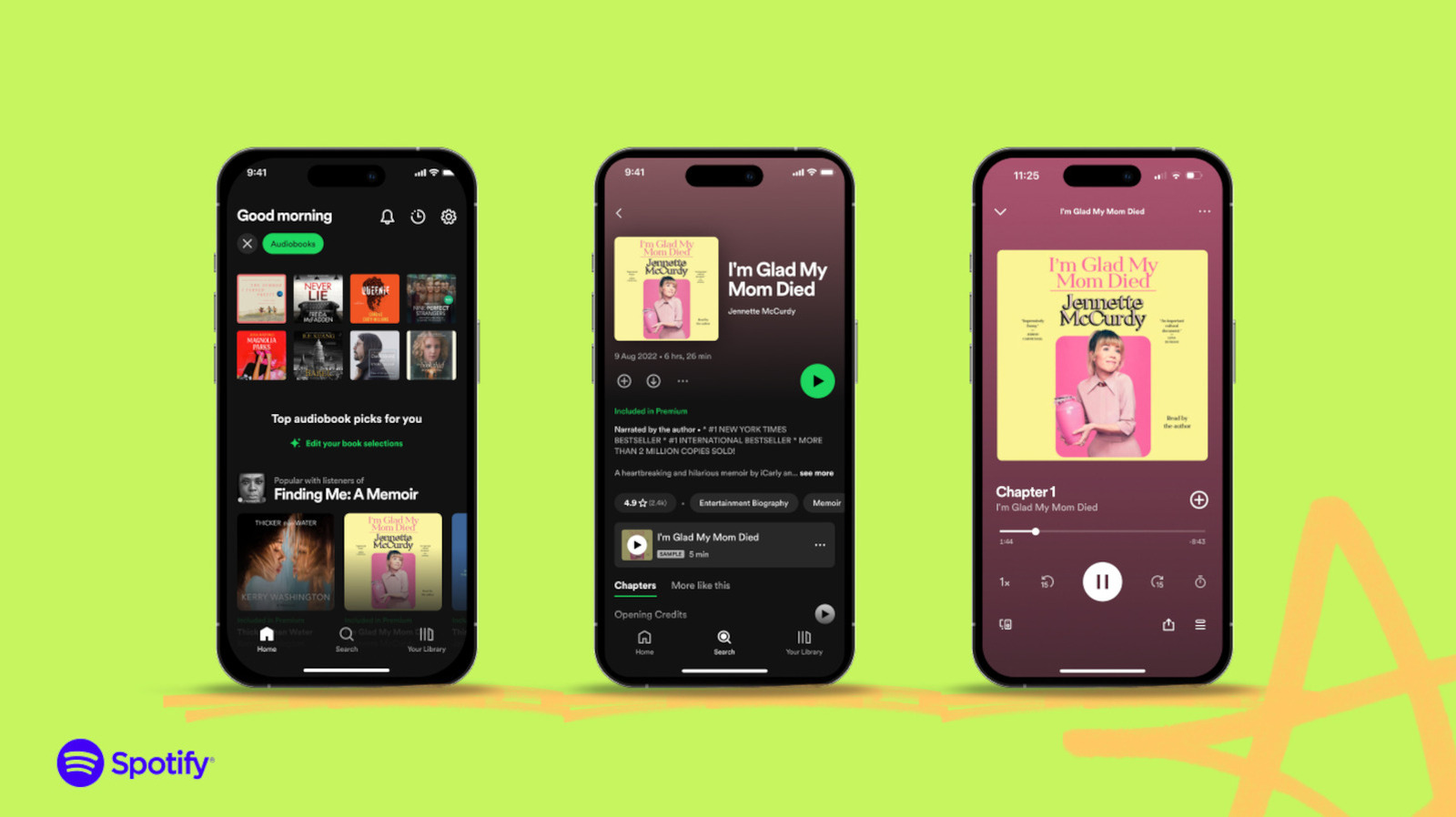
This messes with brand identity and audience retention, but Spotify is testing a new tool to help real artists exercise more control over their profiles. The platform’s Artist Profile Protection feature lets musicians review releases before they go live and become associated with their profiles.

Spotify

This should prevent AI slop from creeping in, as the actual artist will have final say when 100 new songs show up out of the blue that sort of sound like them but with all of that pesky soul removed. It’s in beta right now and if an artist denies a track, it won’t be associated with their profile, won’t contribute to stats and won’t show up in user recommendations. This looks to be a simple and potentially effective solution to an ongoing problem.

“Music has been landing on the wrong artist pages across streaming services, and the rise of easy-to-produce AI tracks has made the problem worse,” Spotify wrote in a blog post. “We know how frustrating this can be for both artists and fans alike.”

This comes just a week after Sony requested the removal of more than 135,000 AI-generated songs from Spotify after it was discovered the tracks were impersonating real artists. This even happens to bands that have opted out of Spotify entirely. King Gizzard & the Lizard Wizard left the platform last year, to protest CEO Daniel Ek’s investment in a weapons manufacturing company, but a deepfake artist quickly filled the vacuum.

Some of this isn’t malicious. It’s a numbers game for the “creators” of these tracks. Statistics vary, but it’s been estimated that around 50,000 AI-generated songs get uploaded to Spotify each and every day. The platform deleted 75 million of these tracks last year. With this many uploads, it’s easy for tracks to accidentally end up on the wrong artist’s profile. Bad actors looking to attach their slop to a known quantity compounds the issue.

In any event, it’s good that Spotify is doing something about this. We don’t know when the tool will exit the beta phase and become available for all artists on the platform. That day can’t come soon enough. 

This article originally appeared on Engadget at https://www.engadget.com/ai/spotify-is-testing-a-tool-to-help-real-artists-deal-with-ai-slop-on-their-profiles-161013653.html?src=rss 

Supreme Court rules ISPs aren’t liable for subscribers’ music piracy

The Supreme Court ruled unanimously on March 25 that Cox Communications is not liable for copyright infringement committed by its subscribers, reversing a 2024 appeals court decision that had upheld the ISP’s liability.

Sony Music Entertainment and other major labels sued Cox in 2018, arguing the company failed to terminate internet service for subscribers repeatedly flagged for pirating copyrighted music. A jury awarded $1 billion in statutory damages after finding Cox willfully infringed all 10,017 copyrighted works at issue, though this was overturned on appeal and a new trial was ordered.

Writing for the court, Justice Clarence Thomas said a provider is not liable “for merely providing a service to the general public with knowledge that it will be used by some to infringe copyrights.” A provider is liable only if it intended or actively encouraged the infringement, Thomas wrote. The decision applies the same framework the court used in 2005 when it found file-sharing service Grokster liable for promoting piracy.

Cox serves approximately six million subscribers and contractually prohibits them from using their connections to distribute copyrighted content. A firm enlisted by the labels to track piracy sent Cox 163,148 infringement notices over a roughly two-year period. Cox terminated just 32 subscribers for copyright infringement during that span.

This article originally appeared on Engadget at https://www.engadget.com/entertainment/streaming/supreme-court-rules-isps-arent-liable-for-subscribers-music-piracy-163412791.html?src=rss 

Mark Zuckerberg, Jensen Huang and Sergey Brin join Trump’s tech advisory panel

The leaders of several major tech companies will offer the White House their opinions on tech and science policy as part of an advisory council. Mark Zuckerberg, Jensen Huang, Michael Dell and Larry Ellison — the CEOs of Meta, NVIDIA, Dell and Oracle, respectively — are joining the panel alongside Google co-founder Sergey Brin and AMD CEO Lisa Su. Venture capitalist Marc Andreessen, who has donated to super PACs that support President Donald Trump, will serve on the panel too.

The latest iteration of the President’s Council of Advisors on Science and Technology (PCAST) has 13 members, though that could expand to 24. White House AI and cryptocurrency czar David Sacks co-chairs PCAST alongside Trump’s science advisor, Michael Kratsios.

“Under President Trump, PCAST will focus on topics related to the opportunities and challenges that emerging technologies present to the American workforce, and ensuring all Americans thrive in the Golden Age of Innovation,” the White House told The Wall Street Journal in a statement. Zuckerberg said he was “honored to join the president’s council and work with other industry leaders” to help ensure the US is the world leader in AI.

George W. Bush established PCAST with a 2001 executive order, and some notable executives have been involved with the panel. Barack Obama’s advisors included then-Google executive chairman Eric Schmidt and former Microsoft chief research and strategy officer Craig Mundie, while ex-Disney CEO Bob Iger served on PCAST during Trump’s first term. Joe Biden’s panel included Su.

The tech CEOs all have a personal and professional stake here, given the potential impact of federal rules on them and their businesses. It’s worth noting that Meta, Google and Huang all chipped in to help pay for the construction of Trump’s White House ballroom. Google, Meta and NVIDIA were among the companies that each donated $1 million to the committee for Trump’s second inauguration.

Meanwhile, Ellison — whose family has spent much of the last couple of years building a media empire that includes Paramount and potentially Warner Bros. Discovery — has close ties to Trump. Oracle is also one of the companies that backed the takeover of the US version of TikTok, a deal that Trump approved with an executive order. It was reported this month that the Trump administration is receiving $10 billion for brokering the buyout.

This article originally appeared on Engadget at https://www.engadget.com/big-tech/mark-zuckerberg-jensen-huang-and-sergey-brin-join-trumps-tech-advisory-panel-144722797.html?src=rss 

Stephen Colbert’s ‘Lord of the Rings’ Movie: Updates on Cast, Plot, Release Date & More

The comedian and writer landed a new gig now that his late-night TV show is ending this May. Get updates on the upcoming ‘Lord of the Rings’ film here.

The comedian and writer landed a new gig now that his late-night TV show is ending this May. Get updates on the upcoming ‘Lord of the Rings’ film here. 

Anthropic releases safer Claude Code ‘auto mode’ to avoid mass file deletions and other AI snafus

Anthropic has begun previewing “auto mode” inside of Claude Code. The company describes the new feature as a middle path between the app’s default behavior, which sees Claude request approval for every file write and bash command, and the “dangerously-skip-premissions” command some coders use to make the chatbot function more autonomously. 

With auto mode enabled, a classifier system guides Claude, giving it permission to carry out actions it deems safe, while redirecting the chatbot to take a different approach when it determines Claude might do something risky. In designing the system, Anthropic’s goal was to reduce the likelihood of Claude carrying out mass file deletions, extracting sensitive data or executing malicious code. 

Of course, no system is perfect, and Anthropic warns as such. “The classifier may still allow some risky actions: for example, if user intent is ambiguous, or if Claude doesn’t have enough context about your environment to know an action might create additional risk,” the company writes. 

Anthropic doesn’t mention a specific incident as inspiration for auto mode, but the recent 13-hour AWS outage Amazon suffered after one of the company’s AI tools reportedly deleted a hosting environment, was probably front of mind for the company. Amazon blamed that specific incident on human error, saying the staffer involved in the incident had “broader permissions than expected.”

Team plan users can preview auto mode starting today, with the feature set to roll out to Enterprise and API users in the coming days.

This article originally appeared on Engadget at https://www.engadget.com/ai/anthropic-releases-safer-claude-code-auto-mode-to-avoid-mass-file-deletions-and-other-ai-snafus-142500615.html?src=rss 

Stephen Colbert is writing a new Lord of the Rings movie

It’s been quite a while since we visited Middle-Earth on the big screen (anime prequels aside), but it looks like Lord of the Rings fans have plenty to look forward to in the coming years. We already knew that Andy Serkis’ The Hunt for Gollum was in the works — and by all accounts is progressing nicely — but another Rings-related film is in development too, and it’s being co-written by none other than Stephen Colbert.

The announcement came from Peter Jackson himself, in a video posted by Warner Bros. to coincide with Tolkien Reading Day. The director of the Lord of the Rings trilogy provided a quick update on Serkis’ film (the British actor is both directing and reprising his role as Gollum), before introducing “very special partner” and diehard Tolkien fan Colbert on a video call.

With The Late Show nearing its end, its host was seemingly going to be out of work in the summer. Colbert is working with his son Peter as well as screenwriter Philippa Boyens (who co-wrote the original film trilogy). They’ll adapt some early chapters of Fellowship of the Ring that never made it into Jackson’s 2001 film. The Lord of the Rings: Shadow of the Past is actually set 14 years after the events of Return of the King, and will see Sam, Merry and Pippin retrace the first steps of their famous adventure.

So while the new film is inspired specifically by Fellowship chapters III (‘Three is Company’) through VIII (‘Fog On The Barrow-Downs’), it sounds like we’re actually getting a sequel of sorts, in which we’ll also see Sam’s daughter Elanor make a huge discovery that puts her on her own quest.

Colbert and his son had been scribbling away at their idea for several years before plucking up the courage to show what they had come up with to Jackson, but the legendary 64-year-old filmmaker was clearly a fan. And given the timing of the announcement, Colbert will soon be able to commit all of his energy to the project, which has not yet named any cast members. Will Sean Astin, Billy Boyd and Dominic Monaghan be dusting off their hobbit attire? Only time will tell, but the time jump would presumably make it possible.

The Lord of the Rings: Shadow of the Past doesn’t have a release date, but its announcement coincides with the 25th anniversary of Fellowship of the Ring, which has already been marked by the whole trilogy returning to theaters earlier this year.

This article originally appeared on Engadget at https://www.engadget.com/entertainment/tv-movies/stephen-colbert-is-writing-a-new-lord-of-the-rings-movie-143004743.html?src=rss 

Ring adds 4K to its battery-powered video doorbells

Ring has today announced a spec bump to its battery-powered video doorbells for all those folks who can’t wire their units to power. The flagship Battery Doorbell Pro (2nd gen) gets 4K video, with 10x zoom and the promise of far longer time between recharges than the previous model. At the same time, it’s bringing 2K imaging to its lower-end battery doorbells, the Battery Doorbell Plus and Battery Doorbell (2nd gen). The former, as fitting its higher price, gets a quick-release battery pack, while both models get 2K video and 6x zoom. Naturally, these features are already available on Ring’s wired products, the bulk of which were announced back in September 2025.

The company is also aware that swapping out batteries isn’t ideal if you really need a doorbell to work all of the time. That’s why it’s also launching a new Solar Charger which integrates into the mount, keeping your doorbell running for longer between trips to the wall outlet. There’s also a bigger Solar Panel, which pumps out more juice than its smaller sibling, and can be mounted in a wider variety of places. All of the above are available to pre-order from today, and are priced as follows: Pro ($250), Plus ($180), Battery Doorbell ($100), Solar Charger ($50), Solar Panel ($60).

This article originally appeared on Engadget at https://www.engadget.com/home/ring-adds-4k-to-its-battery-powered-video-doorbells-130021181.html?src=rss 

Generated by Feedzy
Exit mobile version