Amazon’s budget-friendly answer to the Frame TV will start shipping on April 22

When Amazon introduced the Ember Artline TVs in January, it didn’t have a specific date of availability to share. Now, the company is ready to supply the details: Pre-orders open today, and units ship on April 22 in the US and Canada, “with the UK and Germany to follow.” The company also announced a new version of its Fire TV Stick HD this morning, as well as some new features for its Fire TV software.

For those who don’t remember offhand, the Ember Artline is basically Amazon’s answer to Samsung’s Frame TV. It’s a matte, 4K QLED panel that can double as artwork when you’re not watching TV, and to that end, Amazon is including more than 2,000 pieces of art for free. That’s also part of the Fire TV package that comes on the new Fire TV Stick HD, so you don’t necessarily need an Ember Artline to access them.

In its press release, Amazon said “Our collection spans artistic movements and includes Impressionist classics by Monet, Degas, and Renoir, alongside contemporary works of street art, murals, mixed media, and photography. Customers also have access to 60 exclusive motion video pieces commissioned by documentary filmmaker Sam Nuttmann, who traveled the world capturing landscape and wildlife scenes.”

To make it easier to match the Ember Artline to your room’s decor, there are 10 frame color options to choose from, and the varieties I saw (a faux wood grain and a muted teal metallic finish) looked quite pleasant. If you really want some help finding artwork that will fit your space, Amazon’s “Match the room” feature might come in handy.

A person holding up a phone taking photos of a room with an Ember Artline TV on the wall.

Amazon

At a recent demo, I watched as the company’s representatives scanned a QR code from the TV to pull up the tool on their phone. There, they took three photos of the environment (surrounding walls and furniture, for example) and the system generated suggested pieces of art from the gallery. Using the TV remote, they were then able to choose from the recommendations on the big screen.

In my brief experience, the suggestions were typically quite good at matching the vibe, while offering a variety of styles (geometric, landscapes, modern etc) each time. According to the press release, “the AI tool will suggest artwork from our collection based on the room’s colors, overall style, and any recurring themes in their existing artwork, including nature or travel photography.”

If you’d like a more personal touch, you can showcase your own photos instead by connecting your Amazon Photos account. You can also ask Alexa+ to
“play a slideshow of us biking in the mountains,” for example, to pull up memories ad hoc.

An animated GIF showing the Ember Artline TV in various rooms and settings with varying decor.

Amazon

That’s not the only new feature coming to the Fire TV ecosystem, by the way. In addition to adding Alexa+ support and the new Fire TV UI it showed off in January, Amazon said that this month, it’s “adding another tool for US customers to seamlessly transfer a show or sports game by asking Alexa to move the content to another enabled Fire TV device in your home.”

So say you started watching a show in your bedroom and wanted to continue on the bigger screen in your living area. You could say “Alexa, move this to the living room.” The demo I saw took place on two Ember Artline TVs on adjacent walls, so the speediness was quite noticeable.

After the VP for Fire TV Aidan Marcuss asked the assistant to move the content over, the second TV picked up where the first left off in just about a second or two. Maybe real-world performance may vary but I can’t imagine dashing from my bed to my couch in under three seconds just to avoid missing precious moments of The Boys drama.

For now, the feature is limited to Prime Video content, and Amazon said it plans “to roll it out to more services over time.”

The Ember Artline comes in 55-inch and 65-inch sizes and starts at $900. For context, Samsung’s The Frame (not the Pro versions) is available as a 32-inch model that costs $600, while the 65-inch configuration starts at $1,100 at the moment.

This article originally appeared on Engadget at https://www.engadget.com/home/home-theater/amazons-budget-friendly-answer-to-the-frame-tv-will-start-shipping-on-april-22-130000337.html?src=rss 

Adobe’s Firefly AI Assistant works across Photoshop, Premiere and other apps

Few creative software companies have embraced AI like Adobe, with the company embedding image, video, audio and vector generation tools into nearly all its apps. Now, Adobe is taking on AI apps like Gemini’s Nano Banana with its new prompt-based Firefly AI Assistant. You simply describe the outcome you want and it will execute “complex multi-step workflows” across Photoshop, Premiere, Lightroom, Illustrator and other apps to achieve that result, Adobe says. 

The complexity of apps like Photoshop creates a “barrier to entry” for users who may have a vision but lack skill, according to Adobe. That’s where the FireFly AI Assistant comes in. It works much like ChatGPT and other prompt-based AI assistants, but it has Adobe’s suite of powerful apps behind it to execute the required steps. “You no longer have to map the process. You can start from the outcome,” the company says. 

Adobe emphasizes that while the Firefly AI Assistant is doing the grunt work, you remain in control. “You stay in the loop as the assistant executes, stepping in at any point to guide direction, adjust outputs and create something that’s distinctly yours.” It also maintains Adobe’s native file formats, so the final output remains fully editable. 

Adobe

You’ll be able to launch complex workflows with Creative Skills that let you run multi-step workflows from a single prompt, then customize them to your working style. For instance, you can start with the “social media assets” skill then direct the assistant to crop or use Generative Extend to make it fit the format of Instagram, Facebook and other platforms. 

It can also handle context-aware creative decisions. In one example, Adobe describes a product photo set in a forest. “The assistant might give you a simple slider to increase or reduce the surrounding trees and foliage — making it easy to adjust the scene without complex edits,” the company explains. Finally, to gather and act on feedback, the Assistant can organize and share work among team members via Adobe’s Frame.io. 

Adobe emphasizes that Firefly AI Assistant is grounded in the company’s pro-grade creative tools to deliver “precise, context aware results” in a way that other AI agents can’t and will learn your style over time. That’s an argument the company no doubt hopes will counter a narrative that generative AI apps like Nano Banana are “eating software” like Adobe Photoshop. Adobe’s Firefly AI Assistant will arrive in public beta in the coming weeks. 

Should you wish to use other AI image generator within Adobe apps, the company has added Kling 3.0 and Kling 3.0 Omni, “all-purpose video models optimized for fast, high-quality production with smart storyboarding and audio-visual sync.” That’s on top of other models already offered, including Google’s Nano Banana 2 and Veo 3.1, Runway Gen-4.5, Luma AI’s Ray 3.14, ElevenLabs’ Multilingual v2, Topaz Lab’s Topaz Astra and others. 

This article originally appeared on Engadget at https://www.engadget.com/apps/adobes-firefly-ai-assistant-works-across-photoshop-premiere-and-other-apps-130055883.html?src=rss 

Godzilla goes to New York in ‘Minus Zero’ teaser trailer

Japanese entertainment company Toho has released a teaser video for Godzilla Minus Zero, the upcoming sequel to the award-winning film Godzilla Minus One. The teaser shows the famous monster next to the Statue of Liberty as it rampages across New York. Godzilla Minus Zero is set in 1949, two years after the events of the first film, and will be a direct sequel. You’ll see familiar faces from Minus One in the short trailer, as well, namely Koichi Shikishima and Noriko Oishi, two of the first movie’s main characters.

The kaiju flick was filmed specifically for IMAX with high-definition digital cameras. Even its audio was optimized for the massive screen’s immersive cinema experience. Minus One won an Oscar for Best Visual Effects, so expectations are high for this sequel. The good news is that this movie is also helmed by Takashi Yamazaki, who wrote, directed and oversaw the visual effects for Minus One. Godzilla Minus Zero is heading to cinemas in Japan on November 3 and in the United States on November 6 this year.

This article originally appeared on Engadget at https://www.engadget.com/entertainment/godzilla-goes-to-new-york-in-minus-zero-teaser-trailer-015029346.html?src=rss 

Sony is nerfing its Bravia TVs’ program guide

Sony is removing some features from its TV guide and program guide displays for channels received by an over the air TV antenna on select models of Bravia televisions from 2023-2025. Cord Cutters News reported on the changes, which will take effect in late May.

Channel logos and thumbnail images in program descriptions are going away from the built-in TV Guide for antenna TV channels. Only programs from recently watched channels will be shown in the guide, and depending on the channel, program information may not be displayed. Change is also coming for set top box users, with the dedicated Set Top Box TV menu being removed and replaced by a Control menu. This setup will also not show program thumbnail images any longer. 

This is an admittedly narrow use case in the age of both streaming and cable TV, but Sony didn’t provide any reason for making the change. And for those people who are impacted, this could be an unpleasant surprise next month that makes the TV guide and program guide much less helpful.

This article originally appeared on Engadget at https://www.engadget.com/home/home-theater/sony-is-nerfing-its-bravia-tvs-program-guide-225640797.html?src=rss 

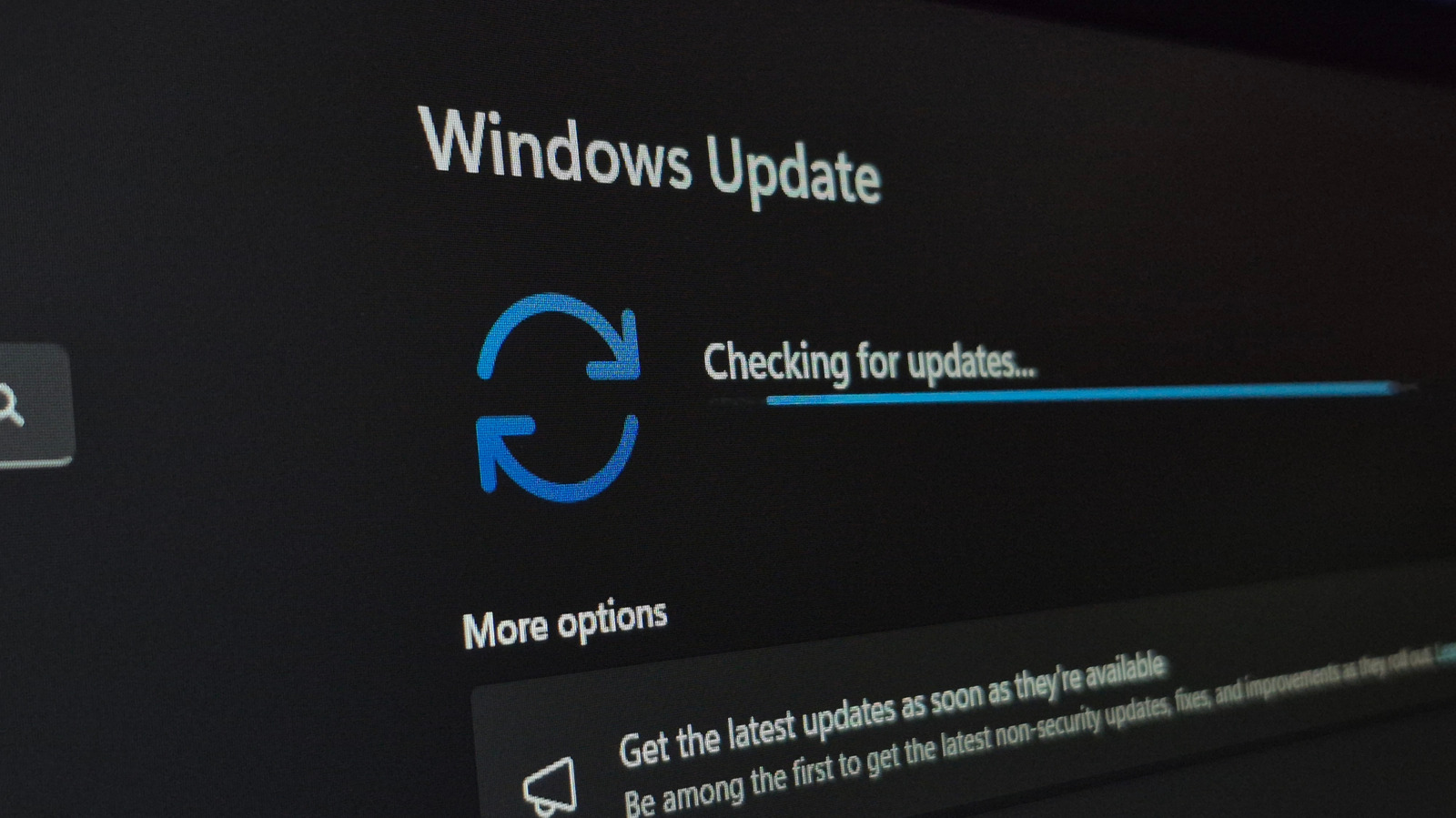
Google’s new Windows app is yet another way to access Gemini

Google has introduced a new app for Windows desktops and, unsurprisingly, it puts AI front at center. If you aren’t a big fan of Google’s Gemini chatbot, then skip on past this download. For those of you who are heavy Gemini users, though, this could mean a simpler and more integrated experience on Windows machines. 

Once installed, you can pull up the app’s search bar with the Alt + Space shortcut. Queries typed into this open-ended search box can hunt down information from the web like typical Google search, where AI Mode will be enabled for an extra layer of artificial intelligence for follow-up questions or a deeper dive down a rabbit hole. But the app isn’t limited to web search. It can delve into your computer’s files, other installed apps or Google Drive files to retrieve information. Screen sharing is also built into the app, which enables using Google Lens to conduct AI-powered searches on content displayed on your monitor. 

The app is rolling out globally today in English. Interestingly, this hasn’t been gated to the most recent Windows 11, but it does require a machine running at least Windows 10.

This article originally appeared on Engadget at https://www.engadget.com/apps/googles-new-windows-app-is-yet-another-way-to-access-gemini-214000564.html?src=rss 

FCC just handed Netgear a de facto router monopoly in the US

The Federal Communications Commission has announced that Netgear has been given conditional approval that effectively exempts it from a previous ban on foreign-made networking routers. The conditional approval gives the company a de facto — though potentially temporary — monopoly on the selling and servicing of new consumer routers in the US.

“We’re pleased to share that Netgear is the first retail consumer router company to receive conditional approval from the Federal Communications Commission (FCC) as a trusted consumer router company,” Netgear CEO CJ Prober said in a statement. “As a US founded and headquartered company, Netgear is aligned with the vision for a more secure digital future for our customers. For the last thirty years, we have been, and continue to be, committed to leading the consumer router category for the United States and setting the bar for quality, performance, innovation and security.”

Both Netgear’s lines of Nighthawk and Orbi mesh routers are covered by the approval until October 1, 2027, which appears to mean that the company can continue to offer software updates to both lines and presumably release and sell new models in the future.

The FCC dramatically expanded the Covered List, a collection of communications equipment seen as posing a risk to national security, to cover all foreign-made routers in March 2026. The decision prevents companies who make routers outside of the US from introducing new foreign-made models, and pushing certain software updates to existing models after March 1, 2027. Confusingly, though, it doesn’t require anyone to replace their existing router or prevent those companies from selling routers they’ve already made. Receiving conditional approval is the definitive way companies can get off the list, but part of the FCC’s requirements for approval is the company offering a plan to bring some or all of its manufacturing to the US — a theoretically costly decision.

Engadget has contacted Netgear for information about the US manufacturing plan it included in its application for conditional approval. We’ll update this article if we hear back.

The vast majority of router companies, even ones that are headquartered in the US like Netgear, build their routers in Asia. It’s not clear what makes Netgear’s currently foreign-made routers safer than, say, an Amazon Eero 7 or a Google Nest WiFi Pro. Until other companies are given conditional approval, though, Netgear is in a unique position.

This article originally appeared on Engadget at https://www.engadget.com/cybersecurity/fcc-just-handed-netgear-a-de-facto-router-monopoly-in-the-us-223712324.html?src=rss 

NAACP sues xAI over data center pollution

The NAACP is suing xAI and a subsidiary called MZX Tech for allegedly operating unpermitted methane gas turbines to power its Colossus 2 data center in South Memphis. The association is asking the federal district court of the Northern District of Mississippi to declare that the company has violated the Clean Air Act, force it to stop using its unpermitted turbines and assess financial penalties against xAI for violating federal law, among other requests.

The lawsuit claims that xAI — the Elon Musk-founded AI startup now owned by SpaceX — is operating 27 gas turbines without an air permit to power Colossus 2, one of a growing number of data centers xAI has set up to train Grok, its AI assistant. Gas turbines expel pollution, hazardous chemicals and fine particulate matter that are linked to things like heart problems, respiratory diseases and even certain cancers, issues that are particularly concerning given Colossus 2’s close proximity to people’s homes. Operating these turbines without an air permit also violates the Clean Air Act, which requires sources of pollution to be permitted before being operated or constructed.

The NAACP is represented in the lawsuit by the Southern Environmental Law Center and Earthjustice. Before filing today’s lawsuit, the NAACP sent xAI a 60-day notice of intent to sue in compliance with the Clean Air Act. xAI’s failure to respond to the notice is why the lawsuit is moving forward today.

“xAI’s continued operation of these turbines without a permit and without adequate pollution controls is not only illegal, it’s an insult to families living nearby who for months have expressed serious concerns about how air pollution from the company’s personal power plant could impact their health and well-being,” Ben Grillot, a Senior Attorney for the Southern Environmental Law Center, said. “xAI must be held accountable for its reckless, unlawful actions — and that’s exactly what this lawsuit aims to do.”

Besides the high cost of sourcing the components that train and run AI models, AI companies often have to generate power to run the data centers where all those components are being installed. Oracle is reportedly turning to gas generators like xAI. Google, Meta and Amazon, meanwhile, have all invested in or signed deals with nuclear energy providers to power their data center efforts. Building new energy sources for data centers is one of several price-lowering methods proposed by the Ratepayer Protection Pledge, an agreement several tech companies signed to try and prevent data centers from raising the cost of the average person’s energy bill.

Quickly building out new energy sources might help ease costs, but it doesn’t account for the negative environmental impacts of having a new power plant in your neighborhood, something the Trump administration doesn’t appear all too interested in addressing. In his latest AI framework proposal, President Donald Trump largely ignored the environmental impact of AI in favor of calling for the permitting process for things like on-site energy generators to be streamlined.

This article originally appeared on Engadget at https://www.engadget.com/ai/naacp-sues-xai-over-data-center-pollution-213511352.html?src=rss 

Generated by Feedzy
Exit mobile version