Pixel 10a hands-on: Google locks down the midrange phone game

Google’s A-series phones have offered some of the best value among midrange handsets for years, and after checking out the new Pixel 10a, I don’t see that trend stopping anytime soon.

Let’s start with the specs. Starting at just $499, you get a vivid 6.3-inch OLED screen with a 120Hz refresh rate and 3,000 nits of peak brightness, 8GB of RAM and either 128GB or 256GB of onboard storage. The phone also features a durable aluminum frame along with a stronger Corning Gorilla Glass 7i panel in front and a composite plastic back with a lovely matte finish. As a nod towards sustainability, Google says the P10a’s chassis is made from 100 percent recycled material, while the rear panel comes in at 81 percent. And just like its predecessor, you still get an IP68 rating for dust and water resistance and the same battery capacity (5,100mAh) — except now it charges even faster, both wired (30 watts, up from 23) and wirelessly (10 watts, up from 5).

While lavender is the new hero color for the Pixel 10a, berry is the hue I’d pick.

Sam Rutherford for Engadget

The one place where the Pixel 10a might come up a touch short is that unlike its more expensive siblings, it features an older Tensor G4 processor instead of the Tensor G5 chip used on the main Pixel 10 line. Google says the decision to go with an older SoC is due to budget constraints. While it might not be the first choice for gamers or power users, I’ve never really had an issue with the day-to-day performance of Google’s recent homegrown silicon.

However, even with a one-year-old chip, Google found a way to port over three flagship features to the Pixel A series for the first time. Camera Coach uses AI to help you compose and come up with more interesting shots. Meanwhile, Auto Best Take is designed to ensure that everyone in a group shot ends up with their finest expression. Finally, Satellite SOS allows you to call for help during emergencies, even when you don’t have proper cell service. 

Satellite SOS support is one of three new features coming to the Google’s A-series phones for the first time.

Sam Rutherford for Engadget

As for its cameras, the P10a looks to be using the same sensors as before, including a 48MP main camera, a 13MP ultra-wide and a 13MP selfie shooter in front. That might be a bummer for some, but considering that the Pixel 9a offered by far the best image quality of any phone in its price bracket, I’m not that bothered. Also, it’s quite likely that if Google had opted for new hardware, it may have pushed the phone above $500. 

After seeing the positive response to the barely-there camera bump on its predecessor, Google leaned in and made the Pixel 10a’s rear camera module completely flat, and it’s my favorite thing about the phone. There’s no hump or protrusions to speak of, and when combined with the rest of the phone’s design, it results in a really sleek, minimalist look. Plus, after almost a decade of big and bulky camera warts on the back of phones, it’s just nice seeing the Pixel 10a go the opposite direction. 

I really appreciate how Google double downed on feedback regarding the Pixel 9a’s tiny camera bump (left) by making the Pixel 10a’s camera (right) completely flat.

Sam Rutherford for Engadget

On the flipside, my biggest complaint about the P10a is that Google didn’t include Pixelsnap support (aka magnetic Qi2 compatibility). It’s another feature that got cut due to cost and it’s a real bummer because after introducing it on last year’s main Pixel 10 line, I was hoping that it would become a standard inclusion on all Google phones going forward. Thankfully, when I asked about the lack of Pixelsnap support, Google representatives were able to confirm that there will be third-party accessory makers such as Casefinite, Dbrand and Spigen that will offer cases with built-in magnetic rings, so anyone hoping to attach magnetic peripherals will still have an avenue to do so. 

The Pixel 10a’s charging speeds have been improved to 30 watts for wired and 10 watts wirelessly.

Sam Rutherford for Engadget

Regardless, for Android phone owners who are in the market for a simple, no-nonsense upgrade that covers all the basics without breaking the bank, the Pixel 10a is looking like another top contender. 

The Pixel 10a is available for pre-order today in lavender, berry, fog and obsidian with official sales slated for March 5. 

This article originally appeared on Engadget at https://www.engadget.com/mobile/smartphones/pixel-10a-hands-on-google-locks-down-the-midrange-phone-game-150000513.html?src=rss 

Google Pixel 10a vs. Pixel 9a: What’s changed and which one should you buy?

Now that pre-orders are open for the Google Pixel 10a, it’s time to see how it stacks up against last year’s Pixel 9a. At first glance, the two phones look very similar, and that’s not a bad thing. Google hasn’t tried to reinvent its budget-friendly formula this year, sticking to the same compact design, clean software experience and camera-first approach that made the 9a such a good value.

Both phones share a lot in common, including 120Hz OLED displays, Google’s Tensor G4 chip, strong computational photography and seven years of OS and security updates. The actual differences are more incremental, including a moderately brighter, tougher display, improved Extreme Battery Saver longevity, slightly faster wireless charging and the addition of Satellite SOS. Importantly, Google is keeping the starting price the same as before, with both phones coming in at $499.

On paper, the Pixel 10a doesn’t dramatically rethink what an affordable Pixel should be, but it does offer meaningful upgrades for the same price. While we wait for a review unit to evaluate the Pixel 10a’s day-to-day performance, here’s a quick comparison of the spec sheets of the two devices to see what the new model brings.

Pixel 10a vs Pixel 9a: Design and display

There’s very little separating these two on performance. Both the Pixel 9a and Pixel 10a run Google’s Tensor G4 chip with 8GB of RAM and the same storage options, so day-to-day speed should feel virtually identical. The Pixel 10a ships with Android 16 out of the box, though the 9a can be updated to the same version.

Off the bat, the Pixel 10a doesn’t look dramatically different from the Pixel 9a, and that appears to be intentional. Google is sticking with the same compact, no-frills approach from the last few A-series Pixels, so you’re still getting a 6.3-inch OLED panel with a smooth 60–120Hz refresh rate and a clean, understated aesthetic. 

The meaningful changes show up once you dig into the display specs. The Pixel 10a upgrades the cover glass from Corning Gorilla Glass 3 to Gorilla Glass 7i, which should offer better durability against drops and scratches over time. Brightness also gets a noticeable bump. The 9a topped out at 1,800 nits for HDR content and 2,700 nits at peak, while the 10a pushes that to 2,000 nits for HDR and up to 3,000 nits at peak brightness. In practice, that should make the Pixel 10a easier to read outdoors and a bit punchier when watching HDR video.

Contrast is improved as well. The Pixel 10a’s panel is rated at a contrast ratio of more than 2,000,000:1, doubling the already respectable figure on the Pixel 9a. That won’t radically change how the phone looks day to day, but it should translate to deeper blacks and slightly more depth in darker scenes, especially when streaming video or browsing photos at night.

Pixel 10a vs Pixel 9a: Cameras

On paper, the Pixel 10a’s camera hardware looks very familiar. Like the Pixel 9a, it uses a 48-megapixel main camera paired with a 13MP ultra-wide, and there’s no dedicated telephoto lens. Image quality, color science and low-light performance should therefore be similar between the two.

Where the Pixel 10a pulls ahead is in software features. Google has added a few camera tools that aren’t available on the Pixel 9a, even though the underlying hardware hasn’t changed much. One of those is Camera Coach, which debuted on last year’s Pixel 10 series and offers on-screen tips to help you frame shots better or adjust how you’re holding the phone. The Pixel 10a also gains Macro Focus, allowing you to get much closer to small subjects like plants or textures. In our Pixel 9a review, we found the phone could capture solid close-up detail, but locking focus could be finicky at times, so a more dedicated macro mode should make those shots easier to nail.

Finally, there’s Auto Best Take, which automatically picks the best expressions from a burst of photos and combines them into a single image. The feature debuted on Google’s Pixel 10 lineup last year, and it’s especially handy for group shots where someone always seems to blink at the wrong moment. By bringing it to the 10a, Google is extending one of its more genuinely practical AI camera tricks to a cheaper phone.

Battery life and charging

Both the Pixel 9a and Pixel 10a use a 5,100mAh battery and support the same 23W wired charging speeds. Where the Pixel 10a does pull ahead slightly is wireless charging. The Pixel 9a tops out at 7.5W, while the Pixel 10a supports wireless charging at up to 10W when used with Qi-certified Extended Power Profile (EPP) chargers, which are designed to deliver faster wireless power than basic Qi pads. The difference isn’t dramatic, but the Pixel 10a should charge a bit quicker on a compatible wireless stand when you’re in a pinch.

You’ll also get some extra hours in dire situations. When you activate Extreme Battery Saver, the Pixel 9a is rated for up to 100 hours, while the Pixel 10a extends that to up to 120 hours. 

The Pixel 10a gets Satellite SOS

The biggest safety-related upgrade on the Pixel 10a is the addition of Satellite SOS. Because it uses a newer modem compared to the Pixel 9a’s Exynos Modem 5300, it is capable of tapping satellite networks when necessary. This allows the phone to contact emergency services when you’re outside of cellular or Wi-Fi coverage, which can be genuinely useful if you spend time hiking, traveling or driving in remote areas.

If you already own a Pixel 9a, there doesn’t appear to be a huge reason to upgrade. Day-to-day performance may feel almost identical, since both phones use the same Tensor G4 chip, the same amount of RAM and very similar camera hardware.

That said, the Pixel 10a does make a stronger case for first-time buyers or anyone upgrading from an older Pixel. The biggest differentiator, though, is Satellite SOS — it’s the one feature the Pixel 9a simply can’t match due to hardware limitations. At the same $499 starting price, the Pixel 10a is, on paper, the better long-term buy if you’re choosing between the two today. 

Google Pixel 10a vs. Google Pixel 9a: Specs at a glance

Spec

Google Pixel 10a

Google Pixel 9a

Price

$499

$499

Processor

Google Tensor G4, Titan M2 coprocessor

Google Tensor G4, Titan M2 coprocessor

Display

6.3-inch Actua display, 1080 x 2424 pOLED at 422.2 PPI, Gorilla Glass 7i

6.3-inch Actua display, 1080 x 2424 pOLED at 422.2 PPI, Corning Gorilla Glass 3

RAM

8GB

8GB

Storage

128GB, 256GB

128GB, 256GB

Battery

5,100mAh

5,100mAh

Wireless charging

Up to 10W

Up to 7.5W

Rear camera

48MP wide, 13MP ultrawide, Super Res Zoom up to 8x

48MP wide, 13MP ultrawide, Super Res Zoom up to 8x

Front camera

13MP selfie cam

13MP selfie cam

SIM

Dual SIM (single nano SIM, eSIM)

Dual SIM (single nano SIM, eSIM)

Connectivity

Wi-Fi 6E, Bluetooth v6, NFC

Wi-Fi 6E, Bluetooth v5.3, NFC

OS

Launch with Android 16

Launch with Android 15

This article originally appeared on Engadget at https://www.engadget.com/mobile/smartphones/google-pixel-10a-vs-pixel-9a-whats-changed-and-which-one-should-you-buy-150000786.html?src=rss 

Polestar unveils a station wagon version of the 4

Polestar is gearing up to launch three new models in the next two years, including a station wagon (estate or shooting brake) version of the Polestar 4 that harkens back to the company’s Volvo roots. The Geely-owned Swedish company sold a record 61,000 EVs in 2025, but hopes that the new models will help it take an even bigger bite out of the market. “We want to get more volume out of a bigger cake,” CEO Michael Lohscheller said. 

Polestar currently offers two models in the US, the Polestar 3 and Polestar 4, both SUVs. However, the new Polestar 4 will come in two variants, one a traditional SUV as before and the other a four-door wagon-type version that combines “the space of an estate and the versatility of an SUV,” Loscheller said. “It’s all the good things from the current car, but it’s a bit more practical.” This new model is due later this year and will be built in Busan, South Korea in order to avoid US tariffs on cars built in China. 

The automaker is also planning to release a new version of the Polestar 2 targeted at young buyers, though that one is unlikely to come to the US. It will be slightly longer for more passenger space and be produced in China like the current model 2. 

Polestar

Finally, the Polestar 7 will be a compact SUV in the same family as Volvo’s EX60, set to arrive in Europe to address the fast-growing compact SUV segment. “We are convinced that we can offer customers a progressive performance-driven car for a very attractive price point, built in Europe,” Lohscheller said. 

The new models are designed to help Polestar hit its goal of 60 percent of EV sales worldwide by “targeting the big profit pools of the BEV segment,” Lohscheller stated. Following Polestar’s withdrawal from the hyper-competitive Chinese market, Europe accounts for 78 percent of its sales and the US most of the rest — but the company hopes to boost its fortunes in the latter. “People forget that the U.S. is a big EV market, especially on the east and west coasts,” the CEO added. “And it will stay a big market.”

This article originally appeared on Engadget at https://www.engadget.com/transportation/evs/polestar-unveils-a-station-wagon-version-of-the-4-144025505.html?src=rss 

Federal court rules that OpenAI must stop using the term ‘Cameo’

Cameo, the platform where celebrities sell short, personalized videos, has scored a preliminary win in a trademark lawsuit against OpenAI. A California judge has ruled that the AI company’s video generation tool Sora cannot use the term ‘cameo’ or any variation likely to cause confusion. A temporary restraining order in the case was originally granted in November of last year.

The suit was first brought in response to a feature available within the Sora app at launch called ‘Cameo’ that allowed users to add any likeness to videos they generated. Cameo claimed the use of the term in this setting was likely to cause confusion and could dilute their brand. OpenAI then carried on with the feature despite the suit.

U.S. District Judge Eumi Lee ruled on Saturday that Cameo’s lawsuit was likely to succeed and granted a preliminary injunction, blocking OpenAI from continuing to use the name. An OpenAI spokesperson responded to the ruling saying, “We disagree with the complaint’s assertion that anyone can claim exclusive ownership over the word ‘cameo,’ and we look forward to continuing to make our case,” according to Reuters.

This is just the latest in a string of intellectual property cases against AI companies that have accelerated as video generation capabilities have improved across the board. Rights holders of all kinds from authors and music publishers to major movie studios have taken the likes of OpenAI, Anthropic, Perplexity and others to court, seeking to protect their IP.

This article originally appeared on Engadget at https://www.engadget.com/ai/federal-court-rules-that-openai-must-stop-using-the-term-cameo-124559072.html?src=rss 

Meta will run AI in WhatsApp through NVIDIA’s ‘confidential computing’

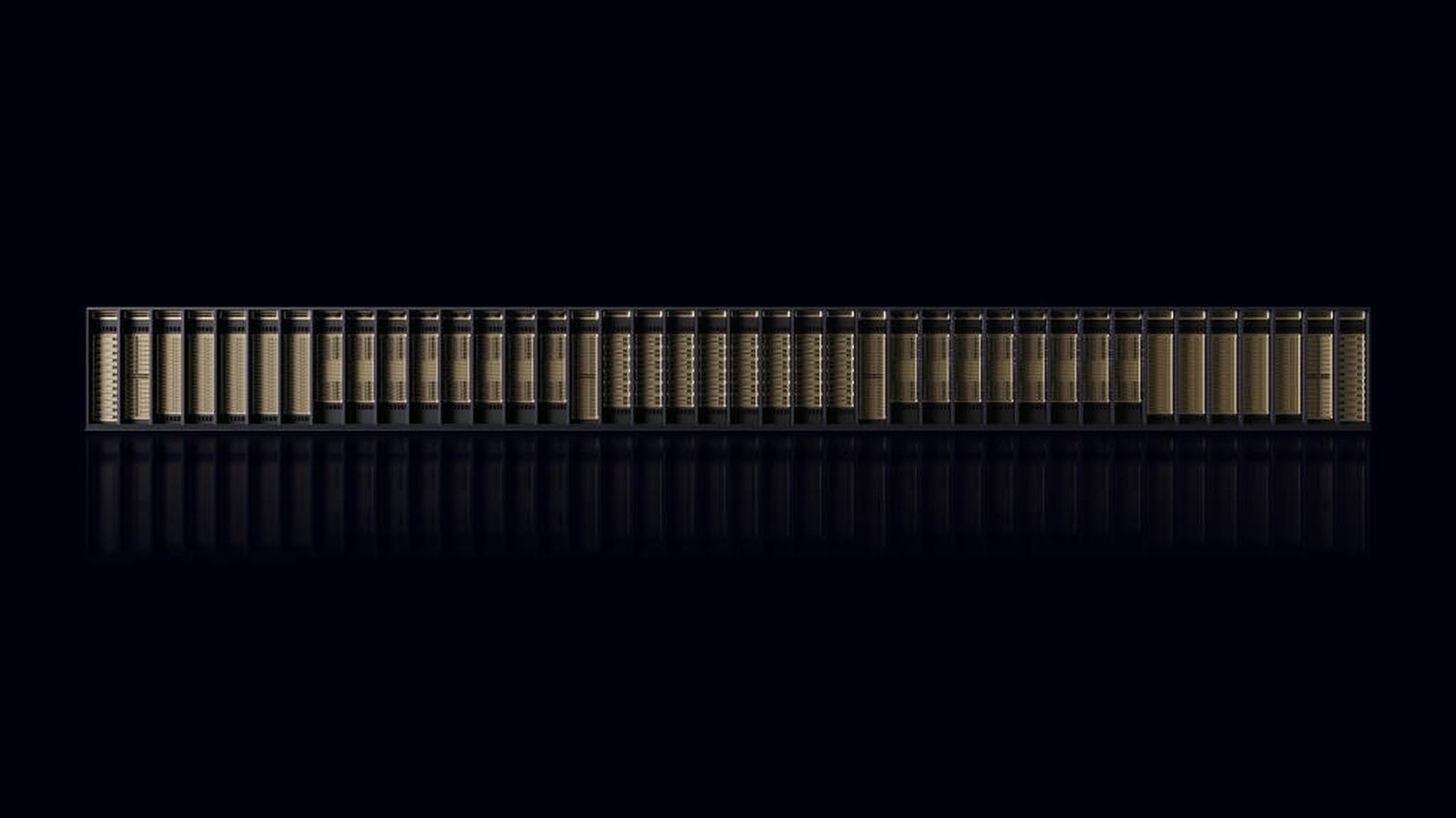
Meta just announced a deal to buy “millions” of NVIDIA Blackwell and Rubin GPUs in a new long-term partnership. As part of that, the social media giant will deploy NVIDIA’s Confidential Computing for WhatsApp, “enabling AI-powered capabilities across the messaging platform while ensuring user data confidentiality and integrity.”

As part of the deal, Meta committed to using NVIDIA’s Confidential Computing for WhatsApp messaging to allow AI inside the app while guaranteeing user data confidentiality. That technology will let Meta secure data during computation, not just when it’s being shuttled to a server. It also allows software creators like Meta or third-party AI agent providers “to preserve their intellectual property,” NVIDIA wrote on a blog about the technology.  

Meta will also be the first to deploy NVIDIA’s Grace CPUs in a standalone way, instead of incorporating them with GPUs. They’re designed to run inference and agentic workloads when running in this fashion. Meta will also be using NVIDIA’s Spectrum-X Ethernet switches. 

Meta announced earlier this year that it would spend up to $135 billion on AI in 2026, so it’s not a surprise that a big chunk of that is going toward NVIDIA. However the numbers involved, likely in the “tens of billions” according to analysts, represent a significant expansion of the partnership between the two companies. Meta plans to build up to 30 data centers, including 26 in the US, by 2028 as part of a $600 billion commitment.

This article originally appeared on Engadget at https://www.engadget.com/ai/meta-will-run-ai-in-whatsapp-through-nvidias-confidential-computing-110002283.html?src=rss 

Tesla stops using ‘Autopilot’ to promote its EVs in California

Tesla has stopped using the term “Autopilot” to sell its cars in California, thereby avoiding a 30-day sales and manufacturing ban in the state. If you’ll recall, a California administrative law judge ruled in December that the automaker misled consumers by using the terms “Autopilot” and “Full Self-Driving.” The judge recommended the suspension, but the California DMV gave Tesla 60 days to remove any untrue and misleading language in its marketing materials. In its announcement, the DMV said Tesla has taken corrective action and has stopped using Autopilot for marketing. Prior to that, the automaker has already clarified that driver supervision is still needed with Full Self-Driving.

The judge was ruling on a complaint the DMV made back in 2022, wherein the agency accused Tesla of making and disseminating misleading statements. It argued that starting in May 2021, Tesla used deceptive marketing materials with the labels “Autopilot” and “Full Self-Driving Capability,” as well as claimed that the “system is designed to be able to conduct short and long-distance trips with no action required by the person in the driver’s seat.” In reality, the vehicles equipped with those features “could not at the time of those advertisements, and cannot now, operate as autonomous vehicles,” the DMV said.

A ban in California could have had a huge effect on the company, seeing as the state accounts for nearly a third of its sales in the country. Tesla also recently announced that it will stop the production of its Model S and X cars to turn its Fremont, California factory where they were being manufactured into a space for the production of its Optimus humanoid robots. Tesla has huge plans for Optimus and intends to start selling the robot to the public by the end of 2027.

This article originally appeared on Engadget at https://www.engadget.com/transportation/evs/tesla-stops-using-autopilot-to-promote-its-evs-in-california-112533060.html?src=rss 

YouTube is down for thousands of users in the US

YouTube is experiencing an outage across the United States, with users in other countries like Canada, India, the Philippines, Australia and Russia also having problems with accessing the website. The issue seems to have started at around 8 PM Eastern time and reached 338,000 reports on Downdetector before starting to taper down. More users reported having issues accessing the app, but I personally lost access to the web homepage first. As of 9:22 PM, users are still reporting being unable to access YouTube on Reddit. As of 9:33 PM, users are complaining that they still can’t access the service, though others say it’s back up for them.

Update, February 17, 2026, 9:34 PM ET: Updated with reports from users.

Update, February 17, 2026, 9:26 PM ET: Updated to correct time of outage, added new countries where it’s out and added new reports of YouTube still being inaccessible.

This article originally appeared on Engadget at https://www.engadget.com/big-tech/youtube-is-down-for-thousands-of-users-in-the-us-020718165.html?src=rss 

Samsung teases mobile AI photography tools ahead of Unpacked

Anyone who’s been paying even a little bit of attention to tech news lately could have made a reasonable guess that AI will be a big topic at Samsung’s Unpacked next week. Ahead of the event, Samsung teased some of what’s to come for AI in terms of the Galaxy S26 smartphone lineup’s photography tools. 

The S26 phones will feature a new camera system using Galaxy AI that combines capturing, editing and sharing of photos and videos. “Users will be able to turn a photo from day to night in seconds, restore missing parts of objects in images, capture detailed photos in low light, and seamlessly merge multiple photos into a single, cohesive result,” a company rep said. The video clips Samsung shared demonstrated the before and after results of using its AI tools, which will all be housed in a single app rather than needing to switch between multiple image editing programs.

Updated cameras are just part of what will be on the schedule for Samsung’s big mobile showcase. The expected Galaxy S26, Galaxy S26+ and Galaxy S26 Ultra will likely have a lot of AI-centric features.

This article originally appeared on Engadget at https://www.engadget.com/mobile/smartphones/samsung-teases-mobile-ai-photography-tools-ahead-of-unpacked-233000358.html?src=rss 

Google I/O 2026 is set for May 19 and 20

We’ll soon get a closer look at a bunch of features and updates Google has planned for Android and its other services. The company has confirmed that Google I/O 2026 will take place on May 19 and 20. As always, Google will stream some of the keynotes and sessions for free, including the opening keynote (during which the company makes the bulk of its major I/O announcements).

Although I/O is primarily a conference for developers, it’s typically where we first learn about major upcoming Android changes, which of course affect tens of millions of people. Expect a lot of news about Google’s AI efforts as well, such as what’s next for Gemini.

See you all at Google I/O starting May 19th! https://t.co/KgNKbb3nMu pic.twitter.com/OD6x3IYtTi

— Sundar Pichai (@sundarpichai) February 17, 2026

As has been the case for several years, Google revealed the conference’s dates for 2026 after enough folks completed a puzzle on the I/O website. This year’s puzzle has multiple “builds” to play through, all of which use Gemini.

They start with a mini-golf game in which a virtual caddy that’s powered by Gemini offers some of the most anodyne advice imaginable. The second build is a nonogram. If you’ve ever played a Picross game, you’ll know what to do here. It’s about using logic to place tiles on a grid in order to create an image. Here, Google is using Gemini to generate “endless game boards.”

The other three minigames are Word Wheel (which “leverages Gemini 3 to automate level design”), Super Sonicbot (which “uses Gemini to introduce microphone mechanics where noise controls the Android Bot’s altitude”) and Stretchy Cat. The latter “uses Gemini 3 as a stage designer balancing game mechanics and difficulty to create endless play.”

This article originally appeared on Engadget at https://www.engadget.com/general/google-io-2026-is-set-for-may-19-and-20-200805024.html?src=rss 

Texas AG sues TP-Link over purported connection to China

Texas is suing Wi-Fi router maker TP-Link for deceptively marketing the security of its products and allowing Chinese hacking groups to access Americans’ devices, Attorney General Ken Paxton has announced. Paxton originally started looking into TP-Link in October 2025. Texas Governor Greg Abbott later prohibited state employees from using TP-Link products in January of this year.

TP-Link is no longer owned by a Chinese company and its products are assembled in Vietnam, but Paxton’s lawsuit claims that because the company’s “ownership and supply-chain are tied to China” it’s subject to the country’s data laws, which require companies to comply with requests from Chinese intelligence agencies. The lawsuit also says that firmware vulnerabilities in TP-Link’s hardware have already “exposed millions of consumers to severe cybersecurity risks.”

TP-Link provided the following statement to Engadget in response to the lawsuit:

The claims made by the Texas Attorney General’s office are without merit and will be proven false. TP-Link Systems Inc. is an independent American company. Neither the Chinese government nor the CCP exercises any form of ownership or control over TP-Link, its products, or its user data. TP-Link’s founder and CEO, Jeffrey Chao, resides in Irvine, CA, and is not and never has been a member of the CCP. To ensure the highest level of security, our core operations and infrastructure are located entirely within the United States, and all U.S. users’ networking data is stored securely on Amazon Web Services servers. We will continue to vigorously defend our reputation as a trusted provider of secure connectivity for American families.

TP-Link was reportedly being investigated at the federal level in 2024 after its devices were connected to the massive “Salt Typhoon” hack that accessed data from multiple US telecom companies. Despite all signs pointing to the federal government getting ready to ban TP-Link in 2025, Reuters reports that the Trump administration paused plans to ban the company’s routers in early February, ahead of a meeting between President Donald Trump and President Xi Jinping.

Update, February 17, 3:38PM ET: Added statement from TP-Link.

This article originally appeared on Engadget at https://www.engadget.com/cybersecurity/texas-ag-sues-tp-link-over-purported-connection-to-china-193802258.html?src=rss 

Generated by Feedzy
Exit mobile version