Logitech’s popular Litra Glow streamer light is back on sale at an all-time low price

Logitech’s Litra Glow has been a big success since it launched early this year, giving streamers an easy way to create soft and flattering illumination for their faces. It’s already quite affordable at $60, but now it has dropped back to an all-time low price of $50 on Amazon.

Buy Logitech Litra Glow at Amazon – $50

The Litra Glow promises to be safe on the eyes for all-day streaming, while providing a “natural, radiant look across skin tones.” You also get cinematic color accuracy via Logitech’s TrueSoft technology, regardless of skin tone. It’s ready to use out of the box thanks to the five presets with different brightness levels and color temperatures, or you can create custom options using the G HUB software. As a bonus, any presets you create can be assigned to the G Keys on a Logitech G keyboard or mouse. 

It’s now on sale for $50, matching its all-time low price. You can find other soft- and ring-style lights from Elgato and others, but most from any recognizable name brand are considerably more expensive. The Litra Glow is already a great buy with Logitech’s promised color accuracy, and now Amazon’s discount makes it even more affordable.

Follow @EngadgetDeals on Twitter and subscribe to the Engadget Deals newsletter for the latest tech deals and buying advice.


The Morning After: Elon Musk says Apple has ‘threatened to withhold’ Twitter app

Elon Musk claims that Apple has “threatened to withhold” Twitter from its app store. According to Musk, the company “won’t tell us why” it has issues with the social network’s app. In subsequent tweets, he railed against Apple’s 30 percent “tax” on in-app purchases and claimed the App Store owner has “censored” other developers. He also said Apple “has mostly stopped advertising on Twitter.” Apple hasn’t yet responded to a request for comment. Musk also hasn’t specified if the company is holding updates to the service or threatening to remove the app from its store altogether.

Apple has strict, if often unevenly enforced, rules that govern the content in apps in its store. You might remember Parler, a “free speech” rival to Twitter, which was removed from the App Store for its lax content moderation rules. The app returned after it rolled out an AI-based moderation system. ​​

– Mat Smith

The biggest stories you might have missed

The warning system that knows when rumbling volcanoes will blow their tops

The best winter car accessories for 2022

Crypto lender BlockFi files for Chapter 11 bankruptcy amid FTX fallout

The best Cyber Monday tech deals that might still be running

Tesla is reportedly redesigning the Model 3 to cut production costs

Meta fined €265 million over Facebook data scraping in the EU

WhatsApp’s latest feature is sending messages to yourself

Message Yourself lets you send notes, reminders and shopping lists.

As confirmed by TechCrunch, a new feature called Message Yourself is now being rolled out globally to iOS and Android users in the next few weeks. Once you get the update, you’ll be able to see yourself at the top of the contacts list when creating new messages. Once you click on that, you’ll be able to send yourself notes and reminders. Until now, you could only message yourself by creating a group with just you as a member or by using the apps click to chat feature. Or open your notes app.

Continue reading.

Twitter data leak exposes over 5.4 million accounts

The dump includes private phone numbers and email addresses.

Earlier this year, Twitter confirmed an API vulnerability allowed the theft of 5.4 million users’ private user data, but the company said it had “no evidence” it was exploited. Now, all those accounts are exposed on a hacker forum. An additional 1.4 million Twitter profiles for suspended users were reportedly shared privately, and an even larger data dump with the data of “tens of millions” of other users may have come from the same vulnerability. If you’re thinking about using two-factor authentication, now would be a good time.

Continue reading.

Apple Watch Ultra’s powerful diving tools arrive with the Oceanic+ app

The smartwatch is now more useful for recreational divers.

Apple

Hush Outdoors and Apple have released Oceanic+, effectively giving Ultra owners a recreation-oriented dive computer. The software tracks fundamentals like depth, no-decompression time (a figure used to set duration limits for given depths) and water temperature. The app works without the touchscreen, and you can set compass headings using the action button. Developers have even cranked up the haptic feedback, so you can feel it through a wetsuit.

Continue reading.

Google sued by FTC and seven states over ‘deceptive’ Pixel 4 ads

Influencers who never used the phone were paid to endorse it.

Engadget

The Federal Trade Commission and seven states have sued Google and iHeartMedia for running allegedly “deceptive” Pixel 4 ads. Promo ads aired between 2019 and 2020 featured influencers extolling the virtues of phones they reportedly didn’t own — Google didn’t even supply Pixels before most of the ads were recorded. The FTC wants to bar Google and iHeartMedia from making any future misleading claims about ownership.

Continue reading.


Apple’s 2022 App Store Awards put the focus on ‘cultural impact’

BeReal, the new social media app that exploded in popularity over the past few months, is one of the biggest winners for this year’s Apple’s App Store Awards. It won iPhone App of the Year for giving people an authentic glimpse into their friend’s and family’s every day lives, the tech giant said in its announcement. In all, Apple highlighted 16 apps and games for 2022 that delivered “exceptional experiences and [made] a profound cultural impact.”

In BeReal’s case, the fact that other social media apps had introduced or are testing features similar to what it does is a clear testament to the “impact” it’s had on the space. BeReal users can share a selfie of themselves with a photo of their environment during a two-minute window that the app randomly selects for them every day. A reverse engineer found an experimental feature that’s basically identical to that within Instagram back in August, while TikTok unveiled its own take on the format in September. 

Another big winner is GoodNotes 5, which was named the iPad App of the Year for taking digital notes “to the next level with best-in-class Apple Pencil support.” Users can treat their iPads like any book or notebook with the app, since it allows them to jot down notes on the margin and highlight important text, among other things. 

MacFamilyTree 10 won Mac App of the year for its ability to create virtually stunning family trees and giving users the capability to collaborate with relatives around the world, while ViX, the Spanish-language streaming service by TelevisaUnivision, won Apple TV App of the Year. Yet another winner is fitness tracker Gentler Streak, which took home the Apple Watch App of the Year award.  

For games, Apex Legends Mobile bested all the other titles for the iPhone, while puzzle game Moncage and card battler Inscryption won best games for the iPad and the Mac, respectively. The Wild West stealth game El Hijo won best game for Apple TV for looking exceptional on a big screen. Wylde Flowers, a life sim that combines farming with magic, was named as the best Apple Arcade game. Finally, esports simulator League of Legends Esports Manager won the first China Game of the Year award.

In addition to the main winners, Apple also highlighted five apps for impacting people’s lives and influencing culture. Those apps include How We Feel, which encourages users to record their emotional well-being to help them better vocalize it, and Dot’s Home, a time-traveling story that puts a spotlight on systemic housing injustices. Locket Widget can help forge connections between people by letting users send live photos to their friend’s and family’s home screen, while Waterllama makes keeping hydrated fun. There’s also Inua – A Story in Ice and Time, which takes users on an adventure rich in Inuit folklore and traditions. 


The USGS warning system that knows when rumbling volcanoes will blow their mountain tops

More than 120 volcanic eruptions have occurred in the United States in the 42 years since Mount St. Helens erupted over Washington in 1980, killing 57 and inflicting over a billion dollars in property damage. While none have been nearly as destructive, their mere presence can impact human activities and even economies hundreds of miles away. Altogether the US Geological Survey (USGS) has identified 161 geologically active volcanoes in 14 states and territories, a third of which constitute “high” or “very high” threats to their surrounding communities, and another 58 volcanoes nationwide classified as being undermonitored. The agency operates five volcano monitoring stations along the west coast to keep an eye on all but the least dangerous as part of the Survey’s Volcano Hazards Program. On average, around 60 volcanoes erupt annually, as Hawaii’s Mauna Loa is doing right now.

Mauna Loa, which had stood dormant for the past 38 years, reawakened late Sunday night for the eighth time since 1843. “Lava flows are not threatening any downslope communities and all indications are that the eruption will remain in the Northeast Rift Zone,” reads Monday’s red alert update from the USGS Hawaiian Volcano Observatory (HVO). “Volcanic gas and possibly fine ash and Pele’s Hair may be carried downwind. Residents at risk from Mauna Loa lava flows should review preparedness and refer to Hawai‘i County Civil Defense information for further guidance.” This week’s eruption is decidedly mild compared to 2018’s Kīlauea Volcano event that destroyed 700 homes and launched ash 3,000 meters into the atmosphere, where it disrupted air traffic patterns.

While lava receives a majority of the public attention, volcanoes have myriad methods for ruining your week with fire and (literal) brimstone. Volcanic ash can travel miles into the stratosphere before raining back down where it exacerbates chronic lung diseases like asthma and emphysema; carbon dioxide and hydrogen sulfide collect in low-lying areas to suffocate the unwary and seismic shifts resulting from the initial explosion can trigger landslides, tsunamis, floods, and large-scale power outages.

“Unlike many other natural disasters … volcanic eruptions can be predicted well in advance of their occurrence if adequate in-ground instrumentation is in place that allows earliest detection of unrest, providing the time needed to mitigate the worst of their effects,” David Applegate, USGS associate director for natural hazards, told a House subcommittee in 2017.

As Eos magazine points out, nobody died as a result of the 2018 Kīlauea eruption, in large part due to the efforts of monitors at the HVO. But, a 2018 threat assessment found that, out of the 18 volcanoes listed as “very high” threat, only three — Mauna Loa, St Helens and the Long Valley Caldera — were rated as “well monitored” when that eruption was happening.

On the same day that Kīlauea blew its top, the US Senate unanimously passed S.346, establishing the National Volcano Early Warning and Monitoring System (NVEWS). The following March, the House of Representatives passed its version, PL 116-9/S.47, dubbed the John D. Dingell Jr. Conservation, Management, and Recreation Act. Not unlike California’s new ShakeAlert early earthquake warning scheme, the NVEWS works to combine and standardize the existing hodgepodge of (often outdated) volcano monitoring hardware operated by both government agencies and academic organizations into a unified system, “to ensure that the most hazardous volcanoes will be properly monitored well in advance of the onset of activity.”

USGS

“Improvements to volcano monitoring networks allow the USGS to detect volcanic unrest at the earliest possible stage,” Tom Murray, USGS Volcano Science Center director, said in a 2018 USGS release. “This provides more time to issue forecasts and warnings of hazardous volcanic activity and gives at-risk communities more time to prepare.”

The NVEWS Act, which was sponsored by Senator Lisa Murkowski (R – AK), earmarks $55 million annually between 2019 and 2023 to provide more accurate and timely eruption forecasts by increasing partnerships with local governments and proactively sharing data with the volcano science community. It also seeks to increase staffing and systems — from broadband seismometers, infrasound arrays, and real-time continuous GPS receivers, to streaming webcams, satellite overwatch and volcanic gas sensors — for 24/7 volcano monitoring and establishes a grant system for furthering volcanology research.

USGS

The USGS ranks volcanic threats based on the risk they pose to public health and property — essentially how potentially destructive the volcano itself is in relation to how many people and things might be impacted when it does erupt. The USGS assigns numerical values to the 24 various hazard and exposure factors for each volcano, then combined to calculate the overall threat score which is divided into five levels (like DEFCONs!). High and Very High get the most detailed monitoring coverage because duh, Moderate threat volcanoes still receive real-time monitoring but don’t have Tommy Lee Jones standing by to intercede, and Low (and Very Low) get checked on as needed. As of May 2022, when the USGS submitted its second annual NVEWS report to Congress, the USGS had spent just under half of the money appropriated for FY 2021 with the funds going to activities like installing a net-gen lahar detection system on Mount Rainier, upgrading the telemetry for more than two dozen observation posts throughout Alaska, Oregon, Washington, California and Hawaii.


Elon Musk claims Apple has ‘threatened to withhold’ Twitter from the App Store

Elon Musk has taken aim at Apple’s App Store policies amid claims that the company has “threatened to withhold” Twitter from its store. According to Musk, Apple “won’t tell us why” it has an issues with Twitter, but the threats have

In subsequent tweets, Musk railed against Apple’s 30 percent “tax” on in-app purchases, and claimed the App Store owner has “censored” other developers. He also said that Apple “has mostly stopped advertising on Twitter.” (Apple wouldn’t be the first major advertiser to do so in recent weeks.)

Apple has also threatened to withhold Twitter from its App Store, but won’t tell us why

— Elon Musk (@elonmusk) November 28, 2022

This wouldn’t be the first time Apple has taken issue with Twitter. In an op-ed recently published byThe New York Times, Twitter’s former head of trust and safety, Yoel Roth, said that Apple’s App Store reviewers often flagged content on Twitter during its app review process.

“In my time at Twitter, representatives of the app stores regularly raised concerns about content available on our platform,” Roth wrote, saying that app reviewers had flagged instances of racial slurs and nudity on the service. “Even as they appear to be driven largely by manual checks and anecdotes, these review procedures have the power to derail company plans and trigger all-hands-on-deck crises for weeks or months at a time.”

Apple didn’t immediately respond to a request for comment.

Musk didn’t specify if Apple is holding new updates to the service or threatening to remove the app from its store altogether. However, there are a number of recent issues that could have flagged Twitter for additional scrutiny.

On Sunday, The Guardianreported that Twitter had initially failed to pull “freshly uploaded” video of a 2019 terror attack at a mosque in Christchurch, New Zealand, until government officials alerted the company to its existence. There has also been widespread concern from activists over the rise in hate speech and reinstatement of high-profile accounts who were banned for breaking Twitter’s hate speech policies. Musk also recently stated he planned to give “amnesty” to previously-banned accounts.

Apple has strict, if unevenly enforced, rules that govern the content that can appear in apps in its store. Parler, a “free speech” rival to Twitter, was removed from the App Store for months due to its lax content moderation rules (the app was reinstated after it rolled out an AI-based moderation system). In 2018, Tumblr banned adult content following a brief removal from the App Store.


Google sued by FTC and seven states over ‘deceptive’ Pixel 4 ads

You’re not the only one wondering if that social media star really used a hot new phone. The Federal Trade Commission and seven states have sued Google and iHeartMedia for running allegedly “deceptive” Pixel 4 ads. Promos aired between 2019 and 2020 featured influencers that extolled the features of phones they reportedly didn’t own — Google didn’t even supply Pixels before most of the ads were recorded, officials said.

iHeartMedia and 11 other radio networks ran the Pixel 4 ads in ten large markets. They aired about 29,000 times. It’s not clear how many people listened to the commercials.

The FTC aims to bar Google and iHeartMedia from making any future misleading claims about ownership. It also asks both companies to prove their compliance through reports. The states, including Arizona, California, Georgia, Illinois, Massachusetts, New York and Texas, have also issued judgments demanding the firms pay $9.4 million in penalties.

Google spokesperson José Castañeda told Engadget in a statement that the company was “pleased” to address the situation and took advertising laws “seriously.” He added that Google didn’t see this as a lawsuit (it’s technically a proposed FTC order and state judgments), and that the tech giant was only settling with six out of the seven states.

Misrepresentative phone ads are far from new. Huawei and Samsung have both been caught passing off stock DSLR photos as representative of their phone cameras. There’s also a history of celebrities marketing phones it’s not clear they use. Gal Gadot had to defend herself against claims she pitched Huawei phones while posting on Twitter from an iPhone, for instance (it was her publicist).

However, the accusations here are more serious. The FTC and participating states are contending that Google set out to use false testimonials. It had a “blatant disrespect” for truth-in-ads rules, according to FTC consumer protection director Samuel Levine. While the punishment is tiny compared to the antitrust penalties Google has faced so far, it could damage trust in the company’s campaigns for newer Pixels and other hardware.


Crypto lender BlockFi files for Chapter 11 bankruptcy amid FTX fallout

Cryptocurrency lender BlockFi has filed for Chapter 11 bankruptcy protection. The move comes just over two weeks after BlockFi suspended all platform activity, including withdrawals, in the wake of crypto exchange FTX‘s implosion. “Given the lack of clarity on the status of FTX.com, FTX US and Alameda, we are not able to operate business as usual,” the company said in an FAQ. Withdrawals remain paused.

“BlockFi’s chapter 11 cases will enable BlockFi to stabilize its business and provide BlockFi with the opportunity to consummate a reorganization that maximizes value for all stakeholders,” BlockFi said. “The court-supervised restructuring process is transparent and encourages dialogue between all stakeholders.”

As with many other players in the industry, BlockFi faced an uncertain future after several crypto companies crumbled in the spring, taking the prices of many cryptocurrencies down with them. Soon after, FTX agreed to prop up BlockFi with a $400 million credit line. The agreement also gave FTX the option to buy BlockFi for up to $240 million. As The New York Times notes, that meant the companies had close financial ties and FTX’s collapse into bankruptcy has had a knock-on effect on BlockFi.

“With the collapse of FTX, the BlockFi management team and board of directors immediately took action to protect clients and the company,” Mark Renzi of Berkeley Research Group, BlockFi’s financial advisor, said in a statement. “From inception, BlockFi has worked to positively shape the cryptocurrency industry and advance the sector. BlockFi looks forward to a transparent process that achieves the best outcome for all clients and other stakeholders.”

BlockFi says that, as part of its restructuring, it will “focus on recovering all obligations owed to BlockFi by its counterparties, including FTX and associated corporate entities.” However, it noted that recoveries from FTX are likely to be delayed, given that company’s bankruptcy process. In addition, BlockFi says it has $256.9 million in cash on hand, which should provide “sufficient liquidity to support certain operations during the restructuring process,” such as paying employee wages and continuing benefits.

In a court filing, BlockFi estimated it had more than 100,000 creditors and consolidated liabilities of between $1 billion and $10 billion. Among the listed creditors are FTX (to which it owes $275 million in loan repayments) and the Securities and Exchange Commission, which it owes $30 million.

Earlier this year, BlockFi agreed to pay $100 million to settle charges from the SEC and 32 states. The SEC claimed that BlockFi offered interest accounts without registering them under the Securities Act. The agency also found that the company made “false and misleading” claims related to the level of risk in its lending activity and loan portfolio.

Filing for Chapter 11 bankruptcy protection doesn’t inherently mean a company is done for. The process allows a struggling business to keep trading while it restructures and looks for ways to pay back creditors. However, bankruptcy isn’t easy to come back from, and BlockFi is just the latest in a long line of dominoes to fall in the precarious crypto industry.


Tesla is reportedly redesigning the Model 3 to cut production costs

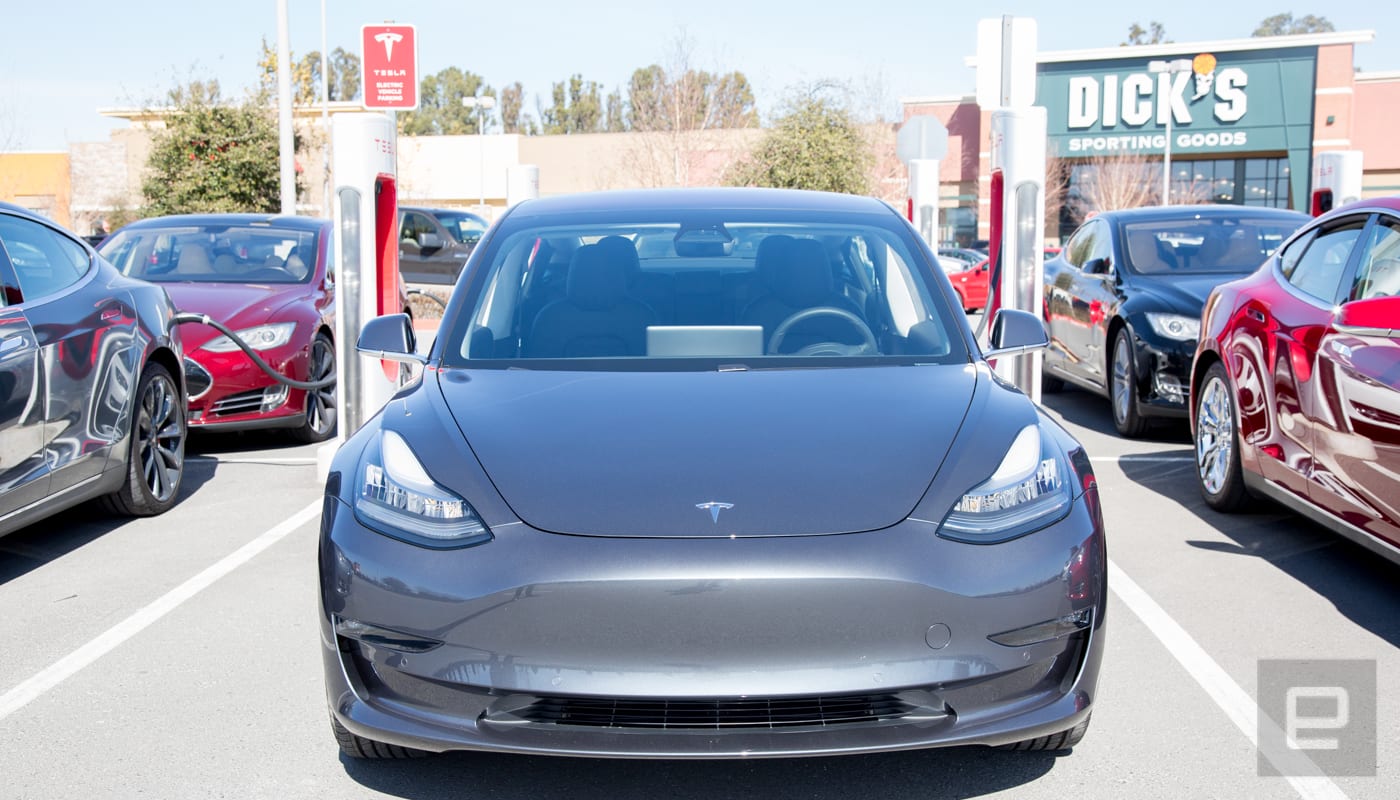
Tesla is working on a redesign of the Model 3 codenamed “Highland,” according to Reuters. The company’s goal is to reportedly reduce the complexity and number of components required to produce the sedan. The redesign could include changes to the car’s exterior and powertrain performance. The project is also said to build on the revamp of the 2021 Model S. However, it’s unknown if the redesigned Model 3 will feature the controversial steering yoke found in its more expensive sibling.

Reuters reports Tesla’s Shanghai Gigafactory will begin producing the new Model 3 sometime during the third quarter of 2023. The company’s Fremont plant will also make the redesigned sedan. It’s unclear how much Tesla expects to save on the new Model 3, nor whether the company will pass on the cost savings to consumers. Tesla currently makes a profit of about $9,500 for every car it produces. Reuters also makes no mention of whether the refresh will feature the automaker’s next-generation 4680 battery cells. In 2020, Elon Musk said the new battery design would enable Tesla to produce a $25,000 electric car within three years.

It’s safe to assume that even if the 2023 timeline is accurate, it could be subject to change. Reuters hasn’t had the best track record with its Tesla reporting recently, and it’s not like the company is great about sticking to deadlines either. When the automaker first announced the Cybertruck, for example, Elon Musk said volume production would start in 2021. That date first slipped to 2022 and then 2023.


The best Cyber Monday 2022 deals on video games, consoles and gaming gear

It’s Cyber Monday, which means it’s still a good time to be in the market for new gaming gear, if you know where to look. That last part is where we can help: We’ve picked through the barrage of so-called gaming deals at Amazon, Walmart, GameStop and other retailers to find the ones that are actually worth your time. Below are some of the highlights, which include genuine deals on the Xbox Series S, Nintendo Switch, several high-profile games, a range of recommended gaming peripherals and more.

Nintendo Switch + Mario Kart 8 Deluxe + Switch Online

Nintendo’s chief holiday deal bundles the standard Switch console with a digital copy of Mario Kart 8 Deluxe and a three-month subscription to the company’s Switch Online service at no extra cost. Nintendo has offered this exact same promotion for the past few years, and given that the newer Switch OLED is a pretty firm upgrade over the base model, it’s hard to call this a great deal. Still, if you’re gifting someone their first Switch and you don’t think they’ll need the Switch OLED’s bigger and more vibrant display, there’s some value here. Mario Kart 8 Deluxe is still a great time and normally retails around $50, while three months of Switch Online typically cost another $8.

Buy Nintendo Switch bundle at Amazon – $300

Xbox Series S

The Xbox Series S is down to $240 at Amazon, and if you use the code XBOX at checkout, the retailer will throw in another $40 in digital credit. That’s effectively a $100 discount. Woot has the device available for $220 outright — albeit for an international model — while several other retailers have it for $240. Normally, the Series S retails for $300. 

Either way, this is a good value for PlayStation or Switch users who want a cheaper way into the Xbox ecosystem. We gave the Series S a review score of 85 at launch: It isn’t powerful enough for 4K gaming, lacks a disc drive and only has 512GB of built-in storage, but it can still play all the same games as the pricier Xbox Series X.

Buy Xbox Series S + $40 credit at Amazon – $240

Xbox Wireless Controller

If you need a spare gamepad for your Xbox or PC, Microsoft’s wireless Xbox Series X/S controller is available for $35 at Lenovo when you use the code GAMERSAVER at checkout. That’s a rare discount and about $15 below the controller’s usual going rate. If stock runs dry at Lenovo, it’s also down to $40 at several other retailers. Those sales apply to multiple finishes, though some colors are priced at $45. Just note that these pads still rely on AA batteries by default; if you want one rechargeable battery, that’ll cost you another $25.

Buy Xbox Wireless Controller at Lenovo – $35Buy Xbox Wireless Controller at Microsoft – $40

PS5 DualSense Wireless Controller

Sony’s DualSense controllers for the PlayStation 5, meanwhile, are down to $49 in several finishes. That matches the lowest price we’ve seen, and depending on what color you choose, comes in either $20 or $25 below the pad’s usual price. In general, the DualSense is heavier and harder to hook up with a PC than its Xbox counterpart, but its D-pad isn’t as clicky, it doesn’t rely on AA batteries and its haptic feedback system is much more nuanced.

Buy PS5 DualSense Controller at Amazon – $49Buy PS5 DualSense Controller at Walmart – $49

Elden Ring

One of the most acclaimed and popular games of 2022, Elden Ring is a mammoth, haunting and challenging open-world game from the developers behind the Souls series of action-RPGs. It’s currently on sale for $35 at Walmart, which is the lowest price we’ve tracked and $15 below the usual going rate for a physical copy. (The PS5 version is low in stock as of this writing, but it’s available for $40 elsewhere.) Like its spiritual predecessors, Elden Ring can sometimes feel punishing, overwhelming and overly cryptic, but its dark-fantasy world is refreshingly honest, letting you discover — or completely miss — its many secrets at your own pace.

Buy Elden Ring at Walmart – $35

Nintendo Switch exclusive games

Ubisoft

If you’re need something new to play on your Switch, a handful of well-regarded first-party Nintendo games are still on sale for lower-than-usual prices (though the selection isn’t quite as strong as it was on Black Friday):

The cutesy strategy game Mario + Rabbids Sparks of Hope is priced at its usual $60 but includes a $10 store gift card at various retailers.

The over-the-top hack-and-slasher Bayonetta 3, which only became available about a month ago, is available for $45.

The platformer dual-pack that is Super Mario 3D World + Bowser’s Fury is within $2 of its all-time low at $42.

The classic open-world game The Legend of Zelda: Breath of the Wild is about $10 cheaper than usual at $29. 

Fire Emblem Warriors: Three Hopes, another recently released hack-and-slasher, is priced a bit higher than it was on Black Friday but is still $25 off. 

The engrossing action-RPG Monster Hunter Rise is available for a new low of $20. 

Note that, on Amazon, some of these deals aren’t visible until checkout. Nintendo also has several other titles discounted as part of a Cyber Week sale at its online eShop.

Buy Bayonetta 3 at Amazon – $45

Horizon Forbidden West and other PS5 exclusive games

If you’re looking to build out your PS5 library, meanwhile, several exclusives for Sony’s console are also at or near their lowest prices to date:

One of our favorite sequels of the year, the robot-battling open-world game Horizon Forbidden West, is down to a new low of $35. You can also pay $29 for a PS4 copy, which includes a free upgrade to the PS5 version. 

A few recommended exclusives are down to $30, including the atmospheric roguelike Returnal, the samurai drama Ghost of Tsushima: Director’s Cut, the shooter-platformer Ratchet & Clank: Rift Apart and the gorgeous remake of the classic PS3 RPG Demon’s Souls

Other PlayStation games we like, such as Uncharted: Legacy of Thieves Collection ($20), Death Stranding: Director’s Cut ($20), The Last of Us Part II ($10) and Marvel’s Spider-Man: Miles Morales ($20, or $35 for the Ultimate Edition), are around their respective best prices as well.

Besides exclusives, a smattering of popular 2022 games are still seeing their first major discounts as well, including A Plague Tale: Requiem ($39), Call of Duty: Modern Warfare II ($55) and, yes, Sonic Frontiers ($35).

Buy Horizon Forbidden West (PS5) at Walmart – $35Buy Horizon Forbidden West (PS4) at GameStop – $29

Steam Autumn Sale

BlueTwelve Studio

If you primarily game on the PC, Steam’s annual Autumn Sale is still kicking as well, bringing the usual truckload of discounts until November 29. Some highlights here include the biting RPG Disco Elysium and the supernatural shooter Control for $10 apiece, the impressive VR game Half-Life: Alyx and the cyberpunk cat game Stray for $24 each and a 22-pack of classic Valve games for just $7. There are hundreds more games from across eras beyond that, but remember that a fair chunk of these prices are likely to be replicated on PlayStation, Nintendo and Xbox’s respective storefronts as well.

PlayStation Plus

If you need to top up your PlayStation Plus subscription, Sony has dropped the price of 12-month memberships to that service by 25 percent. The deal applies to all three PS Plus tiers, so the basic “Essential” tier is down to $45, the “Extra” tier is down to $75, and the “Premium” tier is down to $90.

As a refresher, the Essential tier should be enough for most: It gets you broad access to online multiplayer, an allotment of cloud storage for backing up game saves and a handful of free game downloads each month. The Extra tier adds an on-demand library with a few hundred games, while the Premium tier provides cloud game streaming and an additional selection of “classic” PlayStation games on top of that.

Buy PS Plus at PlayStation Store – 25 percent off

Meta Quest 2 + Resident Evil 4 + Beat Saber

Meta’s Quest 2 headset is a couple years old at this point, but its wire-free design, competent performance and (relative) comfort have kept it the best option for most people looking to give virtual reality a try. For Cyber Monday, Meta is still selling a bundle that pairs the 128GB Quest 2 with two of its better games, the classic horror-shooter Resident Evil 4 and the energetic rhythm game Beat Saber, for $350. That’s a roughly $50 discount. If you need more storage, a bundle with the 256GB variant is on sale for $429.

Now, we’re using the term “discount” loosely here, since the Quest 2 used to start at $299 until Meta jacked the price up by another $100 earlier this year. Still, this is the best deal we’ve seen since that price hike — and if nothing else, this is a much better value than the Meta Quest Pro. We gave the device formerly known as the Oculus Quest 2 a review score of 89 when it launched back in 2020.

Buy Meta Quest 2 bundle at Amazon – $350

Backbone One

The Backbone One is a clever and well-built mobile game controller that we’ve recommend in previous buying guides. The iPhone version of the device is currently down to a new low of $75 in both its standard and PlayStation-branded finishes. This isn’t as good as the deal we saw on Black Friday, when Amazon had the device as low as $64, but it’s still a good $25 off the controller’s normal going rate. 

Regardless of which style you pick, the One should make playing gamepad-compatible iOS games — or cloud-streamed console and PC games — feel much more natural than a touchscreen. The main complaints are that its face buttons are on the clicky side and that you’ll need an adapter to get it to work with certain iPhones.

Buy Backbone One at Target – $75Buy Backbone One at Backbone – $75

HyperX Cloud Alpha

The HyperX Cloud Alpha is down to $50 at HyperX’s online store when you use the code HOLIDAY at checkout. That’s about $20 below the headset’s usual going rate and one of the best prices we’ve tracked. If stock runs out there, the device is also available for $55 at various other retailers. In any event, this is a sturdy, no-frills gaming headset that’s comfortable to wear for hours at a time. A good set of non-gaming headphones will sound better for the price, but the profile here is still relatively well-balanced, and the included mic is perfectly fine for everyday party chats.

If you’d prefer a wireless headset, SteelSeries’ Arctis 7+ is worth a look at $99, which is a new low and roughly $50 off its usual price. That one isn’t as universally comfortable, but it has a decent, hyped-up sound and some 60 hours of battery life per charge.

Buy HyperX Cloud Alpha at HyperX – $50Buy HyperX Cloud Alpha at Amazon – $55

Logitech G Pro X Superlight, plus more gaming accessories

Logitech’s G Pro X Superlight is a high-performing gaming mouse we like for both work and play, and right now it’s down to a new low of $100, or about $35 off its usual street price. You should see the full discount at checkout. That’s still not cheap, but the G Pro X Superlight stands out for being exceptionally light (at about 63 grams), quick to glide, and consistently responsive in faster-paced games. Just note that you only get a couple of customizable shortcut buttons, and that the whole thing connects over a USB dongle, not Bluetooth.

This is just one of a plethora of low or near-low prices on gaming accessories we like, though: 

Razer has since replaced the Viper Ultimate, but at $57 it’s still worth considering as an ultralight alternative to the G Pro X Superlight. It’s a more ambidextrous mouse than the Logitech model, with a pair of shortcut buttons on either side, though its shape is a bit flatter.

If you don’t mind going wired, Razer’s Viper 8KHz is another responsive option for FPS games. It’s a great value at its current deal price of $40, which is an all-time low.

We’ve previously recommended Razer’s Huntsman Mini for those who want a fast gaming keyboard in an ultracompact form factor. It’s currently within $5 of its all-time low at $70.

Corsair’s Scimitar RGB Elite is an soft-feeling, comfortable-sized and full-featured mouse for MMO gaming, and it’s within a dollar of its Black Friday price at $50. Razer’s Naga Trinity is a solid alternative that has swappable side plates; that one is within $2 of its all-time low at $57.

Logitech’s G29 is technically an older-generation model now, but it remains a fine value for those looking to get their first racing wheel at $200. 

Logitech’s G915 TKL is a comfortable wireless keyboard for those who prefer a low-profile feel. It’s down to $160, which is $10 more than its all-time low but $25 off its usual price.

Elgato’s Stream Deck Mk.2 is a 15-key controller we recommend for game streaming, and at $120, it’s available for the lowest price we’ve tracked.

Shop Logitech gaming accessories sale at AmazonShop Razer gaming accessories sale at AmazonShop HyperX gaming accessories sale at Amazon

Asus ROG Zephyrus G14

Will Lipman Photography for Engadget

The latest version of Asus’ ROG Zephyrus G14 gaming laptop is down to $1,300 for a model with a Ryzen 9 6900HS CPU, 16GB of RAM, a 1TB SSD, a 14-inch 120 Hz display and a Radeon RX 6700S GPU. That’s $350 off MSRP and one of the better prices we’ve seen. The Zephyrus G14 is the top pick in our guide to the best gaming laptops: Its chassis is impressively light at 3.64 pounds, but this configuration still packs enough power to play just about any modern game at a 1440p resolution relatively smoothly. 

If you want to save some cash, you can get a previous-gen Zephyrus G14 with a Ryzen 7 5800HS processor, a 512GB SSD, a 144Hz 1080p display and an RTX 3060 GPU for $900. That’s still a decent value despite the drop in power, but be aware that this older model doesn’t include a built-in webcam.

Buy Asus ROG Zephyrus G14 at Best Buy – $1,300

Razer Blade 14

A configuration of Razer’s Blade 14 with an AMD Ryzen 9 6900HX chip, 16GB of RAM, a 1TB SSD and an RTX 3070 Ti GPU is currently down to $2,000 at Amazon. That’s about $350 off its average street price and tied for the best price we’ve tracked. A variant with a slightly slower Ryzen 9 5900HX CPU and a slightly more powerful RTX 3080 GPU is also on sale for $100 more.

We gave the Blade 14 a review score of 84 last year, and we’ve recommended the similar Blade 15 in recent buying guides and gift guides. It can run hot, and you can still get similarly powerful gaming laptops for less cash, but the Blade still packs enough power to play demanding games at higher settings in a slim and slick-feeling design that weighs less than four pounds.

Buy Razer Blade 14 at Amazon – $2,000 

Samsung’s Galaxy Watch 5 falls to $230 with a charger for Cyber Monday

If you’ve already been looking to buy Samsung’s Galaxy Watch 5, today looks like a good time to take the plunge. The Android smartwatch is now on sale from $230 at several retailers, and at Amazon you can get a 35W two-port wall charger included at no extra cost. That’s about $40 below the usual price of a 40mm model. The sale applies to multiple finishes and configurations — a 40mm model with LTE is down to $260 with the wall charger, for instance, while the larger 44mm model is available for the same price.

Shop Galaxy Watch 5 sale at Amazon

The Galaxy Watch 5 Pro, a larger titanium variant with a more durable screen and bigger battery, is also on sale from $399, though that one includes a 15W wireless charger instead. All of these match the all-time lows we saw on Black Friday, but for Cyber Monday the chargers are available as a bonus. Amazon says this sale will run for today only.

The Galaxy Watch 5 is our pick for the best smartwatch for Android users, and we gave it a review score of 85 back in August. The Galaxy Watch 5 Pro, meanwhile, got an 86. The former isn’t a major upgrade over its predecessor, and its battery life can take a hit if you set the display to always-on, but it still gets you a clean, water-resistant design, reliable activity monitoring and useful sleep tracking. If you don’t use an iPhone and want a do-everything wearable, it’s the way to go. The Galaxy 5 Pro puts the same perks in a more durable package, but you’ll need to be sure your wrist can handle something bulkier.

Your Cyber Week Shopping Guide: Get the latest Black Friday and Cyber Monday offers by following @EngadgetDeals on Twitter and subscribing to the Engadget Deals newsletter. Also, shop the top Black Friday and Cyber Monday Deals on Yahoo Life. Learn about Black Friday trends on In the Know, and our car experts at Autoblog are covering must-shop Black Friday and Cyber Monday auto deals.


Generated by Feedzy
Exit mobile version